
Summary
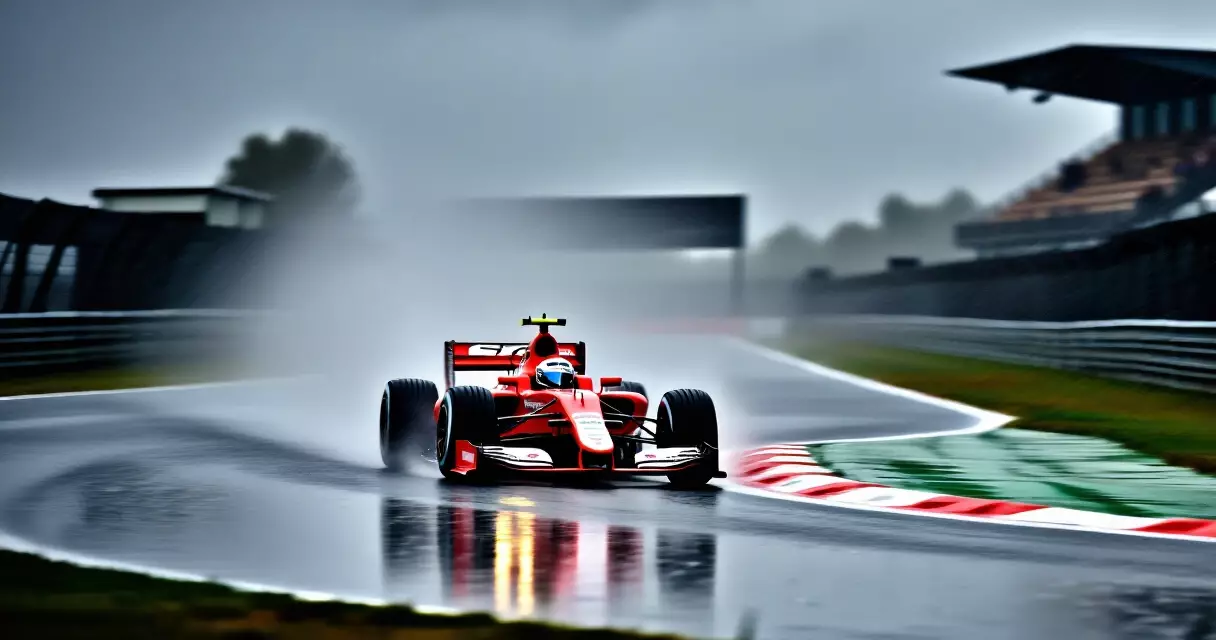
✓Reviewed by Laura BennettRain transforms a Formula 1 Grand Prix from a precision engineering contest into a raw test of driver instinct, and the best F1 wet-weather drives of all time ranked here represent moments when talent overwhelmed machinery. According...
Table of contents
- 1 Why Wet Races Produce the Best F1 Wet-Weather Drives of All Time
- 2 How This Ranking of Best F1 Wet-Weather Drives Was Compiled
- 3 A Brief History of Rain Racing in Formula 1
- 4 Top 10 Best F1 Wet-Weather Drives of All Time Ranked
- 4.1 1. Ayrton Senna, 1993 European Grand Prix, Donington Park
- 4.2 2. Michael Schumacher, 1996 Spanish Grand Prix, Barcelona
- 4.3 3. Lewis Hamilton, 2008 British Grand Prix, Silverstone
- 5 Drives Ranked 4 Through 7 in the All-Time Wet-Weather List
- 6 Drives Ranked 8 Through 10 and Honourable Mentions
- 7 Best F1 Wet-Weather Drives Ranked by the Numbers
- 8 What Separates Good Wet-Weather Drivers From Great Ones
- 9 Modern Wet-Weather Performance: Verstappen and the Current Grid
- 10 Singapore’s Role in F1 Wet-Weather History
- 11 Comparing Wet-Weather Greatness Across Eras
- 12 Frequently Asked Questions
- 12.1 Who is the greatest wet-weather driver in F1 history?
- 12.2 How are wet-weather stats defined in Formula 1?
- 12.3 Is it better to judge wet-weather greatness by wins or win percentage?
- 12.4 Why do some rankings put Senna first and others Schumacher?
- 12.5 What makes Singapore especially challenging in the rain?
- 12.6 Which current F1 drivers are best in wet conditions?
- 13 Key Takeaways: Best F1 Wet-Weather Drives of All Time Ranked
- 14 Sources
Rain transforms a Formula 1 Grand Prix from a precision engineering contest into a raw test of driver instinct, and the best F1 wet-weather drives of all time ranked here represent moments when talent overwhelmed machinery. According to data compiled by Pitlane Stats covering the 1950 to 2025 World Championship seasons, approximately 15% of all F1 races have been classified as wet, yet those races have produced a disproportionate share of the sport’s most celebrated performances. This ranking draws on verified win totals, wet-start win percentages, and the tactical circumstances behind each drive to identify the greatest rain-race performances in the sport’s history.
Why Wet Races Produce the Best F1 Wet-Weather Drives of All Time
Wet conditions strip away the aerodynamic advantages that separate front-running machinery from the midfield. Reduced grip levels mean throttle sensitivity, steering precision, and the ability to read a drying racing line become more decisive than downforce figures. According to an f1metrics analysis, wet starts are significantly more incident-prone: approximately 20.5% of wet-start entries ended in a driver-related DNF, compared with 12.5% for dry starts. That elevated attrition rate means surviving and winning a rain race demands both speed and judgement.
The same f1metrics study identified six seasons in which at least one-third of all races were wet, showing how weather patterns can cluster and create eras where rain mastery becomes a championship-defining skill rather than an occasional bonus.
How This Ranking of Best F1 Wet-Weather Drives Was Compiled
Ranking the best F1 wet-weather drives of all time ranked requires transparent methodology. This list draws primarily on two statistical datasets: Pitlane Stats, which covers wet-race wins and winning percentages across the 1950 to 2025 championship seasons, and f1metrics, which provides adjusted performance models accounting for car competitiveness. Where the two datasets diverge on whether a race qualifies as “wet,” both definitions are noted.
Each entry is judged on four criteria: severity of conditions during the decisive phase of the race, the gap between the driver’s finishing position and where the car would be expected to finish in dry conditions, strategic decisions made by the driver or team under pressure, and the competitive context of that season.
A Brief History of Rain Racing in Formula 1
Wet-weather racing has been part of Formula 1 since the championship’s inaugural season in 1950, when cars ran on narrow treaded tyres with no aerodynamic aids. Juan Manuel Fangio, according to historical data compiled by Tudo Sobre Fórmula 1, won six of his eight wet-race starts for a 75% conversion rate. Purpose-built wet-weather tyres were not introduced until the late 1970s, and full-wet and intermediate compounds as separate categories became standard only in the 1990s. The FIA’s safety interventions have evolved continuously, with standing restarts behind the safety car and mandatory red flags in cases of poor visibility becoming routine in the 2020s.
Top 10 Best F1 Wet-Weather Drives of All Time Ranked
1. Ayrton Senna, 1993 European Grand Prix, Donington Park
Senna qualified fifth, dropped to fifth at the start on a saturated track, then overtook four cars in the opening lap to lead by the end of lap one. He won by over a minute in mixed conditions, lapping everyone up to second place. According to Pitlane Stats, Senna’s overall wet-win rate of approximately 55.6% from around 18 wet starts remains the highest among drivers with significant wet-race samples. This Donington performance is the most commonly cited single wet-weather drive in F1 history across statistical and editorial sources alike.
2. Michael Schumacher, 1996 Spanish Grand Prix, Barcelona
Schumacher won by 45 seconds in torrential rain at the Circuit de Barcelona-Catalunya, in a Ferrari that was not competitive in dry conditions that season. According to Pitlane Stats data, Schumacher accumulated 16 wet-race wins from approximately 44 wet starts across his career, a 36% conversion rate. The 1996 Spanish Grand Prix was his first major wet-weather statement for Ferrari and is regularly cited as evidence of his ability to extract performance beyond the car’s baseline. The Monaco Grand Prix results from the same modern era of motorsport show how race classifications and driver standings can shift dramatically under changing conditions.
A wet Grand Prix compresses the gap between car and driver, and the best rain performances are those where the driver’s margin of victory exceeds the machinery’s expected advantage by the widest amount.
3. Lewis Hamilton, 2008 British Grand Prix, Silverstone
Hamilton won by over a minute in heavy rain at his home Grand Prix, finishing 68 seconds ahead of Nick Heidfeld. According to Pitlane Stats, Hamilton’s career wet record stands at 13 wins from approximately 37 wet starts, giving him a 35% win rate. The 2008 Silverstone drive is often cited as the moment Hamilton established himself among the all-time wet-weather elite, combining raw pace with zero significant errors across the full race distance.
Drives Ranked 4 Through 7 in the All-Time Wet-Weather List
4. Ayrton Senna, 1991 Brazilian Grand Prix, Interlagos. Senna won his home Grand Prix in gruelling wet conditions despite his gearbox failing progressively, finishing the final laps stuck in sixth gear. The physical toll left him unable to lift the trophy immediately.
5. Michael Schumacher, 1995 Belgian Grand Prix, Spa-Francorchamps. Schumacher started 16th and won at a circuit known for localised rain cells. The drive demonstrated his ability to read micro-conditions across different sectors of a long lap.
6. Max Verstappen, 2016 Brazilian Grand Prix, Interlagos. Verstappen, then 19 years old, drove from 16th to third in treacherous conditions, including a series of overtakes and a spectacular car save at approximately 300 km/h. According to Pitlane Stats data, Verstappen’s wet-race record has since grown to approximately 5 wins from around 16 wet starts, a 31% conversion rate.
7. Jenson Button, 2011 Canadian Grand Prix, Montreal. Button recovered from last place to win in a race lasting over four hours, interrupted by a two-hour red flag period. His career wet record, per Pitlane Stats, shows 7 wins from approximately 39 wet starts (18%), but this single drive elevated his wet-weather reputation significantly.
Drives Ranked 8 Through 10 and Honourable Mentions
8. Gilles Villeneuve, 1981 Canadian Grand Prix, Montreal. Villeneuve navigated near-zero visibility to win at his home circuit, a performance that predated modern wet-weather tyre technology and safety car procedures.
9. Rubens Barrichello, 2009 Italian Grand Prix, Monza. Barrichello won in mixed conditions that caught several front-runners out with tyre strategy errors, demonstrating experience-based judgement that the data can struggle to capture.
10. Kimi Raikkonen, 2005 Japanese Grand Prix, Suzuka. Raikkonen drove from 17th to first in rain-affected conditions, with a victory that combined aggressive overtaking and precise tyre management. Raikkonen’s overall wet record places him among the top performers by win percentage, according to statistical compilations on f1metrics.
Best F1 Wet-Weather Drives Ranked by the Numbers
The table below summarises career wet-race statistics for the drivers featured in this ranking, drawing on data from Pitlane Stats and Tudo Sobre Fórmula 1. Totals vary between sources because of differing definitions of what constitutes a “wet” race.
| Driver | Wet Wins (Pitlane Stats) | Approx. Wet Starts | Win % | Era |
|---|---|---|---|---|
| Michael Schumacher | 16 | ~44 | 36% | 1991–2012 |
| Lewis Hamilton | 13 | ~37 | 35% | 2007–present |
| Ayrton Senna | 10 | ~18 | 55.6% | 1984–1994 |
| Jenson Button | 7 | ~39 | 18% | 2000–2017 |
| Max Verstappen | 5 | ~16 | 31% | 2015–present |
| Juan Manuel Fangio | 6 | ~8 | 75% | 1950–1958 |
What Separates Good Wet-Weather Drivers From Great Ones
Three measurable factors distinguish elite rain drivers from competent ones. First, tyre feel: the ability to sense grip levels through reduced mechanical feedback. Second, adaptability to a changing racing line as the track dries or re-wets. Third, risk calibration: knowing when to push and when to protect a position. The f1metrics analysis highlights that wet races have a significantly higher variance in finishing order compared with dry races, meaning the reward for getting these judgements right is amplified.
Modern F1 has added data overlay to these instincts. Teams now monitor real-time weather radar, track temperature sensors at multiple points, and tyre degradation models, yet the final call on when to switch from intermediates to slicks still falls to the driver’s feel for the track surface. The way tactical context shifts outcomes in motorsport echoes similar dynamics in team sports, much as Stanley Cup Finals series can pivot on a single moment of individual brilliance within a structured game plan.
Modern Wet-Weather Performance: Verstappen and the Current Grid
Max Verstappen’s wet-race record through the 2025 season stands at approximately 5 wins from 16 wet starts, per Pitlane Stats. His 2016 Brazilian Grand Prix drive remains his signature rain performance, but subsequent wet victories have confirmed the pattern. A Reddit-hosted analysis of every driver’s wet-weather record, which drew on FIA classification data, found that among drivers who have participated in more than ten wet races in the current era, Alex Albon and Lance Stroll rank highest in positions gained per wet race, with Verstappen third.
The 2026 regulation changes, introducing new aerodynamic rules and power unit specifications, add a further variable: how the new ground-effect cars behave on a wet surface is still being assessed across the season. Singapore’s street circuit remains one of the most rain-sensitive venues on the calendar. According to the Singapore Grand Prix official weather page, there is almost a 40% chance of precipitation at any time of the day during race week. The 2026 Singapore Grand Prix is scheduled for 9 to 11 October, having moved from its traditional September slot.
Singapore’s Role in F1 Wet-Weather History
The Marina Bay Street Circuit has been a rain-affected venue on multiple occasions. The 2022 Singapore Grand Prix start was delayed by adverse weather, with torrential rain flooding parts of the pit lane. Singapore’s equatorial climate produces approximately 170 mm of rain across 14 wet days in September, according to climate data compiled by travel weather sources. The circuit’s combination of a night race, limited run-off, and standing water in low-lying sections makes it one of the most challenging venues when rain arrives.
For fans attending the relocated October race, the precipitation risk remains comparable. The high humidity and frequent thunderstorms characteristic of Singapore’s climate ensure that wet-weather preparedness stays relevant for teams and spectators alike. The broader F1 calendar intersects with other major sporting competitions throughout 2026, including events covered in the FIFA World Cup 2026 opener analysis.
Singapore’s near-40% precipitation probability makes every Grand Prix weekend there a potential stage for the next great wet-weather drive.
Comparing Wet-Weather Greatness Across Eras
Direct comparison across eras is complicated by changes in tyre technology, safety regulations, and car philosophy. The table below illustrates how key variables have shifted.
| Factor | 1950s–1970s | 1980s–1990s | 2000s–Present |
|---|---|---|---|
| Wet tyre type | Treaded road-based | Purpose-built wet/intermediate | Advanced wet/intermediate compounds |
| Safety car usage in rain | Rare | Occasional | Routine, with standing restarts |
| Visibility aids | None | Rear rain light introduced | LED rain lights, enhanced spray guards |
| Race stoppage threshold | Very high | High | Moderate (red flags more common) |
| Average wet races per season | ~2–3 | ~2–4 | ~3–4 |
This context matters because a wet-weather drive in 1968 involved fundamentally different risks and equipment than one in 2023. Fangio’s 75% wet-win rate from the 1950s, while statistically extraordinary, came in an era without safety cars, run-off areas, or modern crash structures. Meanwhile, modern drivers face more closely matched machinery and narrower performance windows.
Frequently Asked Questions
Who is the greatest wet-weather driver in F1 history?
Based on available data, Ayrton Senna holds the highest wet-race win percentage at approximately 55.6%, while Michael Schumacher leads in total wet wins with 16, according to Pitlane Stats. The answer depends on whether the metric is peak performance rate or cumulative success.
How are wet-weather stats defined in Formula 1?
Definitions vary. The f1metrics model classifies a race as wet if wet or intermediate tyres were used during the race start procedure. Other sources count any race where rain tyres were deployed at any point. This methodological difference explains discrepancies between datasets.
Is it better to judge wet-weather greatness by wins or win percentage?
Neither metric alone is sufficient. Win percentage favours drivers with fewer wet starts, such as Fangio (75% from 8 starts). Total wins favour long careers. The most balanced approach combines both with a qualitative assessment of individual performances, which is the methodology used in this ranking.
Why do some rankings put Senna first and others Schumacher?
The difference comes down to methodology. Rankings that weight win percentage tend to favour Senna (55.6%). Rankings that weight total victories favour Schumacher (16 wins). Rankings that incorporate car-adjusted performance models can produce different orderings again, as the f1metrics analysis demonstrates.
What makes Singapore especially challenging in the rain?
Singapore’s Marina Bay circuit is a street track with limited run-off, artificial lighting, and tight corners. Combined with equatorial humidity and a near-40% precipitation probability according to the official Singapore Grand Prix weather page, rain at Marina Bay creates standing water, reduced visibility, and rapidly changing grip levels.
Which current F1 drivers are best in wet conditions?
Based on available data through the 2025 season, Max Verstappen leads active drivers with approximately 5 wet wins from 16 starts. Community-driven analyses have also identified Alex Albon and Lance Stroll as among the strongest performers in positions gained during wet races, though their sample sizes remain relatively small.
Key Takeaways: Best F1 Wet-Weather Drives of All Time Ranked
The best F1 wet-weather drives of all time ranked in this article reflect a combination of statistical evidence and race-specific context. Senna’s 1993 Donington lap remains the benchmark single performance; Schumacher’s 1996 Barcelona victory the most convincing demonstration of extracting speed beyond a car’s baseline; Hamilton’s 2008 Silverstone win the most dominant modern display. Verstappen’s trajectory through the 2025 data suggests he will continue to climb this ranking. What unites every entry is that the driver’s contribution visibly exceeded the machinery’s expected performance, a quality that rain uniquely exposes.
Wet-weather data remains imperfect and dependent on classification methodology. The approximately 15% of F1 races run in wet conditions, as identified by f1metrics, constitute a small enough sample that individual brilliance can meaningfully shift career statistics. That statistical fragility is part of what makes rain-race greatness so compelling and so debated. For readers following the broader landscape of competition analysis across sports, perspectives like the Sport and Competition guide explore similar questions of how to measure greatness within structured competitive frameworks.
Sources
- Pitlane Stats: F1 Wet Weather Stats — retrieved September 13, 2026
- f1metrics: Who Was the Best Wet-Weather Driver? — retrieved September 13, 2026
- Tudo Sobre Fórmula 1: Wins With Rain or Wet Tracks — retrieved September 13, 2026
- Singapore Grand Prix: Weather Forecast — retrieved September 13, 2026