
Summary
A Grand Slam singles champion walks off court with 2,000 ranking points, while a player who wins a lower-tier ATP Challenger event might collect 75. Both lift a trophy on the final day, yet those two results sit worlds apart...
Table of contents
- 1 The Four Tiers That Organize Professional Tennis
- 2 Grand Slams: Tennis at Its Largest Scale
- 3 ATP and WTA Tour Events: The Backbone of the Season
- 4 The Challenger Tour and ITF Circuit: Where Careers Begin
- 5 From Results to Rankings: How Points Stack Up
- 6 Prize Money Across the Pyramid
- 7 Format Differences That Change How a Result Reads
- 8 Putting It Together: Comparing Results Like an Analyst
- 9 Frequently Asked Questions
- 9.1 What is the main difference between a Grand Slam and an ATP or WTA Tour event?
- 9.2 How many Grand Slam tournaments are there each year?
- 9.3 Do Challenger and ITF results count toward the rankings?
- 9.4 Why do Grand Slam matches last longer than other tournaments?
- 9.5 Do the ATP and WTA award the same points for the same level?
- 9.6 What is the ITF World Tennis Tour?
- 9.7 Which events are mandatory for top-ranked players?
- 10 Sources
A Grand Slam singles champion walks off court with 2,000 ranking points, while a player who wins a lower-tier ATP Challenger event might collect 75. Both lift a trophy on the final day, yet those two results sit worlds apart in the standings, in the prize money, and in what they say about a career. According to ATP ranking data summarized on Wikipedia, that 2,000-point figure is the single largest reward available anywhere in men’s or women’s professional tennis, and nothing else on the calendar comes close.
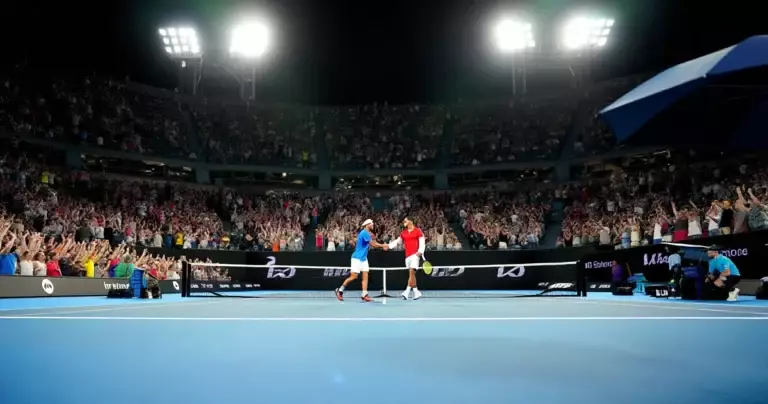
That gap is exactly why a casual viewer can feel lost. One week the headlines celebrate a “title” in Melbourne in front of 15,000 fans, and the next week they celebrate a “title” in a city the reader has never heard of, played on a court ringed by a few hundred spectators. Both are real professional titles. They simply belong to different tiers of a layered system, and reading results correctly means knowing which tier you are looking at.
This article maps the full pyramid: Grand Slams at the top, the ATP and WTA Tour events in the middle, and the Challenger and ITF circuits underneath. By the end you will know how points, prize money, draw sizes, and match formats differ at each level, and how to compare a Challenger title against a Grand Slam quarterfinal without getting fooled by the word “title.”
The Four Tiers That Organize Professional Tennis
Professional tennis is built like a pyramid. At the apex sit the four Grand Slams, the biggest and richest events of the season. Below them are the regular tour events run by the ATP for men and the WTA for women, split into 1000, 500, and 250 categories by size and reward. Beneath the main tour comes the developmental layer: the ATP Challenger Tour and the WTA 125 series. At the base lies the ITF World Tennis Tour, the entry point where most professionals begin chasing their first ranking points.
Governance is split across three bodies, and that split matters for how results are recorded. The International Tennis Federation (ITF) oversees the Grand Slams jointly with the four host nations, and it also runs the entry-level World Tennis Tour. The ATP administers the men’s professional tour and its Challenger circuit, while the WTA administers the women’s tour and the WTA 125 events. A single ranking, though, blends results from all of these layers, so a player’s number reflects performances across every tier they entered.
One quick way to keep the structure straight: the higher the tier, the bigger the draw, the longer the event runs, and the more points and money are on the line. If you want to see how every category feeds into one season-long archive, the ATP and WTA match reports archive collects results from across the pyramid in one place.
Grand Slams: Tennis at Its Largest Scale
The four Grand Slams, sometimes called the majors, are the Australian Open, Roland Garros (the French Open), Wimbledon, and the US Open. As described in the Wikipedia overview of the Grand Slam tournaments, these four events have anchored the calendar for more than a century and are widely treated as the defining measure of a great career. The phrase “Grand Slam” itself refers to winning all four in a single season, a feat achieved only a handful of times in singles history.
Each major has its own surface and slot on the calendar. The Australian Open opens the year in January on hard courts in Melbourne. Roland Garros follows in late May on the red clay of Paris. Wimbledon arrives in late June and July on grass in London, the only major still played on that surface. The US Open closes the Slam season in late August and September on hard courts in New York. Surface alone changes how results read, because clay rewards different skills than grass, and a champion on one surface is not guaranteed to thrive on another.
Size is the other defining trait. Grand Slam singles events carry 128-player draws, meaning a champion must win seven matches across roughly two weeks. The men’s events are played best of five sets, a format used almost nowhere else in the modern game, while the women’s events are best of three. That extra length raises the physical and tactical demands, and it is a major reason a Grand Slam result is treated as heavier evidence of form than a result from a shorter event.
Rules at the majors have converged in recent years. The four tournaments agreed to standardize the deciding-set tiebreak, adopting a unified 10-point tiebreak at six games all in the final set, a change reported by Reuters and other outlets when the Grand Slam Board confirmed it. Before that, each major handled long final sets differently, which sometimes produced marathon matches. The shared format now makes results easier to compare across the four events.
Financially, nothing on the calendar matches a major. Grand Slam champions earn the top prize cheques in the sport, and total prize pools run into the tens of millions of dollars per event. Wimbledon, for instance, reported singles champions’ cheques of roughly £3 million in its 2025 edition, according to figures published by BBC Sport. Equal prize money for men and women has been standard across all four majors since the late 2000s, after Wimbledon became the last to equalize its purse in 2007.
ATP and WTA Tour Events: The Backbone of the Season
Between the majors, the season is filled by the regular tour, run by the ATP Tour for men and the WTA Tour for women. These events are sorted into three categories by prestige and reward: the 1000s at the top, then the 500s, then the 250s. The number in each label is roughly the number of ranking points the champion earns, which makes the system easy to read once you know the code.
The 1000-level events sit just below the majors. On the men’s side these are the ATP Masters 1000 tournaments, a set of nine events including Indian Wells, Miami, Monte-Carlo, Madrid, Rome, Canada, Cincinnati, Shanghai, and Paris. The WTA runs its own 1000-level series at comparable cities. Most of these are mandatory for top-ranked players, meaning a star cannot simply skip them without consequences, and many now run across a stretched schedule of more than a week with larger draws of 96 players.
The 500 and 250 events form the working week-to-week circuit. A 500-level title is a strong result that often shapes the rankings race, while 250-level events offer ranking points and prize money to a broader pool of players, including those building toward the top tier. Draws at these events are smaller, commonly 28 to 48 players, and the schedule is dense, with multiple tournaments running in different parts of the world on the same week.
One format point separates the whole tour from the majors: ATP and WTA Tour events are played best of three sets for everyone, men and women alike. A regular-tour final is therefore shorter than a men’s Grand Slam final, which affects how much a single result can tell you about endurance over a long fortnight. The season also ends with the ATP Finals and WTA Finals, elite eight-player events where an undefeated champion can collect up to 1,500 points, more than a 1000-level title but still short of a major.
The Challenger Tour and ITF Circuit: Where Careers Begin
Below the main tour sits the developmental engine of the sport. The ATP Challenger Tour is the men’s second-tier circuit, and it stages well over 195 events across the year in cities around the world. Challenger events are graded into categories labeled 175, 125, 100, 75, and 50, where the number again signals the ranking points the champion earns. A Challenger 175 title is a meaningful step, while a Challenger 50 title offers a smaller boost suited to players climbing out of the lower rankings.
The Challenger Tour is where most future stars sharpen their games and earn the points needed to reach the main tour. A result line from a Challenger may look identical in shape to a tour result, with the same scoreline format, yet it carries far fewer points and a smaller cheque. Reading the venue and category is the only reliable way to tell the difference, because the scoreboard alone will not announce that a match was a Challenger semifinal rather than an ATP 500 semifinal.
The WTA runs a parallel developmental layer through its WTA 125 series, where champions earn up to 160 points. These events give rising and returning players a stage between the ITF circuit and the main WTA Tour. They function much like the men’s Challengers, offering a place to build ranking and match toughness against solid professional opposition without the depth of a full tour field.
At the base lies the ITF World Tennis Tour, the entry point administered by the International Tennis Federation. These events, often labeled by prize money such as M15 or W35, hand out modest points and small cheques, but they are where almost every professional first earns a ranking. Prize money here can be just a few thousand dollars for a champion, a stark contrast to the seven-figure cheques at the majors, which underlines how steep the climb is from the base of the pyramid to its peak.
From Results to Rankings: How Points Stack Up
Rankings are the scoreboard that connects every tier. Both tours use a rolling 52-week system in which a player’s best results are counted and older points expire after a year. The ATP counts a set number of a player’s best results, with the four Grand Slams and the mandatory Masters 1000 events weighted heavily, while the WTA uses a comparable best-results model. Because the majors and 1000s award so many points, deep runs at those events do far more for a ranking than a string of titles at lower levels.
The table below shows the champion’s reward at each level for singles, drawn from ATP and WTA ranking schedules summarized on Wikipedia. The point of comparing them side by side is to make the scale visible: a single Grand Slam title is worth more than ten Challenger 175 titles combined, which is why a breakthrough at a major can rocket a player up the standings in a single fortnight.
| Tournament level | Approx. events per year | Champion’s ranking points | Governing body |
|---|---|---|---|
| Grand Slam | 4 | 2,000 | ITF |
| Tour Finals (ATP / WTA) | 1 each | up to 1,500 | ATP / WTA |
| ATP / WTA 1000 | 9 to 10 | 1,000 | ATP / WTA |
| ATP / WTA 500 | 15 to 16 | 500 | ATP / WTA |
| ATP / WTA 250 | 30 or more | 250 | ATP / WTA |
| ATP Challenger (175 top tier) | 195 or more | 50 to 175 | ATP |
| WTA 125 | 40 or more | up to 160 | WTA |
| ITF World Tennis Tour | 500 or more | a few, up to roughly 50 | ITF |
Notice the cliff between the top three rows and the rest. Once you drop below the 1000 level, the points fall away quickly, and a player living on the Challenger circuit needs many strong weeks to match what one good major can deliver. If you want a closer look at how those points are summed, defended, and lost across a season, our guide to how tournament results affect ATP and WTA rankings walks through the math step by step.
Prize Money Across the Pyramid
Money follows the same shape as points, only the gaps are even wider. A Grand Slam champion can earn a seven-figure cheque, a tour-level champion earns somewhere from low six figures up toward a million, and a Challenger champion may take home only a few tens of thousands. The ITF base layer pays the least, sometimes leaving lower-ranked players to cover travel and coaching costs out of pocket. This financial pyramid is one reason the climb through the tiers is as much an economic challenge as a sporting one.
The figures below are approximate and vary by event, currency, and year, but they capture the relative scale of each tier. Grand Slam and tour numbers reflect tournament announcements reported by outlets such as BBC Sport, while Challenger and ITF figures track the published category minimums.
| Level | Example event | Singles draw | Men’s match format | Approx. singles champion prize |
|---|---|---|---|---|
| Grand Slam | Wimbledon (2025) | 128 | Best of 5 sets | ~£3 million |
| ATP / WTA 1000 | Indian Wells | 96 | Best of 3 sets | ~$1 million or more |
| ATP / WTA 500 | Dubai, Barcelona | 32 to 48 | Best of 3 sets | ~$400,000 to $500,000 |
| ATP / WTA 250 | Various host cities | 28 to 32 | Best of 3 sets | ~$100,000 or more |
| ATP Challenger 175 | Various host cities | 48 | Best of 3 sets | ~$25,000 to $40,000 |
| ITF World Tennis Tour (M25) | Various host cities | 32 | Best of 3 sets | ~$3,000 to $4,000 |
The equal-pay story is worth repeating here. At all four majors, men and women now receive identical prize money, a standard that took decades to reach and was completed when Wimbledon equalized its purse in 2007. Below the majors, prize money is set per event and per tour, so the parity picture is more varied, though the headline category numbers shown above apply across both circuits.
Format Differences That Change How a Result Reads
Two results can show the same scoreline yet mean very different things, and format is usually the reason. The clearest example is set length. Men’s Grand Slam matches are best of five sets, so a 6-4, 3-6, 7-6, 4-6, 6-3 result reflects nearly four hours of physical and tactical battle. Everywhere else on the men’s tour, and in all women’s matches, play is best of three, which compresses the same drama into a shorter contest. A five-set win therefore signals endurance that a three-set win cannot.
Draw size is the next variable. A Grand Slam champion beats seven opponents from a 128-player field, while a 250-level champion might beat only five from a draw of 28. The deeper the draw, the more rounds a player must survive, and the more a title says about consistency across a long event. Seeding follows the same logic: majors seed 32 players, spreading the strongest names apart, whereas smaller events seed far fewer, which can lead to tougher early matchups.
Tiebreak and scoring quirks add a final wrinkle. With the deciding-set tiebreak now standardized at the majors, a final set that reaches six games all is settled by a 10-point tiebreak, the same across all four. Lower-tier events may use their own scoring experiments from time to time, so checking the format is part of reading any result accurately. For a walkthrough of how to decode the numbers themselves, our guide on how to read tennis scores breaks down sets, games, and tiebreaks in plain terms.

Putting It Together: Comparing Results Like an Analyst
Once the tiers make sense, comparing results becomes straightforward. Suppose one player wins a Challenger 175 title the same week another reaches a Grand Slam quarterfinal and loses. On paper both had a strong week, but the Grand Slam quarterfinalist earned roughly 400 points and a larger cheque, while the Challenger champion earned 175. The losing major run was the more valuable result, even though it ended without a trophy, which is the kind of distinction the rankings reward and casual headlines often blur.
A practical habit helps: when you read any result, identify the event level first, then the round, then the score. Level tells you the stakes, round tells you how far the player advanced, and the score tells you how the match unfolded. A first-round win at a major and a first-round win at a 250 look identical on a scoreboard, but they carry different weight in a season-long picture. Treating event level as the starting point keeps you from overrating a deep run at a small event or underrating an early exit at a big one.
This framing also explains the shape of a typical career. Players usually grind through ITF and Challenger events, accumulating small batches of points, before they can hold a main-tour ranking. The breakthrough often comes when a young player finally goes deep at a 1000 or a major, banking a large block of points in one go. Following results across the whole pyramid, rather than only the marquee events, is the best way to spot a rising name before they reach the biggest stages.
Frequently Asked Questions
What is the main difference between a Grand Slam and an ATP or WTA Tour event?
The biggest differences are scale and reward. Grand Slams use 128-player draws, run for about two weeks, and award the champion 2,000 ranking points plus the sport’s largest prize cheques, according to ATP and WTA ranking schedules summarized on Wikipedia. Regular ATP and WTA Tour events are smaller, with 1000, 500, and 250 categories awarding fewer points, and they are run by the tours rather than the ITF. Men’s Grand Slam matches are also best of five sets, while tour events are best of three, so a major result reflects more rounds and longer matches than a comparable tour result does.
How many Grand Slam tournaments are there each year?
There are four Grand Slam tournaments every year, as documented in the Wikipedia overview of the majors. In calendar order they are the Australian Open in January on hard courts, Roland Garros in late May on clay, Wimbledon in late June and July on grass, and the US Open in late August and September on hard courts. Winning all four in the same season is the achievement that gives the term “Grand Slam” its meaning, and it has been accomplished only a few times in singles history. The four events have anchored the professional calendar for over a century.
Do Challenger and ITF results count toward the rankings?
Yes, results from the ATP Challenger Tour, the WTA 125 series, and the ITF World Tennis Tour all award ranking points, just fewer than tour-level events. The ATP Challenger Tour grades its events into 175, 125, 100, 75, and 50 categories, with the number signaling the champion’s points, and it stages well over 195 events a year. ITF World Tennis Tour events sit at the base of the system and hand out modest points, but they are where most professionals earn their first ranking. These lower tiers are the developmental ladder that feeds players up toward the main tour and the majors.
Why do Grand Slam matches last longer than other tournaments?
Men’s Grand Slam singles matches are played best of five sets, while almost every other professional match, including all women’s matches and all ATP and WTA Tour events, is best of three. Winning three sets instead of two naturally takes more time and demands greater endurance, which is why five-set classics can run past four hours. The larger 128-player draws also mean champions must win seven matches rather than five or six. Together, the longer format and deeper field make a Grand Slam title a stronger test of stamina and consistency than a title at a shorter, smaller event.
Do the ATP and WTA award the same points for the same level?
At the headline level the systems mirror each other closely. A Grand Slam champion earns 2,000 points on both tours, a 1000-level champion earns 1,000, a 500-level champion earns 500, and a 250-level champion earns 250, based on ATP and WTA ranking schedules summarized on Wikipedia. Both tours use a rolling 52-week ranking that counts a player’s best results, and both crown season-ending Finals where an undefeated champion can earn up to 1,500 points. Minor differences exist in draw sizes, the exact number of counting results, and the developmental tiers, but the core category values line up between the men’s and women’s circuits.
What is the ITF World Tennis Tour?
The ITF World Tennis Tour is the entry-level circuit run by the International Tennis Federation, sitting below the ATP Challenger Tour and WTA 125 events. Its tournaments are usually labeled by prize money, such as M15, M25, W15, or W35, and they offer small cheques and modest ranking points. For most players this is the starting line of a professional career, the place where they earn their first ranking and try to climb high enough to enter Challenger and tour-level events. Because it forms the base of the pyramid, the World Tennis Tour is also the largest layer by number of events held each year.
Which events are mandatory for top-ranked players?
Top-ranked players are generally required to play the four Grand Slams and most of the 1000-level events, which is why those tournaments draw the strongest fields. On the men’s side the ATP Masters 1000 series includes nine events that count heavily for elite players, and the WTA applies a similar rule to its 1000-level tournaments. Skipping a mandatory event without an approved reason can carry ranking or financial consequences. The 500 and 250 events, by contrast, give players more freedom to build their own schedules, which is why fields at those levels vary more from week to week than at the majors and 1000s.
Sources
- Grand Slam (tennis) overview, Wikipedia – https://en.wikipedia.org/wiki/Grand_Slam_(tennis)
- ATP Tour, Wikipedia – https://en.wikipedia.org/wiki/ATP_Tour
- WTA Tour, Wikipedia – https://en.wikipedia.org/wiki/WTA_Tour
- ATP Challenger Tour, Wikipedia – https://en.wikipedia.org/wiki/ATP_Challenger_Tour
- ATP rankings, Wikipedia – https://en.wikipedia.org/wiki/ATP_rankings
- International Tennis Federation – https://www.itftennis.com/
- BBC Sport, Tennis section – https://www.bbc.com/sport/tennis
- Reuters, Tennis section – https://www.reuters.com/sports/tennis/
Cricket Match Scorecards: Test, ODI & T20 Results Database