
Summary
✓Reviewed by Laura Bennett UNITED STATES — August 3, 2026 — The FIFA World Cup 2026 group-stage clash between Mexico and England on August 2 shattered U.S. television viewership records for the tournament, drawing more than 44 million viewers across...
Table of contents
- 1 Telemundo’s 23.2 Million: A Spanish-Language Broadcast Milestone
- 2 Combined Audience Surpasses 44 Million Across All Platforms
- 3 Match Context: England and Mexico in Group Stage Contention
- 4 Viewership Figures in Context: How 2026 Compares to Prior World Cups
- 5 What the Numbers Mean for Soccer’s U.S. Commercial Landscape
- 6 Dark Horses and Emerging Storylines to Follow
- 7 What to Watch as the Tournament Progresses
- 8 Related Coverage
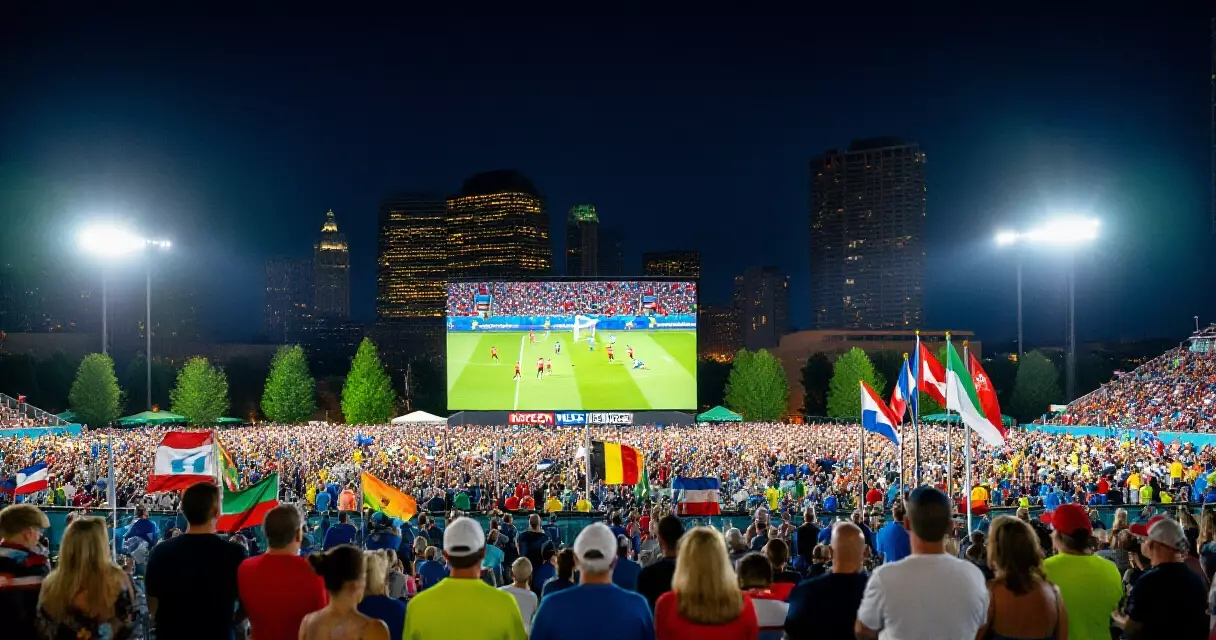
UNITED STATES — August 3, 2026 — The FIFA World Cup 2026 group-stage clash between Mexico and England on August 2 shattered U.S. television viewership records for the tournament, drawing more than 44 million viewers across all networks combined, with a staggering 23.2 million watching on Telemundo alone, according to figures reported by The Athletic on August 2, 2026. The numbers mark the most-watched group-stage match in the history of the World Cup on U.S. soil.
The fixture, played at one of the tournament’s American host venues, pitted two of the sport’s most globally recognized fanbases against each other — Mexico’s passionate diaspora across the United States and England’s enormous traveling and television support. The result was a viewership figure that now rivals audience benchmarks typically reserved for NFL playoff games and major championship bouts, reflecting just how dramatically soccer’s footprint has expanded in the United States ahead of and during this home World Cup.
Telemundo’s 23.2 Million: A Spanish-Language Broadcast Milestone
The headline number from Sunday’s fixture is the Telemundo figure. The NBCUniversal-owned Spanish-language network recorded 23.2 million viewers for the Mexico vs. England match — a number that, on its own, would have placed among the top-rated individual broadcasts on any U.S. network in recent memory. Telemundo has held Spanish-language World Cup rights in the United States for multiple cycles, and the Mexico matchup represents the ideal scenario for that investment: a must-watch game for tens of millions of Spanish-speaking fans with deep ties to the Mexican national team.
Broadcasters and sports media analysts had anticipated elevated numbers for this fixture given Mexico’s enormous U.S.-based fanbase, but the final tally exceeded pre-match projections. “This is a transformative moment for the sport in America,” one sports media analyst told AP Sports in coverage of the tournament’s audience trends. “When you combine the host-nation effect with a rivalry-adjacent matchup like Mexico-England, you get numbers that force every rights-holder to reconsider what soccer is worth in this market.”
Combined Audience Surpasses 44 Million Across All Platforms
The combined multi-platform audience — encompassing Telemundo, NBC, Peacock, and related streaming outlets — exceeded 44 million viewers in total, according to The Athletic’s August 2 report. That figure aggregates linear television, authenticated streaming, and out-of-home viewing panels. To put it in context, the 2022 FIFA World Cup final between Argentina and France drew approximately 26 million viewers in the United States — meaning a group-stage match at the 2026 tournament has already surpassed the entire audience for the sport’s most recent world championship final by a substantial margin.
The comparison underscores how hosting the tournament on home soil has unlocked a level of American engagement that broadcasters, FIFA, and commercial partners have spent years trying to cultivate. With games spread across 16 U.S. cities and kickoff times suited to American primetime and afternoon slots, the structural advantages of a domestic World Cup are now translating directly into audience records.

Match Context: England and Mexico in Group Stage Contention
The Mexico vs. England group-stage fixture carried significant implications for both sides’ advancement prospects. England entered the match as one of the tournament’s pre-competition favorites, carrying the weight of a nation that has not lifted the FIFA World Cup since 1966. Mexico, perennially competitive in the group stages, were looking to establish early momentum in a tournament played on familiar North American soil — a factor their coaching staff had cited as a strategic advantage in the buildup to the competition.
The fixture’s competitive stakes, combined with its audience demographics, made it a marquee event on the tournament calendar well before kickoff. For context on how the 2026 World Cup’s early fixtures have reshaped expectations for the competition, see our earlier coverage of the tournament’s opening round matchups and ceremony.
Viewership Figures in Context: How 2026 Compares to Prior World Cups
| Tournament / Match | U.S. Audience (approx.) | Primary Network |
|---|---|---|
| 2026 WC: Mexico vs. England (group stage) | 44 million+ | Telemundo / NBC / Peacock |
| 2022 WC Final: Argentina vs. France | ~26 million | Fox / Telemundo |
| 2018 WC Final: France vs. Croatia | ~12 million | Fox / Telemundo |
| 2014 WC: USA vs. Portugal (group stage) | ~18.2 million | ESPN / Univision |
The table above illustrates the step-change in U.S. viewership the 2026 tournament is producing. Even accounting for methodological differences in how streaming audiences are measured across different eras, the trajectory is unambiguous: hosting the World Cup in the United States has unlocked an audience tier for soccer that was previously theoretical.
What the Numbers Mean for Soccer’s U.S. Commercial Landscape
The commercial implications of a 44-million-viewer group match extend well beyond broadcast rights. Sponsorship activations tied to the tournament, merchandise sales, and the downstream effect on Major League Soccer attendances and streaming subscriptions are all expected to benefit from the amplified national attention. Sports media analysts tracking the World Cup’s commercial footprint have noted that brands that secured official FIFA partnerships ahead of the 2026 edition are seeing engagement metrics that outperform the most optimistic pre-tournament forecasts.
For broadcasters specifically, the Mexico vs. England figures will inform rights-fee negotiations for future international soccer properties in the United States. Telemundo’s exclusive Spanish-language performance is particularly significant: a single match audience of 23.2 million on one network establishes a floor for what top-tier international soccer can command in the Spanish-language market.
The tournament’s domestic staging has also intensified political and governance debates around the competition. Earlier this year, UEFA threatened to boycott the 2026 World Cup over FIFA’s plans to bring in private investors — a dispute that, while unresolved at the administrative level, has not dampened on-field competition or audience enthusiasm. The viewership records being set during the group stage suggest that whatever governance tensions exist behind the scenes, the product on the pitch is drawing fans in record numbers.
Dark Horses and Emerging Storylines to Follow
With group-stage matches continuing through early August, several other fixtures are positioned to generate significant audience numbers as the knockout rounds approach. Teams that entered the tournament as relative unknowns have, in some cases, already distinguished themselves. Our earlier analysis of the top five dark horse teams to watch at the 2026 World Cup identified several nations whose group-stage performances are now drawing broader media attention.
For U.S. sports fans tracking the statistical context behind these results, the complete football stats reference guide provides a detailed breakdown of how to read and interpret match data, possession figures, and expected-goals metrics that are increasingly central to how World Cup results are analyzed and reported.
What to Watch as the Tournament Progresses
Several factors will determine whether the viewership trajectory established by Mexico vs. England continues through the knockout rounds:
- U.S. Men’s National Team advancement: If the USMNT progresses deep into the knockout stages, host-nation matches on American soil could approach or exceed the August 2 benchmark.
- Mexico’s continued presence: Each Mexico fixture in the knockout rounds would re-engage the Spanish-language audience that drove Telemundo’s record numbers.
- England’s title run: A deep England run would maintain interest from the large Anglo-American viewership bloc that contributed to the combined 44 million figure.
- Scheduling and kickoff times: Group-stage slots that fell into U.S. primetime or weekend afternoon windows have consistently outperformed midweek morning kickoffs in past tournaments hosted outside North America.
The knockout round bracket, once confirmed, will clarify which of these scenarios are in play. The numbers reported on August 2 represent a benchmark, not a ceiling — and if the right matchups land in prime broadcast windows, the overall tournament audience could set records that stand for decades.
Related Coverage
- FIFA World Cup 2026 Opener: Key Matchups and Opening Ceremony Details
- Top 5 Dark Horse Teams to Watch at the FIFA World Cup 2026
- UEFA Threatens to Boycott 2026 World Cup Over FIFA Private Investor Plans
- Sports or Competition Reference Football: The Complete Stats Guide