Summary
✓Reviewed by Laura Bennett Competition sits at the heart of every sporting contest, yet its psychological effects on athletes remain widely misunderstood. The chapter "Ready, Steady, Go: Competition in Sport" by Maria Kavussanu, Andrew Cooke, and Marc Jones, published in...
Table of contents
- 1 What Is “Ready, Steady, Go: Competition in Sport”?
- 2 The Authors Behind the Competition in Sport Research
- 3 Types of Competition in Sport Examined in the Chapter
- 4 Competition, Performance, and Choking Under Pressure
- 5 Prosocial and Antisocial Behaviour in Competitive Sport
- 6 How This Research Connects to Competition Policy in Sport
- 7 Competition in Sport: Key Themes Compared
- 8 Competition Governance Developments in 2025 and 2026
- 9 Academic Context: Where the Chapter Fits in Sport Psychology
- 10 Relevance for Singapore’s Sporting Landscape
- 11 Competition in Sport Timeline: From Policy to Psychology
- 12 Frequently Asked Questions
- 12.1 What is “Ready, Steady, Go: Competition in Sport” about?
- 12.2 Who wrote the “Ready, Steady, Go” chapter on competition in sport?
- 12.3 Where can I find the PDF of “Ready, Steady, Go: Competition in Sport”?
- 12.4 What does “appropriate competition” mean in sport?
- 12.5 How does competition affect choking in sport?
- 12.6 How does the OECD approach competition in sport?
- 13 Key Takeaways
- 14 Sources
Competition sits at the heart of every sporting contest, yet its psychological effects on athletes remain widely misunderstood. The chapter “Ready, Steady, Go: Competition in Sport” by Maria Kavussanu, Andrew Cooke, and Marc Jones, published in The Oxford Handbook of the Psychology of Competition (2021), offers one of the most thorough academic treatments of how competition shapes performance, enjoyment, anxiety, and social behaviour among athletes. For coaches, sport scientists, and engaged fans in Singapore and beyond, understanding this research provides practical insight into why some competitors thrive under pressure while others choke.
What Is “Ready, Steady, Go: Competition in Sport”?
The paper appears as Chapter 24 in Part VI (“Competition in Context”) of The Oxford Handbook of the Psychology of Competition. According to APA PsycNet, it has been cited at least eight times in peer-reviewed literature since its publication. The authors define competition as an integral element of sport and examine how it influences a range of athlete outcomes, from peak performance and enjoyment to anxiety, choking under pressure, and both prosocial and antisocial behaviour on the field.
The chapter distinguishes between different types of competition and introduces the idea of “appropriate” competition, a concept that asks when competitive structures help athletes and when they harm them. This framework has direct relevance to youth development programmes, elite coaching environments, and the way leagues and federations design their competitive formats.
The Authors Behind the Competition in Sport Research
Maria Kavussanu is based at the School of Sport, Exercise and Rehabilitation Sciences at the University of Birmingham. Her research programme focuses on morality, motivation, and competition in sport, making her one of the most cited scholars in sport psychology on this topic. Andrew Cooke is a Senior Lecturer in Performance Psychology at Bangor University’s Institute for the Psychology of Elite Performance (IPEP), where he studies how pressure affects motor performance. Marc Jones holds a professorship in psychology at Manchester Metropolitan University, specialising in stress, emotion, and competitive performance.
Together, they bring complementary expertise: Kavussanu’s work on moral behaviour in competition, Cooke’s research on choking and pressure, and Jones’s studies on emotional regulation in high-stakes settings. The chapter benefits from this breadth, covering competition not as a single phenomenon but as a multi-faceted psychological experience that varies depending on the athlete, the sport, and the competitive structure in place.
Types of Competition in Sport Examined in the Chapter
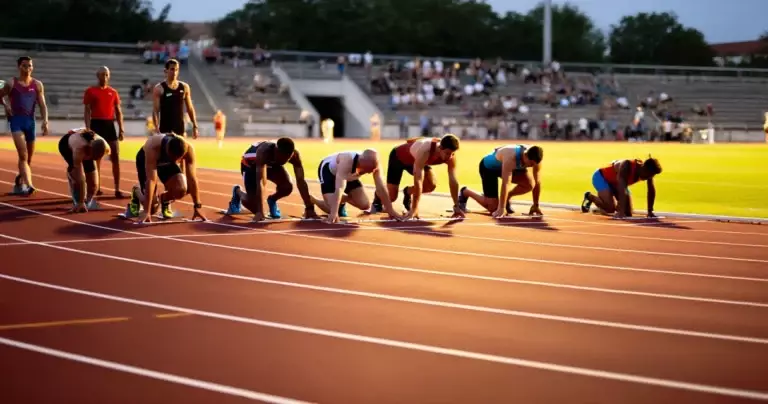
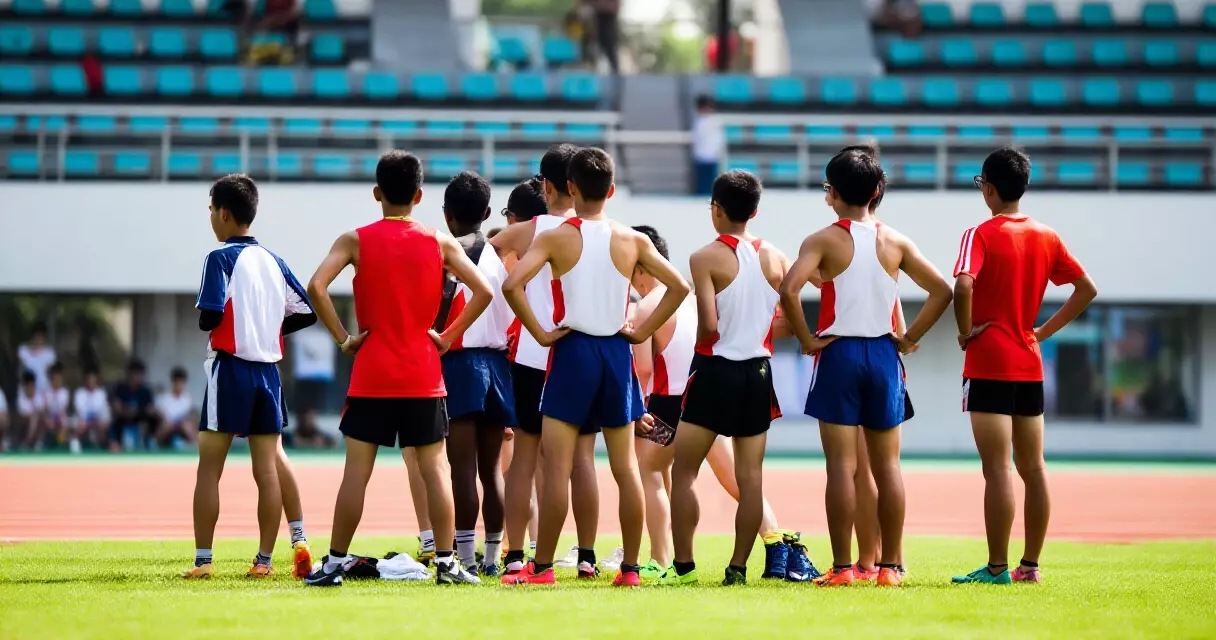
One of the central contributions of “Ready, Steady, Go: Competition in Sport” is its taxonomy of competitive types. The authors distinguish between direct competition (head-to-head contests such as tennis matches or boxing bouts), indirect competition (where athletes perform separately and are ranked against each other, as in gymnastics or athletics), and intra-team competition (where teammates compete for selection or playing time within the same squad).
Each type produces different psychological responses. Direct competition tends to heighten both arousal and anxiety, while indirect competition can reduce social-comparison pressure but increase self-referential worry. Intra-team competition, according to the chapter, can erode trust and prosocial behaviour if poorly managed, but can also sharpen performance when the coaching environment frames it constructively. These distinctions matter for coaches designing training environments and for football academies in Singapore and elsewhere that must balance development with competitive intensity.
Competition, Performance, and Choking Under Pressure
A significant portion of the chapter addresses the relationship between competition and choking. Choking in sport refers to a significant drop in performance under pressure that cannot be explained by physical factors alone. The authors review evidence showing that competitive pressure can trigger attentional shifts, where athletes move from automatic, well-practised movements to conscious, effortful control, which disrupts fluency and timing.
The chapter also examines how competition can enhance performance. Moderate competitive pressure, appropriately framed, can increase effort, focus, and enjoyment. The key variable, according to the authors, is the athlete’s appraisal of the situation: those who view competition as a challenge tend to perform better than those who perceive it as a threat. This challenge-threat framework has become one of the most active areas of sport psychology research in the years since the chapter’s publication.
Competition does not simply help or hinder performance; its effect depends on how the athlete interprets the competitive situation and whether they view it as a challenge or a threat.
Prosocial and Antisocial Behaviour in Competitive Sport
Kavussanu’s own research programme heavily informs the chapter’s discussion of moral behaviour. The authors present evidence that highly competitive environments can increase antisocial behaviour, including deliberate fouls, verbal aggression, and gamesmanship, particularly when winning is emphasised above all else. Conversely, when coaches and institutions frame competition within a broader set of values, prosocial behaviour such as helping opponents, fair play, and respect for officials can be maintained even in high-stakes matches.
This finding has practical implications for leagues and governing bodies. The chapter suggests that the structure of competition itself, not just individual character, shapes moral outcomes. Tournament formats that reward only winning, with little recognition of sportsmanship or development, tend to produce more antisocial behaviour than formats that balance competitive outcomes with process-oriented goals. The distinction resonates with ongoing discussions about what separates sport from pure competition and whether competitive integrity can coexist with athlete welfare.
How This Research Connects to Competition Policy in Sport
While Kavussanu, Cooke, and Jones focus on the psychology of individual athletes, their work intersects with broader policy questions about how sporting competitions should be structured. The OECD’s 2023 background note on Competition and Professional Sports examines how league structures, broadcasting rights, and financial regulations create competition-policy concerns at the institutional level. The OECD has been studying these issues since its 1997 roundtable on Competition Issues Related to Sports, making this one of the longest-running areas of sport governance research.
The OECD Competition Trends 2025 report, released in February 2025, tracks enforcement activity across 69 jurisdictions and reflects growing regulatory attention to how professional sport markets function. For Singapore, where Sport Singapore oversees national sport policy and competitive pathways, these international frameworks provide context for how competition structures affect both athlete welfare and market fairness.
Competition in Sport: Key Themes Compared
The table below summarises the main themes covered in “Ready, Steady, Go: Competition in Sport” alongside related policy and governance dimensions drawn from OECD publications.
| Theme | Psychological dimension (Kavussanu et al.) | Policy dimension (OECD) |
|---|---|---|
| Types of competition | Direct, indirect, intra-team | League structures, promotion/relegation formats |
| Performance effects | Challenge vs. threat appraisal; choking | Competitive balance regulations |
| Moral behaviour | Prosocial vs. antisocial conduct | Integrity rules, manipulation sanctions |
| Appropriate competition | Age- and skill-calibrated formats | Licensing requirements for competitions |
| Athlete welfare | Anxiety, enjoyment, burnout | Inclusion and accessibility mandates |
Competition Governance Developments in 2025 and 2026
Since the chapter’s publication, sport competition governance has continued to evolve. Saudi Arabia’s new Sports Law, which came into force on 11 June 2026, requires a licence from the Ministry of Sport for the management and operation of sports competitions and events. The law also grants federations authority to impose sanctions including fines, suspension from competitions, annulment of results, and withdrawal of titles. These regulatory developments reflect a global trend toward formalising competition structures through legal frameworks rather than relying solely on self-regulation by sporting bodies.
Canada updated its ten-year Canadian Sport Policy in March 2026, maintaining competition as a central pillar of national sport development. Meanwhile, the OECD’s ongoing work on competition and professional sports continues to examine how market dominance by major leagues and broadcasting monopolies can distort competitive fairness. For readers following what sports competitions are called across different governance systems, these policy shifts reshape the very definition of organised competition.
Academic Context: Where the Chapter Fits in Sport Psychology
“Ready, Steady, Go: Competition in Sport” sits within a broader academic tradition that dates back to the earliest experimental studies of social facilitation in the late nineteenth century. Norman Triplett’s 1898 study of competitive cyclists is often cited as the first experiment in sport psychology, establishing that the presence of competitors can enhance performance. The Kavussanu, Cooke, and Jones chapter updates this tradition with contemporary evidence on how competition affects not just speed or output, but the full range of psychological and moral outcomes athletes experience.
The Oxford Handbook volume places the chapter alongside related work on competition in education (Chapter 25), in the workplace, and in evolutionary contexts. This positioning underscores that competition in sport is not an isolated phenomenon but part of a broader human tendency to compare, rank, and strive against others. For sport-specific readers, the chapter’s value lies in its tight focus on athletic contexts, drawing primarily on data from team and individual sports rather than laboratory experiments with non-athlete populations.
The structure of competition itself, not just individual character, shapes whether athletes behave prosocially or antisocially on the field.
Relevance for Singapore’s Sporting Landscape
Singapore’s sport system, overseen by Sport Singapore under the Ministry of Culture, Community and Youth, faces many of the questions the chapter raises. Youth development pathways in sports such as football, swimming, and table tennis must balance competitive intensity with long-term athlete development. The chapter’s framework of “appropriate” competition offers a research-backed lens for evaluating whether junior leagues and school competitions are calibrated to promote both performance and wellbeing.
At the professional level, Singapore’s domestic leagues, including the Singapore Premier League in football and the broader sports reference ecosystem, operate within competitive structures that reflect both local governance and international norms. The OECD’s work on competition policy in professional sport is directly relevant to how these leagues negotiate broadcasting deals, manage salary caps, and maintain competitive balance across clubs with unequal resources.
Competition in Sport Timeline: From Policy to Psychology
The table below traces key milestones in the study and governance of competition in sport, from early academic work to current policy developments.
| Year | Milestone | Source |
|---|---|---|
| 1898 | Norman Triplett publishes first study of competitive performance in cyclists | American Journal of Psychology |
| 1997 | OECD Competition Committee debates competition issues in sport | OECD Roundtable |
| 2021 | Kavussanu, Cooke, and Jones publish “Ready, Steady, Go” in the Oxford Handbook | Oxford University Press |
| 2023 | OECD publishes background note on Competition and Professional Sports | OECD Competition Committee |
| 2025 | OECD Competition Trends report covers 69 jurisdictions | OECD (February 2025) |
| 2026 | Saudi Arabia’s new Sports Law introduces licensing for competitions | Saudi Ministry of Sport |
Frequently Asked Questions
What is “Ready, Steady, Go: Competition in Sport” about?
It is Chapter 24 of The Oxford Handbook of the Psychology of Competition, written by Maria Kavussanu, Andrew Cooke, and Marc Jones. The chapter reviews how competition affects athlete performance, enjoyment, anxiety, choking, and moral behaviour, and introduces the concept of “appropriate” competition.
Who wrote the “Ready, Steady, Go” chapter on competition in sport?
The three authors are Maria Kavussanu (University of Birmingham), Andrew Cooke (Bangor University), and Marc Jones (Manchester Metropolitan University). Each specialises in a different aspect of competitive sport psychology.
Where can I find the PDF of “Ready, Steady, Go: Competition in Sport”?
The chapter is available through Oxford Academic’s online platform as part of The Oxford Handbook of the Psychology of Competition. Institutional access through a university library is typically required, though some versions may be accessible via the authors’ university research repositories.
What does “appropriate competition” mean in sport?
Appropriate competition refers to competitive structures that are calibrated to the age, skill level, and developmental stage of athletes. The concept suggests that competition is not inherently good or bad; rather, its effects depend on how it is designed and framed by coaches and institutions.
How does competition affect choking in sport?
According to the chapter, competitive pressure can cause athletes to shift from automatic, well-practised movements to conscious, effortful control. This attentional shift disrupts performance fluency and is a primary mechanism behind choking. Whether an athlete chokes depends largely on whether they appraise the competition as a challenge or a threat.
How does the OECD approach competition in sport?
The OECD treats professional sport as a competition-policy issue, examining how league structures, broadcasting rights, and financial regulations affect market fairness. Its work spans from a 1997 roundtable to the 2023 background note on Competition and Professional Sports and the 2025 Competition Trends report covering 69 jurisdictions.
Key Takeaways
“Ready, Steady, Go: Competition in Sport” remains a foundational reference for understanding how competition shapes the athletic experience. Its core insight, that the effects of competition depend on its type, structure, and framing rather than on competition as a blanket concept, has practical applications for coaches, sport administrators, and policymakers. Combined with the OECD’s ongoing work on competition governance in professional sport and evolving regulatory frameworks such as Saudi Arabia’s 2026 Sports Law, the research underscores that designing competition well is as important as competing well. For Singapore’s sporting community, these findings offer an evidence-based framework for evaluating how local competitive structures serve athletes at every level, from youth academies to professional leagues.
Sources
- Ready, Steady, Go: Competition in Sport (Oxford Academic) — retrieved September 12, 2026
- Ready, Steady, Go: Competition in Sport (APA PsycNet) — retrieved September 12, 2026
- Competition Issues Related to Sports (OECD, 1997) — retrieved September 12, 2026
- Competition and Professional Sports (OECD, 2023) — retrieved September 12, 2026
- OECD Competition Trends 2025 — retrieved September 12, 2026
- Canadian Sport Policy (Government of Canada) — retrieved September 12, 2026