Summary
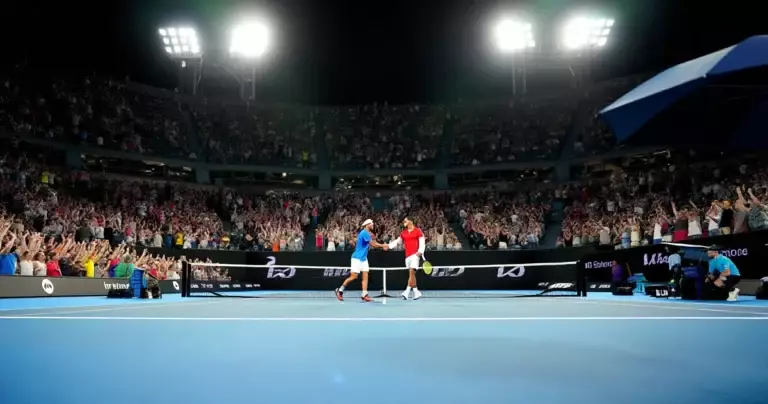
✓Reviewed by Laura Bennett When Marta Kostyuk closed out her March 2025 Miami Open victory over Anna Blinkova with an underarm serve ace on match point, the reaction was immediate and split: gasps, then cheers, then a furious social-media debate...
Table of contents
- 1 What the Rules Actually Say About the Underarm Serve
- 2 A Brief History: How the Underarm Serve Became a Flashpoint
- 3 Tennis Underarm Serve Controversy Trends: The 2025–2026 Landscape
- 4 Who Uses It and Why: Players at the Center of the Debate
- 5 The Tactical Logic Behind the Underarm Serve
- 5.1 Why Deep Returner Positioning Creates the Opportunity
- 5.2 When the Tactic Backfires Reputationally
- 6 Expert and Player Opinions: The Divide in 2025–2026
- 7 How American Tennis Culture Views the Controversy
- 8 Comparing Player Positions on the Underarm Serve: A Reference Guide
- 9 Key Incidents That Shaped Underarm Serve Controversy Trends
- 10 Where the Debate Is Heading: Normalization vs. Persistent Backlash
- 11 Frequently Asked Questions
- 11.1 Is the underarm serve legal in professional tennis?
- 11.2 Why do some players and fans consider it disrespectful?
- 11.3 Which players are most associated with the underarm serve in 2025–2026?
- 11.4 When is the underarm serve most effective tactically?
- 11.5 Has the controversy around underarm serves changed over time?
- 11.6 Do the ATP, WTA, or ITF plan to restrict the underarm serve?
- 12 Key Takeaways
- 13 Sources
When Marta Kostyuk closed out her March 2025 Miami Open victory over Anna Blinkova with an underarm serve ace on match point, the reaction was immediate and split: gasps, then cheers, then a furious social-media debate that echoed matches and arguments stretching back years. Tennis underarm serve controversy trends have shifted dramatically over the past decade — moving from near-universal outrage to a grudging, contested acceptance — yet the shot still ignites crowds and sparks post-match confrontations every time a top player deploys it on a big stage. As of August 2026, the debate is no longer about legality. It is about identity, strategy, and what professional tennis owes its audience.
What the Rules Actually Say About the Underarm Serve
The first thing any serious analysis of tennis underarm serve controversy trends must establish is this: the shot is unambiguously legal. According to the USTA’s official rules page, an underhand serve is permitted under the ITF Rules of Tennis, specifically Rule 16 governing the service motion. The only requirement is that the ball must be struck with the racquet before it hits the ground — the direction of the swing, whether upward or downward, is irrelevant to legality. Neither the ITF, the ATP, the WTA, nor the USTA has ever introduced a prohibition on the delivery method.
This matters because much of the controversy has historically been framed as a rules question when it is really an etiquette question. The distinction is important: a player who uses an underarm serve cannot be penalized, cannot be warned, and cannot be required to replay the point. Opponents who react with visible displeasure — or who publicly criticize the shot in press conferences — are responding to a social norm, not a codified standard. Understanding that gap is the starting point for understanding why the debate has evolved the way it has.
A Brief History: How the Underarm Serve Became a Flashpoint
The underarm serve is not new to professional tennis — it appeared sporadically throughout the twentieth century — but it entered modern mainstream consciousness in February 2019 when Nick Kyrgios used it against Rafael Nadal at the Acapulco International. Nadal responded by publicly accusing Kyrgios of “lacking respect” for his opponent and the crowd — a charge that resonated because Nadal is widely regarded as one of the sport’s most committed competitors. Roger Federer, in the same press environment, said that while the shot was within the rules, he personally would not use it. Those two reactions — disapproval from the sport’s most respected figures — set the tone for years of coverage that followed.
Just weeks later, Kyrgios hit two underarm serves in a single match at the 2019 Miami Open, defeating Dusan Lajovic 6–3, 6–1, according to BBC Sport’s contemporaneous report. Former British Fed Cup captain Judy Murray called Kyrgios a “genius” for the tactic and publicly wondered why more players did not follow his lead. That split — high-profile criticism on one side, genuine tactical admiration on the other — has defined the debate ever since.
Tennis Underarm Serve Controversy Trends: The 2025–2026 Landscape
By 2025 and into 2026, the tennis underarm serve controversy trends had matured in two parallel directions. On one hand, elite use of the shot had broadened: players such as Alexander Bublik and Alejandro Davidovich Fokina joined Kyrgios in deploying it as a calculated weapon rather than a desperation move. On the other, crowd reactions remained episodic and intense, particularly when the context felt opportunistic or unsympathetic. A September 2025 analysis by The Athletic noted that the shot had “transitioned from a mere trick shot to a strategic maneuver” at the elite level, with advocates pointing to its effectiveness against returners who position themselves far behind the baseline.
The most significant recent incident came in April 2026, when Jaume Munar Borges used an underarm serve against Tomás Martín Etcheverry during a professional tour match. As documented by The Athletic’s April 2026 report, the crowd reacted negatively, and the moment reignited discussion over whether the criticism directed at the shot has become outdated. The consistent pattern — legal delivery, immediate crowd disapproval, followed by a broader media debate — shows that the controversy’s structure has not changed even as elite-level tactical acceptance has grown.
Who Uses It and Why: Players at the Center of the Debate
Understanding the underarm serve controversy requires knowing which players have shaped its reputation. Nick Kyrgios remains the figure most associated with normalizing the shot at the elite level. Alexander Bublik and Alejandro Davidovich Fokina have since used it regularly, adding it to their tactical arsenals rather than reserving it for shock value. At the 2025 Miami Open, Marta Kostyuk closed out her match against Anna Blinkova with an underarm serve ace on match point — a moment that The Athletic described as sparking “the typical division of opinions” immediately after the shot landed.
Andy Murray has also experimented with the delivery. According to reporting cited by The Sun, Murray described using it as a “smart play” specifically against opponents who are standing far behind the baseline — framing it as a positional exploit rather than a disrespectful act. That contextual framing is increasingly central to how defenders of the shot argue its legitimacy: the underarm serve is most effective, and arguably most justified, when a returner has deliberately moved to a deep position to handle heavy first serves.
Corentin Moutet attracted particular criticism when he deployed the tactic against what BBC Sport reported was an injured Alexei Popyrin at the Australian Open — an instance the BBC cited as the clearest example of why the shot can “inflame reactions” even among observers who otherwise accept its legality. The injury dimension remains the most combustible element of the debate: using a surprise delivery against a physically compromised opponent strikes many fans as the line between smart tactics and poor sportsmanship.
“The underarm serve is as respectful as a drop shot” — coach Patrick Mouratoglou, as quoted by Tennis Majors
The Tactical Logic Behind the Underarm Serve
Why Deep Returner Positioning Creates the Opportunity
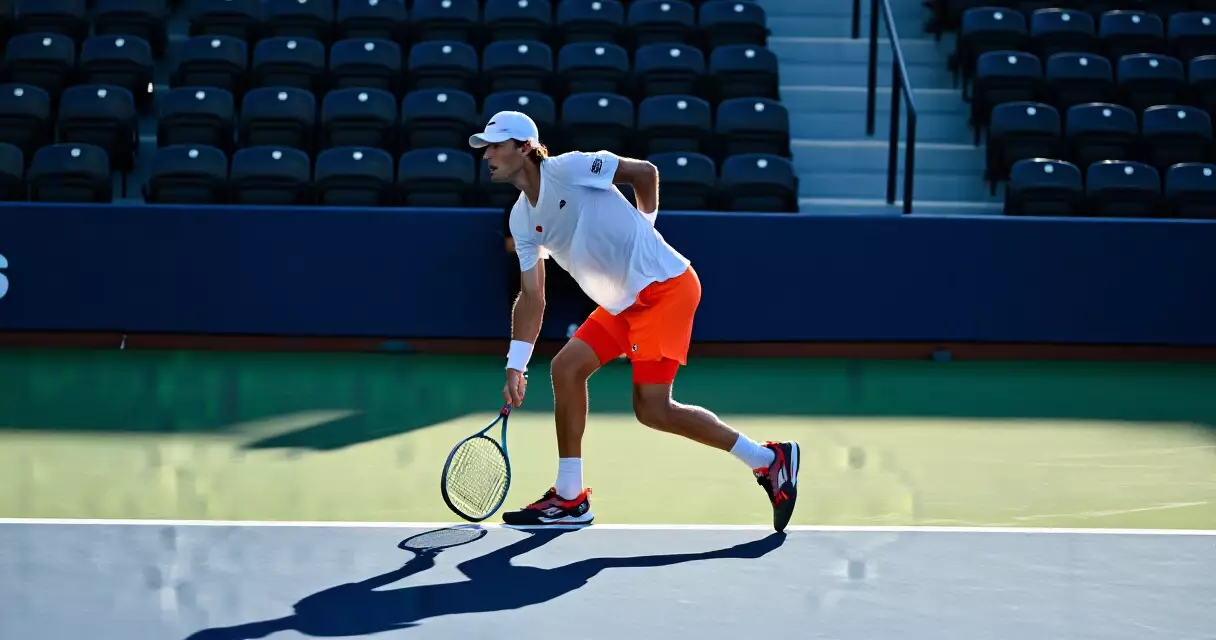
The tactical case for the underarm serve is straightforward. Modern elite returners, particularly those facing powerful servers, routinely stand a meter or more behind the baseline to give themselves additional reaction time. That positioning is itself a tactical choice — a trade-off that sacrifices court coverage on short balls in order to handle pace. An underarm serve exploits exactly that trade-off: it lands short in the service box and forces a sprint forward that a deep-standing returner is poorly positioned to win.
The element of surprise compounds the effect. Because the delivery is rare and unusual in appearance — the server’s motion reads as a normal stance and then produces an unexpectedly soft shot — returners who are not anticipating it have almost no time to adjust their weight forward. On a first serve, when the returner’s priming reaction is oriented toward pace, the mismatch in expectation is at its highest.
When the Tactic Backfires Reputationally
The tactical case becomes clouded when context is unfavorable. Using the shot on an early break in the first set, against a fully healthy opponent who simply happens to stand deep, reads as opportunistic. Using it against an opponent dealing with a visible injury reads as cynical. The Independent’s analysis, citing Ivan Lendl’s public defense of the shot, noted that American player Mackenzie McDonald acknowledged its legitimacy while also saying he personally lacked the “guts” to use it in competition — a telling admission that even tactically curious players can feel the social weight of the shot’s reputation.
Expert and Player Opinions: The Divide in 2025–2026
The range of expert opinion on underarm serve use reflects the broader split in tennis culture. Coach Patrick Mouratoglou stated on Instagram, as quoted by Tennis Majors, that the shot is “as respectful as a drop shot” — arguing that it is simply a legal variation with a tactical purpose, no different morally from any other low-percentage surprise play. Judy Murray used the word “genius” when describing Kyrgios’s deployment of it, expressing surprise that more professionals had not adopted the tactic.
On the other side, Rafael Nadal called it “a bad tactic” and “lacking respect,” as reported by multiple outlets covering the 2019 Acapulco incident. That framing — which ties the shot to respect rather than rules — reflects a traditional view in which professional tennis is understood to carry obligations beyond the written code. The BBC’s 2025 report on tennis etiquette placed the underarm serve discussion alongside debates over net-cord apologies and body shots, suggesting that the sport is in a broader renegotiation of what its unwritten norms should look like in an era of professional tactics-first play.
“More players are starting to do it, but it’s not the right thing to do” — American pro Mackenzie McDonald, as cited in The Independent’s analysis of Ivan Lendl’s defense of the underarm serve
How American Tennis Culture Views the Controversy
The U.S. tennis market offers a specific lens on this debate. According to the BBC’s 2025 coverage of tennis etiquette trends, American players and fans are, in some respects, less rigid about certain unwritten norms — failing to apologize for a net cord, for instance, is more culturally acceptable in U.S. tennis than in some other traditions. That relative flexibility might suggest a more permissive American attitude toward the underarm serve, but public reaction data does not clearly support that inference: the shot generates debate in U.S. media and among American fans much as it does elsewhere.
What is more specifically American is the influence of major-tournament staging. When controversial underarm serves happen at the U.S. Open in New York, or at the Miami Open — which has a large and vocal American fan presence — the crowd reaction spreads immediately through U.S. sports media. The September 2025 BBC report directly referenced the “electric New York energy” of U.S. Open crowds as an amplifier of the etiquette debate, noting that the charged atmosphere makes every on-court behavioral choice more visible and more contested. For anyone tracking Wimbledon coverage, our analysis of 2026 Wimbledon favorites offers relevant context on how grass-court tournament dynamics differ from the U.S. hard-court environment where underarm serves tend to generate the most coverage.
Comparing Player Positions on the Underarm Serve: A Reference Guide
The following table summarizes publicly stated positions from prominent figures in the underarm serve debate, drawn from sourced reporting across 2019–2026.
| Player / Figure | Position on Underarm Serve | Quoted Context | Source |
|---|---|---|---|
| Nick Kyrgios | Active advocate; uses it regularly | Used twice vs. Lajovic (Miami Open 2019) and vs. Nadal (Acapulco 2019) | BBC Sport |
| Alexander Bublik | Regular user; frames it as tactical | Cited among players who have “added it as a weapon” to their arsenal | Tennis Majors |
| Rafael Nadal | Opposed; calls it “a bad tactic” and disrespectful | Post-match comments after 2019 Acapulco incident | BBC Sport / Indian Express |
| Andy Murray | Conditional supporter; “smart play” in right context | Said he would use it against opponents standing far behind baseline | The Sun |
| Patrick Mouratoglou | Defender; equates it to a drop shot | “As respectful as a drop shot” via Instagram post | Tennis Majors |
| Judy Murray | Enthusiastic supporter; called Kyrgios a “genius” | BBC interview following 2019 Miami Open | BBC Sport |
| Ivan Lendl | Defender; argues critics should reconsider | Featured in Independent analysis: “Lendl’s OK with underarm serves” | The Independent |
| Mackenzie McDonald | Accepts legality; personally reluctant | “It’s not the right thing to do” — personal standard, not rules objection | The Independent |
Key Incidents That Shaped Underarm Serve Controversy Trends
Tracing the arc of underarm serve controversy trends requires a chronological look at the incidents that moved public and media opinion.
| Date | Match / Event | Player(s) | Significance | Source |
|---|---|---|---|---|
| Feb 2019 | Acapulco International | Kyrgios vs. Nadal | Ignited modern mainstream debate; Nadal’s “lacking respect” comment widely cited | BBC / Indian Express |
| Mar 2019 | Miami Open | Kyrgios vs. Lajovic (6–3, 6–1) | Two underarm serves in one match; Judy Murray calls Kyrgios a “genius” | BBC Sport |
| 2022 | Wimbledon | Andy Murray vs. James Duckworth | High-profile player beyond Kyrgios normalizes the shot; “smart play” framing enters discourse | The Sun |
| Mar 2025 | Miami Open (WTA) | Kostyuk vs. Blinkova | Underarm ace on match point; women’s tour prominence signals broader normalization | The Athletic |
| 2025 | Australian Open | Moutet vs. Popyrin (injured) | Injury-context use; most-criticized modern example; BBC cites it as why backlash persists | BBC Sport |
| Apr 2026 | ATP Tour match | Borges vs. Etcheverry | Crowd backlash reignites debate; The Athletic frames criticism as increasingly outdated | The Athletic |
Where the Debate Is Heading: Normalization vs. Persistent Backlash
The trajectory of tennis underarm serve controversy trends as of August 2026 points toward increasing tactical acceptance at the elite level — but not toward the disappearance of controversy. The shot is appearing more frequently, being used by more players, and being framed by prominent coaches and commentators as simply another legal delivery. At the same time, the incidents that generate the most backlash (use against injured opponents, use in moments perceived as humiliating) continue to produce the same visceral crowd reactions they always have.
What has genuinely changed is the media framing. Outlets that once led with moral condemnation are now more likely to lead with tactical analysis, acknowledging the shot’s strategic logic before weighing its social cost. That shift in framing — visible in The Athletic’s 2025 and 2026 coverage — reflects a broader evolution in sports journalism toward tactics-first reporting. For context on how analytical framing has changed across sports coverage more broadly, the rise of match report analytics in modern football journalism offers a useful parallel.
The governing bodies have shown no inclination to intervene. Neither the ITF nor the ATP nor the WTA has proposed restricting underarm serves, and the USTA’s guidance page simply confirms the shot’s legality without qualifications. Given the absence of any institutional push to ban or limit it, the debate will continue to be resolved match by match, crowd by crowd, and post-match press conference by press conference — exactly as it has been since 2019.
Frequently Asked Questions
Is the underarm serve legal in professional tennis?
Yes, the underarm serve is completely legal under ITF Rule 16, which governs the service motion. The USTA confirms on its official rules page that as long as the ball is struck before it hits the ground, the direction of the swing is irrelevant. No professional governing body — ATP, WTA, or ITF — has proposed a ban or restriction.
Why do some players and fans consider it disrespectful?
The criticism centers on the element of surprise and the perception that the shot circumvents the expected contest of athleticism. Critics, including Rafael Nadal, have argued it “lacks respect” for the opponent and audience. When used against an injured player, the objection is strongest — the tactical advantage of exploiting a deep return position disappears, leaving only the advantage of surprise against someone who cannot respond normally.
Which players are most associated with the underarm serve in 2025–2026?
Nick Kyrgios is the player most responsible for bringing the shot into mainstream debate, but Alexander Bublik and Alejandro Davidovich Fokina have used it regularly as a tactical weapon. Marta Kostyuk drew significant attention for using it as an ace on match point at the 2025 Miami Open. Andy Murray has also deployed it at Wimbledon and discussed it publicly as a situational tool.
When is the underarm serve most effective tactically?
The shot is most effective when a returner is positioned unusually far behind the baseline — a stance adopted to handle heavy first serves. The underarm delivery’s short bounce lands near the service line, forcing the returner to sprint forward from a severely disadvantaged starting position. The first time it is used in a match, the surprise amplifies its effectiveness; after that, the element of anticipation diminishes some of the advantage.
Has the controversy around underarm serves changed over time?
Significantly. In 2019, the dominant media framing was moral: the shot was widely described as unsporting, controversial, or disrespectful. By 2025–2026, according to The Athletic’s reporting, the dominant framing had shifted to tactical analysis: the shot is increasingly described as a legitimate strategic option with a specific situational application. Moral objections have not disappeared — they still appear whenever a high-profile incident occurs — but they are no longer the opening frame for most coverage.
Do the ATP, WTA, or ITF plan to restrict the underarm serve?
As of August 2026, there are no reported proposals from any governing body to restrict, penalize, or ban the underarm serve. The ITF’s service rules have not been amended to address the controversy, and official guidance from the USTA simply confirms the shot’s legality under existing rules. All indications are that the governing bodies view this as an etiquette matter rather than a rules matter.
Key Takeaways
- The underarm serve is legal under ITF Rule 16; the USTA confirms this explicitly on its official platform
- The controversy is about social norms, not rules — no governing body has proposed restricting it
- Nick Kyrgios normalized the shot at elite level starting in 2019; Alexander Bublik, Alejandro Davidovich Fokina, and others have since adopted it
- The strongest backlash occurs when the shot targets an injured opponent, where the tactical justification largely disappears
- Media framing shifted from moral condemnation to tactical analysis between 2019 and 2026, per The Athletic’s reporting
- The debate now sits within a broader tennis etiquette renegotiation that includes net-cord apologies and body shots
- Governing bodies have shown no interest in intervening; the controversy will continue to be resolved socially rather than institutionally
For broader context on how specific tennis tournaments shape these conversations, our coverage of Wimbledon 2026 favorites and the French Open 2026 final results covers the high-stakes environments where underarm serve incidents attract the most attention.
Sources
- USTA: Is the Underhand Serve Allowed? — Retrieved August 12, 2026
- BBC Sport: Nick Kyrgios a genius for underarm serve tactics, says Judy Murray — Retrieved August 12, 2026
- BBC Sport: Electric New York energy reignites etiquette debate — Retrieved August 12, 2026
- The Athletic: The underarm tennis serve — April 2026 tactic controversy — Retrieved August 12, 2026
- The Athletic: Tennis and the underarm serve — Kostyuk vs. Blinkova, March 2025 — Retrieved August 12, 2026
- The Athletic: Is the best tennis serve technique now halfway between overarm and underarm? — September 2025 — Retrieved August 12, 2026
- The Independent: Analysis — Lendl’s OK with underarm serves; we should be, too — Retrieved August 12, 2026