Summary
The UEFA Champions League Final draws a global television audience exceeding 450 million viewers each year, according to UEFA's own broadcast data, placing it alongside the Super Bowl and the Olympic 100-metre final among the planet's most-watched single sporting events....
Table of contents
- 1 What Is the UEFA Champions League Final?
- 2 A Brief History of the Champions League Final
- 3 How the Final Works: Format, Rules, and Tiebreakers
- 4 Where and When the Final Is Played
- 5 How to Watch the Champions League Final in the United States
- 6 Attending the Final: Tickets and What to Expect
- 7 The Trophy, Medals, and Ceremony
- 8 Prize Money: What the Winners Earn
- 9 Frequently Asked Questions About the Champions League Final
- 9.1 Is the Champions League Final always a single match, or can it be two legs?
- 9.2 What happens if the final ends in a draw after 90 minutes?
- 9.3 What time does the Champions League Final start for U.S. viewers?
- 9.4 Which team has won the most Champions League Finals?
- 9.5 Where can I buy legitimate tickets for the Champions League Final?
- 9.6 Can I watch the Champions League Final for free in the U.S.?
- 9.7 How does the new league phase format affect the road to the final?
- 9.8 What is the Champions League trophy called, and what does the winner receive?
- 10 Sources
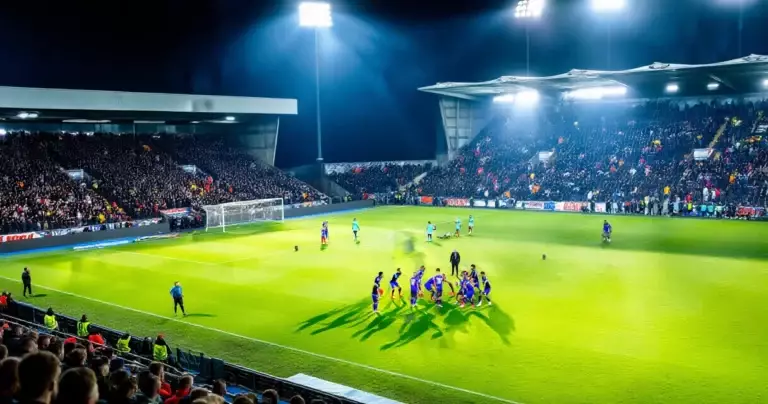
The UEFA Champions League Final draws a global television audience exceeding 450 million viewers each year, according to UEFA’s own broadcast data, placing it alongside the Super Bowl and the Olympic 100-metre final among the planet’s most-watched single sporting events. For American fans wondering how the showpiece works, who can win it, and where to find it on a Saturday afternoon, the answers are simpler than the occasion’s scale suggests.
What Is the UEFA Champions League Final?
Europe’s premier club football tournament culminates in a single showpiece match each season. Thirty-six clubs compete through a league phase and a knockout bracket, and the two survivors meet at one neutral venue to decide who lifts the trophy. UEFA, the Union of European Football Associations, organises the event and selects the host city several years in advance, giving the chosen location time to prepare infrastructure, security, and fan hospitality.
Unlike every other round in the Champions League knockout stage, the final uses no home-and-away format. There is no second leg, no aggregate score, and no advantage for finishing higher in the earlier rounds. The two clubs enter as equals, and the team that scores more goals over 90 minutes wins the trophy outright.
For current standings and results from the ongoing campaign, the UEFA Champions League matches hub is updated after every match day throughout the season.
A Brief History of the Champions League Final
The competition began as the European Cup in 1955, and Real Madrid dominated the early years, claiming the first five editions in a row. From the outset, the final was contested at a single neutral venue, setting it apart from most continental knockout football of the era. Early editions featured clubs from smaller markets that would rarely reach the showpiece today, but the single-match final quickly became the template for elite club competition worldwide.
UEFA rebranded the tournament as the UEFA Champions League for the 1992-93 season, introducing a group stage, expanding broadcast rights deals dramatically, and attracting clubs from Spain, England, Germany, and Italy backed by far greater financial resources. According to Wikipedia’s historical record of the UEFA Champions League Final, the showpiece has been held in 25 different countries, reflecting how deliberately UEFA has spread the event across its member associations over the decades.
Several finals have become cultural touchstones. Manchester United’s injury-time comeback against Bayern Munich in Barcelona in 1999, Liverpool’s penalty-shoot-out recovery from 3-0 down against AC Milan in Istanbul in 2005, and Real Madrid’s late equaliser against Atlético Madrid in Lisbon in 2014 are among the most discussed nights the sport has produced. Our rundown of the 25 best Champions League matches ever played covers each of those moments in depth.
How the Final Works: Format, Rules, and Tiebreakers
The match structure is straightforward, though the rules differ from the knockout rounds that precede it in important ways.
Regulation time. Two teams play a standard 90-minute match, including stoppage time added by the referee at the end of each half. The team with more goals at the final whistle wins the trophy.
Extra time. If scores are level after 90 minutes, two additional 15-minute periods follow, played in full regardless of whether a goal is scored. The so-called “golden goal” rule, which ended matches the instant extra-time goals were scored, has not been used in European competition since 2004. A team leading at the end of 30 minutes of extra time wins.
Penalty shoot-out. Should scores remain level after 120 minutes, a shoot-out decides the champion. Each side nominates five penalty takers who alternate kicks at goal. If the shoot-out is tied after five kicks each, it continues on a sudden-death basis until one team scores and the other misses. The 2022-23 final between Manchester City and Inter Milan in Istanbul was settled in regulation time – a 1-0 City win – but a shoot-out is always one equaliser away from becoming the deciding factor.
No away goals. UEFA abolished the away-goals rule across all its competitions from the 2021-22 season onward. In the final, played at a neutral venue, the rule was never applicable, but its removal confirms that penalties are the only tiebreaker available once extra time is exhausted.
The Champions League Final is the only match in European football where there is no second chance: one game, one trophy, no next week.
Where and When the Final Is Played
UEFA selects host cities and stadiums several years in advance through a formal bidding process. Cities submit detailed plans covering stadium capacity, transport links, fan-zone facilities, and security arrangements, and UEFA’s executive committee votes on the winning bid. This lead time allows local organisers to prepare properly for the influx of tens of thousands of travelling supporters.
Kick-off is set at 21:00 Central European Time (CET), which converts to 3:00 p.m. Eastern / 2:00 p.m. Central / 1:00 p.m. Mountain / 12:00 p.m. Pacific for U.S. viewers. The final is held on a Saturday in late May, giving most American fans a weekend afternoon slot with no late-night commitment. Our Champions League match schedule page is updated throughout each season with confirmed dates and kick-off times as UEFA announces them.
| Season | Venue | City | Result |
|---|---|---|---|
| 2019–20 | Estádio da Luz | Lisbon, Portugal | Bayern Munich 1–0 PSG |
| 2020–21 | Estádio do Dragão | Porto, Portugal | Chelsea 1–0 Man City |
| 2021–22 | Stade de France | Paris, France | Real Madrid 1–0 Liverpool |
| 2022–23 | Atatürk Olympic Stadium | Istanbul, Turkey | Man City 1–0 Inter Milan |
| 2023–24 | Wembley Stadium | London, England | Real Madrid 2–0 Dortmund |
How to Watch the Champions League Final in the United States
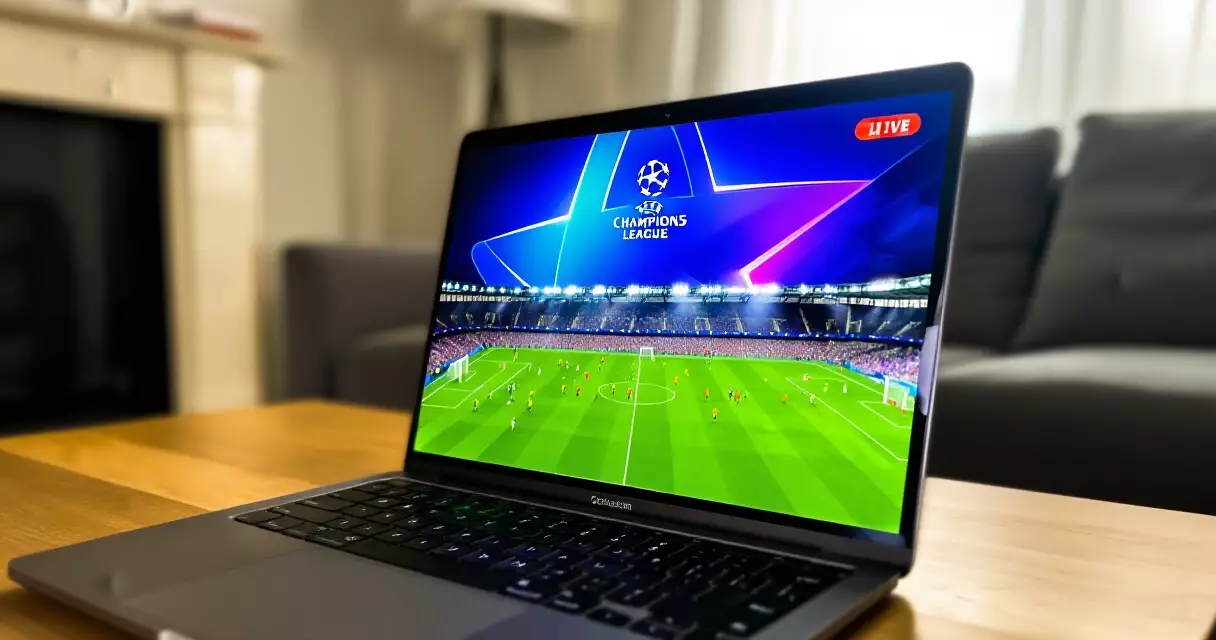
CBS Sports and its streaming platform Paramount+ hold exclusive U.S. broadcast rights for the UEFA Champions League through at least 2027, covering every match including the final. Spanish-language coverage runs on UniMás and TUDN. Our full guide to watching Champions League matches in the U.S. explains exactly which subscription tier you need and which games are available free of charge.
| Platform | Language | Access Type | Notes |
|---|---|---|---|
| CBS Sports (linear) | English | Cable or satellite subscription | Broadcasts most finals; check local listings |
| Paramount+ | English | Streaming subscription | Essential and Pro tiers both carry the final |
| UniMás | Spanish | Free over-the-air | Available in most major U.S. markets |
| TUDN | Spanish | Cable + streaming | Also available via FuboTV and Sling |
That 21:00 CET start means U.S. viewers tune in at 3:00 p.m. ET on a typically sunny Saturday afternoon – a far friendlier window than most prime-time European kickoffs during the regular season. If your stream drops mid-match, our troubleshooting guide for Champions League stream problems covers the most common fixes, from blackout issues to buffer loops.
Attending the Final: Tickets and What to Expect
Tickets for the Champions League Final rank among the most sought-after in global sport. Demand from two sets of supporters far outstrips supply from a single stadium. UEFA distributes seats through four main channels:
- Club allocations. Each finalist receives approximately 20,000 tickets for their supporters, with the precise figure adjusted to the host stadium’s capacity.
- Commercial partners. UEFA’s sponsors and official partners receive an allocation as part of their agreements with the governing body.
- General public ballot. A limited number of tickets go to registered fans worldwide via a draw on UEFA’s official website. Registration typically opens several months before the final.
- National associations. UEFA’s member associations each receive a small allocation for fans in their territory.
Face-value prices range from around €70 for the cheapest category to €600 or more for premium seats, based on UEFA’s tiered pricing structure used at recent finals. Secondary market prices routinely run several times higher once demand from both sets of supporters enters the resale market. Before purchasing from a third party, read our guide on how to buy Champions League tickets safely, which explains what to look for and which resale platforms carry UEFA’s endorsement.
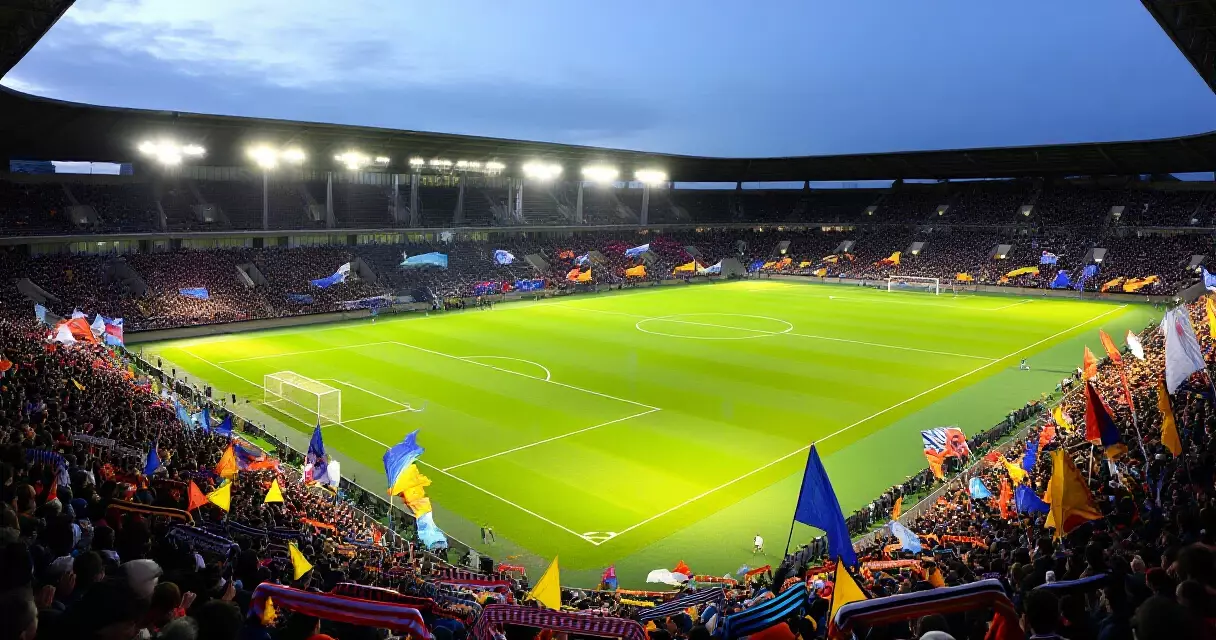
The match-day experience extends well beyond 90 minutes. UEFA organises a fan festival in the host city for several days before the final, with live music, merchandise, and appearances from former players. On the day itself, stadium gates typically open two hours before kick-off. A pre-match ceremony – which has historically featured headline music acts performing on the pitch – begins around 45 minutes before the referee’s whistle.
The Trophy, Medals, and Ceremony
The UEFA Champions League trophy, formally called the “Coupe des clubs champions européens,” is one of football’s most recognisable pieces of silverware. Standing 73.5 cm tall and weighing approximately 8 kg, it features two large handles on either side – the source of its widespread informal nickname, “Big Ears.” Winning clubs receive a full-size permanent replica to keep, while the original rotates each year to the new champion.
Players on both the winning and losing squads receive medals: gold for the champions, silver for the runners-up. Not every player who appeared for a club during the season is automatically eligible; UEFA determines medal eligibility based on the squad registered for the knockout phase, so players who joined after the registration deadline may not qualify.
After the final whistle, UEFA assembles a presentation podium on the pitch. A brief ceremony follows, with officials and VIP guests in attendance. The winning captain lifts the trophy to begin the celebration, and post-match press conferences with managers and key players typically fill the hour that follows. Broadcast coverage on CBS Sports and Paramount+ in the U.S. carries medal presentations and fan reactions live.
Each winning club keeps a full-size replica of the trophy permanently, but the right to hold the original for one season is the prize every player and manager truly covets.
Prize Money: What the Winners Earn
The prize pool for the UEFA Champions League has risen steadily as broadcast rights values have grown. For the 2023-24 season, UEFA confirmed a total competition-wide prize pool of approximately €2.03 billion, with the winning club earning around €20 million specifically for lifting the trophy – on top of payments accumulated throughout the campaign for each match played and won.
A club that navigates from the league phase all the way to the final and wins can realistically collect between €80 million and €130 million across the full season, once starting bonuses, per-match performance payments, and the market pool – which distributes funds based on the size of the broadcast market in each club’s home country – are all counted. According to BBC Sport’s coverage of UEFA’s financial distribution, the difference between winning and losing the final alone can reach €15–20 million in direct prize money.
For a breakdown of how the statistics that drive performance bonuses are calculated and where to find them for each round, visit our Champions League match stats guide.
Frequently Asked Questions About the Champions League Final
Is the Champions League Final always a single match, or can it be two legs?
The final is always a single match at a pre-selected neutral venue. This structure has been in place since the European Cup’s earliest editions and has not changed through any subsequent rebrand or format revision. All preceding knockout rounds – the round of 16, quarter-finals, and semi-finals – use a two-legged home-and-away format, but the final abandons that structure so neither club holds a geographical advantage. A single match also concentrates global commercial and broadcasting interest into one event, which is central to UEFA’s rights strategy. For a full explanation of how the earlier rounds differ, our article on Champions League knockout stage rules covers the two-leg format and aggregate tiebreaker sequence in detail.
What happens if the final ends in a draw after 90 minutes?
A draw after regulation time triggers two additional 15-minute periods of extra time, played in full even if a goal is scored in the first period. If the score is still level after 120 minutes, the match is decided by a penalty shoot-out. Each team nominates five penalty takers who alternate kicks at goal. If both sides are still tied after five attempts each, the shoot-out moves to sudden death, where each pair of kicks is decisive. There is no replay, no coin toss, and no away-goals rule as a fallback. UEFA confirmed the removal of the away-goals rule across all club competitions from 2021-22 onward, as reported by The Guardian in June 2021. In a final played at a neutral venue, that rule was never applicable anyway, but its abolition confirmed that penalties are the only tiebreaker once extra time is exhausted.
What time does the Champions League Final start for U.S. viewers?
UEFA sets the final at 21:00 Central European Time, which translates to 3:00 p.m. Eastern, 2:00 p.m. Central, 1:00 p.m. Mountain, and 12:00 p.m. Pacific. The match is held on a Saturday in late May, so most American fans can watch live without adjusting their schedule significantly. Pre-match programming on CBS Sports typically begins 60 to 90 minutes before kick-off, with team news, punditry, and coverage of the pre-match ceremony from the stadium. Exact dates for each season’s final are confirmed on our Champions League schedule page as soon as UEFA makes them official.
Which team has won the most Champions League Finals?
Real Madrid hold the all-time record with 15 Champions League and European Cup titles. Their run spans the competition’s very first edition in 1956 through to their most recent triumph at Wembley in June 2024, a 2-0 victory over Borussia Dortmund with goals from Dani Carvajal and Vinicius Jr. AC Milan are second all-time with seven titles, followed by Liverpool and Bayern Munich with six each, and Barcelona with five. Spain’s clubs have historically dominated the showpiece: Real Madrid and Barcelona alone account for 20 of the 69 total titles awarded since the European Cup began, according to Wikipedia’s historical record of the competition.
Where can I buy legitimate tickets for the Champions League Final?
Tickets are distributed through UEFA’s official channels: club allocations for fans of each finalist, a public ballot run on UEFA’s website at uefa.com, a small share for national associations, and the portion retained for commercial partners. The public ballot opens several months before the final and registration is free. Purchasing from unlicensed third-party resellers carries a real risk of counterfeit tickets, inflated prices, and no recourse if something goes wrong on match day. UEFA’s officially endorsed ticket exchange is the only secondary marketplace it sanctions. Our guide to buying Champions League tickets safely walks through the full process, including how to register for the ballot and how to verify that a resale platform is UEFA-approved.
Can I watch the Champions League Final for free in the U.S.?
CBS Sports’ linear channel broadcasts the final and is accessible with a cable or satellite subscription. Viewers subscribed to a live TV streaming service that carries CBS – such as YouTube TV, Hulu + Live TV, or FuboTV – can also watch without an additional Paramount+ account. Paramount+ is the dedicated streaming home and requires a paid subscription, though promotional free trials are sometimes available. Free, unauthorised streams are legally risky and frequently unreliable, especially during a final when traffic spikes sharply at kick-off. Our article on watching Champions League matches free legally explains every genuinely free option and the practical risks that come with unofficial alternatives.
How does the new league phase format affect the road to the final?
Starting with the 2024-25 season, UEFA replaced the old group stage with a 36-team league phase in which every club plays eight matches against varied opponents. Clubs finishing in the top eight of the league phase qualify directly for the round of 16; those finishing 9th through 24th enter a two-legged play-off round; clubs finishing 25th or lower are eliminated. This change, covered in detail in our article on the league phase vs group stage format shift, means the road to the final is longer and more demanding for any club without a top-eight finish. The final itself remains unchanged: one match, one venue, extra time and penalties if needed.
What is the Champions League trophy called, and what does the winner receive?
The official name is the “Coupe des clubs champions européens,” reflecting the French-language origins of the competition’s founding documents from the 1950s. Fans and commentators almost universally call it the Champions League trophy or “Big Ears,” a reference to the distinctive large handles on either side of the silver cup. The trophy stands 73.5 cm tall and weighs approximately 8 kg. Each winning club receives a full-size replica to keep permanently; UEFA retains the original, which is presented to the new champion each year and returned the following season. Winning players receive gold medals based on squad eligibility rules determined by UEFA for each knockout phase. The right to display the UEFA Champions League winner banner and to use the trophy in club branding also transfers to the new champions for the following twelve months.
Sources
- UEFA official website – https://www.uefa.com
- Wikipedia: UEFA Champions League Final – https://en.wikipedia.org/wiki/UEFA_Champions_League_Final
- BBC Sport – https://www.bbc.com/sport/football
- The Guardian: Away goals rule abolished – https://www.theguardian.com/football/2021/jun/24/away-goals-rule-to-be-abolished-in-all-uefa-club-competitions
Cricket Match Scorecards: Test, ODI & T20 Results Database