Summary
✓Reviewed by Laura Bennett Esports — organized, competitive video gaming contested by individuals and teams in structured leagues and tournaments — has grown from a niche hobby into one of the fastest-expanding entertainment industries in the United States. As of...
Table of contents
- 1 What Are Esports? A Clear Definition
- 2 A Brief History: How Esports Grew Into a Global Industry
- 3 How Big Is the U.S. Esports Market in 2026?
- 4 The Games That Define Esports Competition
- 5 How Esports Makes Money: Revenue Streams Explained
- 5.1 Sponsorship
- 5.2 Media Rights and Streaming
- 5.3 Prize Pools and Publisher Investment
- 6 American Players and the Prize Money Landscape
- 7 Esports vs. Traditional Sports: How the Comparison Holds Up
- 8 Esports Viewership: Who Watches and How
- 9 Esports in Context: What the Data Doesn’t Tell You
- 10 Esports and Traditional Sports Journalism: Where They Intersect
- 11 Frequently Asked Questions About Esports
- 11.1 What is the difference between gaming and esports?
- 11.2 How much money do esports players earn?
- 11.3 Is esports considered a real sport?
- 11.4 Which esports game has the largest prize pool?
- 11.5 Can you get a college scholarship for esports in the United States?
- 11.6 How is esports viewership measured?
- 12 Sources
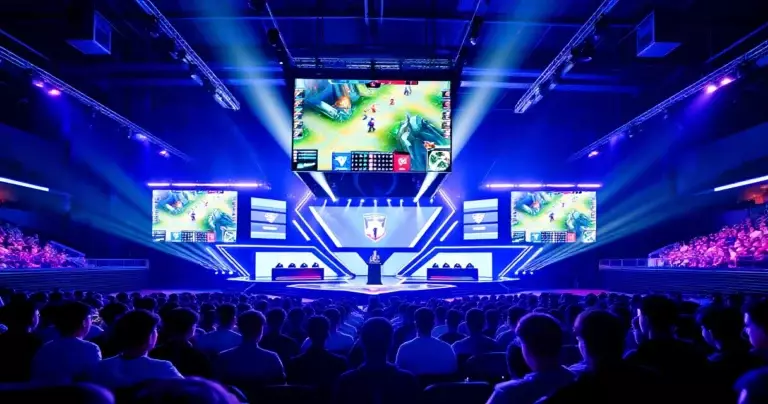
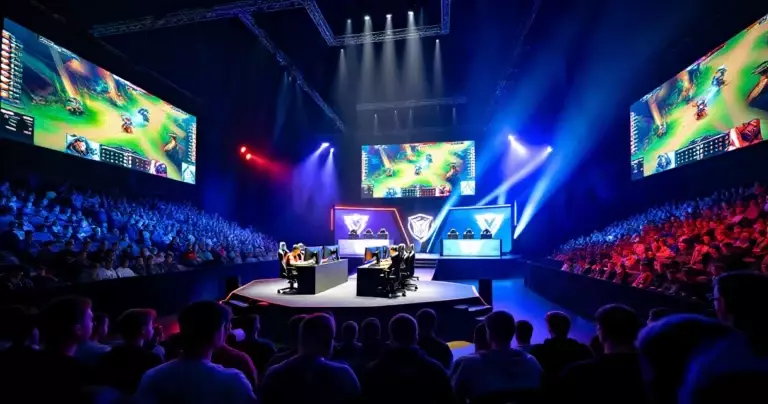
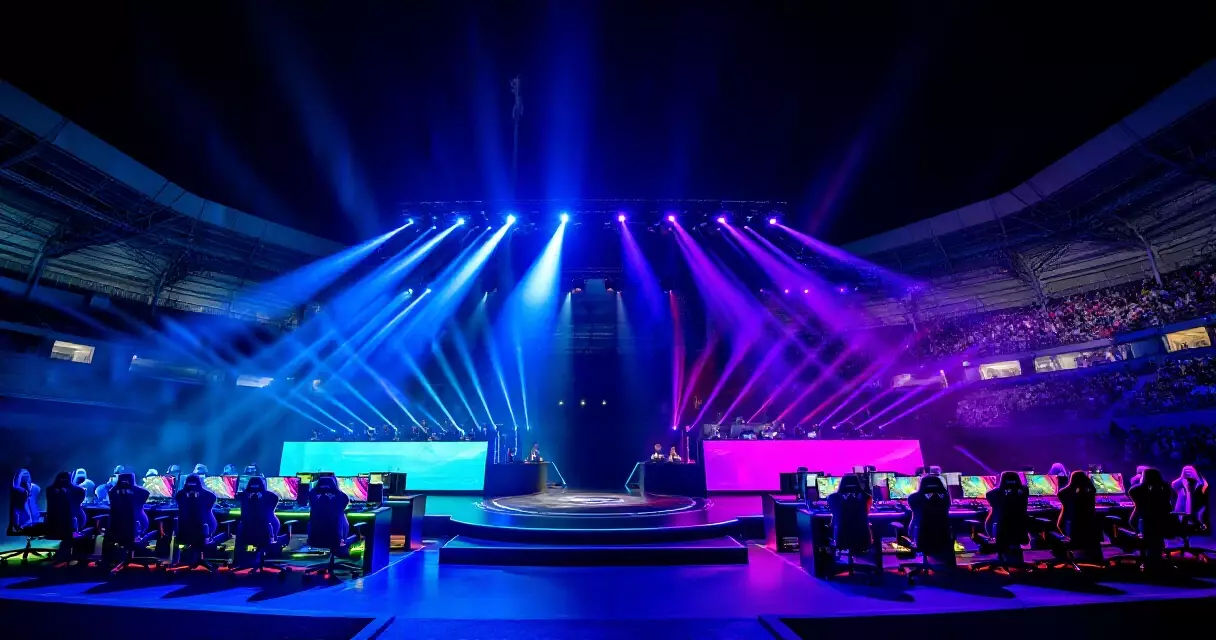
Esports — organized, competitive video gaming contested by individuals and teams in structured leagues and tournaments — has grown from a niche hobby into one of the fastest-expanding entertainment industries in the United States. As of August 2026, the U.S. esports market is on a trajectory that most traditional sports leagues would envy, with prize pools measured in the tens of millions, over 29,000 American players who have earned competitive prize money, and a broadcast audience that now rivals major cable television events.
What Are Esports? A Clear Definition
The term esports (sometimes written as e sports or electronic sports) refers to multiplayer video game competitions played at a professional or semi-professional level, in front of a live or online audience. Unlike casual gaming, esports involves structured formats — regular seasons, bracket-style knockout rounds, referee oversight, and contracted players who train full-time. Games range from first-person shooters such as Counter-Strike 2 and Valorant, to real-time strategy titles, battle royale games like Fortnite, and sports simulations. The defining feature is competition: players or teams compete for rankings, prize money, trophies, and in some cases Olympic qualification.
A common question is whether esports is a “real” sport. Most sports governing bodies now treat it as a competitive discipline rather than pure entertainment, and the Entertainment Software Association documents how deeply gaming — the broader ecosystem that feeds esports — is embedded in the American economy, supporting more than 250,000 jobs and generating $95.8 billion in total economic impact.
A Brief History: How Esports Grew Into a Global Industry
Competitive gaming traces its roots to the early 1970s, when Stanford University hosted one of the first documented video game tournaments in 1972 for the game Spacewar!. The modern esports era began in earnest in the late 1990s with the formation of professional StarCraft leagues in South Korea and the launch of the Cyberathlete Professional League in the United States. The 2010s saw the explosion of streaming platforms and game publishers investing directly in league infrastructure — Riot Games launched the League of Legends Championship Series in North America in 2013, and Activision Blizzard introduced the franchised Overwatch League in 2018. By the mid-2020s, the industry had matured past its “hyper-growth at any cost” phase into one focused on sustainable monetization through sponsorship, media rights, and ticket sales.
How Big Is the U.S. Esports Market in 2026?
Market sizing in esports varies considerably depending on which revenue streams a firm includes, which is why published estimates for the United States range from under $600 million to well above $1 billion for 2025–2026. According to IMARC Group‘s 2026 report, the U.S. esports market was valued at USD 536.4 million in 2025, with a projected CAGR of 8.94% through 2034 reaching USD 1,185.9 million. A separate analysis by Grand View Research placed 2024 U.S. esports revenue at USD 555.4 million and projects a more aggressive 21.9% CAGR to 2030, reaching USD 1,843.8 million — a gap that reflects differences in how “esports revenue” is defined across firms.
What both sources agree on: the United States is the world’s largest national esports market by revenue. According to one 2026 secondary market estimate, the U.S. accounts for approximately $1.4 billion in esports revenue when broader definitions of the ecosystem are applied, ahead of China at roughly $1.0 billion. Globally, the esports market was valued at USD 2.6 billion in 2025, with North America holding over 30% of that share per Grand View Research’s industry-wide analysis.
The Games That Define Esports Competition
Esports is not a single game — it is a competitive format applied across dozens of titles, each with its own league ecosystem, ruleset, and audience. The most prominent titles in competitive play as of 2026 include:
- Counter-Strike 2 — the successor to CS:GO and, according to Esports Earnings‘ 2026 game rankings, among the highest prize-pool titles of the year with $4,907,265 distributed across 988 active players in 2026 tournaments.
- Fortnite — the highest-awarding game for American players in all-time history, with $52,369,833 paid out to U.S. competitors according to Esports Earnings.
- League of Legends — the long-standing anchor of Western esports, operated by Riot Games through the LCS in North America.
- Valorant — Riot’s tactical shooter that has drawn significant viewership since its 2020 launch.
- Mobile Legends: Bang Bang — the top game by peak viewers globally in 2026, with 5,680,511 peak concurrent viewers during its top event, according to Esports Charts.
- Dota 2 — home to The International, historically one of esports’ largest single-tournament prize pools.
The breadth of the game roster matters for anyone analyzing esports competitively or from a business perspective: audience figures, prize pools, and viewership are fragmented across titles and platforms rather than consolidated in a single league structure the way traditional team sports are.
How Esports Makes Money: Revenue Streams Explained
Understanding esports economics requires looking beyond prize pools, which are only one component of a multi-layered business model. According to Grand View Research’s U.S. esports market analysis, sponsorship was the largest single revenue source in 2024, while media rights is identified as the fastest-growing segment through 2030.
Sponsorship
Brands pay esports organizations and tournament operators to reach younger, digitally native audiences that are difficult to target through traditional television advertising. Endemic sponsors (hardware manufacturers, peripheral makers, energy drink companies) have been joined by non-endemic brands from financial services, automotive, and fast food sectors — a sign of audience mainstream credibility.
Media Rights and Streaming
Live esports broadcasts are distributed primarily through Twitch and YouTube, with some league deals on linear television and streamer-specific platforms. Media rights deals — where broadcasters pay for the exclusive right to air events — are the fastest-growing revenue segment because they represent predictable, recurring income for league operators rather than the variable revenue of ticket and merchandise sales. This mirrors the trajectory that transformed traditional professional sports into the media properties they are today.
Prize Pools and Publisher Investment
Game publishers often fund prize pools directly or seed them through in-game purchases. This model, pioneered at scale by Valve’s The International for Dota 2 and replicated in Fortnite’s World Cup format, directly links player earnings to the game’s commercial success. According to Esports Earnings, American players have collectively won $299,977,476 across 22,991 tournaments — a figure that underscores how commercially meaningful prize competition has become.
Sponsorship remains the dominant revenue engine in U.S. esports, but media rights is the segment most likely to define the industry’s next decade.
American Players and the Prize Money Landscape
The United States produces more high-earning competitive players than any other Western nation. Based on data from Esports Earnings as of August 2026, Kyle “Bugha” Giersdorf stands as the highest-earning American esports player with $3,784,225 in career prize money — $3,771,558 of which came from Fortnite tournaments, including his 2019 Fortnite World Cup solo championship. The concentration of earnings in a small number of players and a small number of titles reflects how prize structures in esports are winner-heavy, rewarding top performers disproportionately relative to participation.
This landscape has direct implications for anyone tracking the sports competition reference for esports: raw prize totals must be contextualized against the number of events, player count, and title-specific prize structures to be meaningful.
Esports vs. Traditional Sports: How the Comparison Holds Up
A recurring debate in coverage of esports is how it compares structurally to traditional sports. The table below sets out key dimensions where both categories can be measured side by side.
| Dimension | Traditional Sports (e.g., NFL, NBA) | Esports |
|---|---|---|
| League structure | Unified, franchised, multi-decade history | Fragmented across game titles; franchise model emerging |
| Revenue model | Broadcast rights dominate | Sponsorship dominant; media rights growing |
| Athlete career length | 10–20 years typical | Often 5–10 years; reflexes peak earlier |
| Audience delivery | Linear TV and streaming | Primarily streaming (Twitch, YouTube) |
| Physical venues | Stadiums seating tens of thousands | Dedicated arenas plus large-scale online viewership |
| Scholarship pathways | NCAA system, extensively established | Over 280 U.S. colleges with varsity programs (SQ Magazine, 2026) |
Esports Viewership: Who Watches and How
Global esports viewership in 2026 is estimated at approximately 640 million total viewers, with 318 million classified as core enthusiasts, according to SQ Magazine’s 2026 esports statistics compilation. In the United States, the user penetration rate stood at 18.7% in 2024 and is projected to reach 23.4% by 2028. Mobile viewing is a significant and growing share of the audience — approximately 56% of global esports views in 2026 are delivered via mobile devices, a trend that mirrors broader shifts in video consumption across all content categories.
Peak viewership at individual events provides a more immediate sense of scale. According to Esports Charts‘ 2026 rankings, Mobile Legends: Bang Bang led all titles by peak concurrent viewers at 5,680,511 — a figure comparable to, or exceeding, the live audiences that many traditional sports events attract in specific markets.
With 640 million total viewers globally and over 280 college programs offering scholarships in the United States, esports has crossed a threshold from niche subculture to mainstream competitive institution.
Esports in Context: What the Data Doesn’t Tell You
Several genuine limitations exist in esports data that any informed reader should understand. First, there is no single authoritative statistical body for esports the way the NFL has its official statistics or MLB’s sports competition reference football database provides standardized records. Data is distributed across game publishers, third-party trackers like Esports Charts and Esports Earnings, and market-research firms — each using different methodologies.
Second, prize money and viewership figures are not always an accurate proxy for industry health. A single high-prize tournament can inflate a game title’s annual totals; similarly, peak viewership for one event does not reflect consistent audience engagement across a season. Anyone conducting a serious competition reference analysis of esports should use multi-metric frameworks rather than relying on any single headline number.
| Metric | 2025/2026 Figure | Source |
|---|---|---|
| U.S. esports market value (2025) | USD 536.4 million | IMARC Group, 2026 |
| U.S. market projected value (2030) | USD 1,843.8 million | Grand View Research, 2026 |
| Global esports market (2025) | USD 2.6 billion | Grand View Research, 2026 |
| U.S. all-time player prize earnings | $299,977,476 | Esports Earnings, 2026 |
| Top game by 2026 peak viewers | Mobile Legends: Bang Bang (5.68M) | Esports Charts, 2026 |
| U.S. gaming industry jobs | 250,000+ | Entertainment Software Association, 2026 |
Esports and Traditional Sports Journalism: Where They Intersect
For sports journalists and analysts, esports presents a coverage challenge because it requires both game-specific knowledge and competition-analysis skills. Match reports for esports events function differently from a soccer or basketball recap — there is no single scoreline, but rather round-by-round or map-by-map breakdowns that require knowledge of game mechanics. Publications covering esports at a serious level use the same post-match analytical framework applied to traditional sports: What was the tactical approach? Which players overperformed or underperformed their expected metrics? How does the result affect tournament standings and team form going into the next fixture?
The Sports or Competition Reference NBA database is one example of how statistical infrastructure underpins serious match analysis in traditional sports — esports is building equivalent infrastructure game by game, with Esports Charts and Esports Earnings serving analogous roles in competitive gaming coverage.
Frequently Asked Questions About Esports
What is the difference between gaming and esports?
Gaming is any act of playing a video game, whether casual or competitive, alone or with others. Esports refers specifically to organized, competitive gaming where players or teams compete in structured tournaments or leagues, usually for prize money, rankings, or both. All esports involves gaming, but the vast majority of gaming is not esports.
How much money do esports players earn?
Earnings vary enormously by game, region, and competitive tier. According to Esports Earnings’ August 2026 data, the highest-earning American player, Kyle “Bugha” Giersdorf, has earned approximately $3.78 million in career prize money — almost entirely from Fortnite. Most professional players earn far less from prize money alone, supplementing income through streaming, sponsorship deals, and team salaries.
Is esports considered a real sport?
This depends on definition. Esports meets many criteria associated with sport — structured competition, professional organization, dedicated training regimens, and an audience that follows results and standings. It is recognized as a competitive discipline by several national Olympic committees, and collegiate esports is formally organized under varsity program structures at over 280 U.S. colleges. It does not meet traditional definitions requiring physical exertion, which is why many sports governing bodies classify it separately rather than directly alongside athletics.
Which esports game has the largest prize pool?
Prize pool leadership shifts year to year. Historically, Dota 2’s The International has held records for single-tournament prize pools. As of 2026, Counter-Strike 2 is among the top games by annual prize distribution according to Esports Earnings, with over $4.9 million distributed in 2026 events. For U.S. players specifically, Fortnite has generated the most all-time prize money at over $52 million.
Can you get a college scholarship for esports in the United States?
Yes. According to SQ Magazine’s 2026 esports statistics report, more than 280 U.S. colleges and universities now offer varsity esports programs with scholarships. These programs are typically structured similarly to athletic scholarships, with tryouts, team commitments, and academic eligibility requirements. Common titles recruited for include League of Legends, Valorant, Overwatch 2, and Rocket League.
How is esports viewership measured?
The most commonly used metrics are peak concurrent viewers (the highest simultaneous audience at any point during an event) and average concurrent viewers (the mean across the full broadcast). Esports Charts is the principal third-party tracking service used by the industry. Peak viewers are typically much higher than average viewers because audiences surge during key match moments — finals, clutch rounds, major upsets. When comparing esports viewership to traditional sports broadcasts, it is important to use consistent metrics, as traditional sports figures often aggregate multiple platform streams while esports data may be platform-specific.
Sources
- IMARC Group — United States Esports Market Size, Forecast 2026–34 — retrieved August 8, 2026
- Grand View Research — US Esports Market Size & Outlook, 2025–2030 — retrieved August 8, 2026
- Grand View Research — Esports Market Size, Share And Growth Report, 2026–2033 — retrieved August 8, 2026
- Esports Earnings — United States Esports Results & Statistics — retrieved August 8, 2026
- Esports Earnings — Top Games of 2026 — retrieved August 8, 2026
- Esports Charts — Most Popular Esports Games 2026 by Peak Viewers — retrieved August 8, 2026
- Entertainment Software Association — Data & Insights — retrieved August 8, 2026