Summary
✓Reviewed by Laura Bennett The esports player profile of Faker stands apart from every other name in competitive gaming history. Lee Sang-hyeok, born on 7 May 1996 in Seoul, South Korea, turned professional in 2013 at the age of sixteen...
Table of contents
- 1 Who Is Faker? The Basics of the World’s Most Famous Esports Player
- 2 Faker’s Career Timeline: From Rookie Debut to Six-Time World Champion
- 2.1 The 2013–2016 Dynasty: Establishing an Impossible Standard
- 2.2 The 2023–2025 Renaissance: Greatness Confirmed by a Second Era
- 3 The Championship Record: Faker’s Titles Ranked by Tournament
- 4 What Makes Faker the Greatest League of Legends Player: The Case on Its Merits
- 5 Faker’s Background: From Seoul to Becoming a Part-Owner of T1
- 6 Comparing Faker to Other Elite League of Legends Players
- 7 Faker’s Legacy in Esports: Why His Record Will Be Difficult to Break
- 8 Frequently Asked Questions About Faker
- 8.1 How many World Championships has Faker won?
- 8.2 What team does Faker play for?
- 8.3 What position does Faker play in League of Legends?
- 8.4 Has Faker ever played for a team other than T1?
- 8.5 Why is Faker compared to Michael Jordan?
- 8.6 Is Faker still playing competitively in 2026?
- 9 Sources
The esports player profile of Faker stands apart from every other name in competitive gaming history. Lee Sang-hyeok, born on 7 May 1996 in Seoul, South Korea, turned professional in 2013 at the age of sixteen and has since accumulated a record that no other player in League of Legends has come close to matching. By August 2026, according to Wikipedia’s Faker biography, he holds six World Championship titles won across more than a decade of elite competition — a number that settles the GOAT debate as conclusively as any in team sports.
Who Is Faker? The Basics of the World’s Most Famous Esports Player
Faker’s full name is Lee Sang-hyeok (이상혁). He was born on 7 May 1996 in the Gangseo-gu district of Seoul and began his competitive career with SK Telecom T1 — now simply T1 — in January 2013. He has never played for another organisation. Before signing with SK Telecom, he was known on the Korean solo-queue ladder under the handle GoJeonPa, as noted in the Catalan Wikipedia entry on Faker. His position is mid lane, the role traditionally associated with mechanical skill, map influence, and game-deciding individual plays.
His debut season was not a gradual build. Faker won the 2013 World Championship in his first year as a professional, a feat that no other player in the game’s history has replicated with the same subsequent consistency. From that first title, the framework for the rest of his career was already established: dominant regular-season play in the LCK, deep international tournament runs, and a champion-or-nothing expectation that few athletes in any sport have ever had to manage.
Faker’s Career Timeline: From Rookie Debut to Six-Time World Champion
Any complete esports player profile of Faker must account for the full arc of his career, because longevity at the highest level is itself one of the primary arguments for his greatness. He did not peak briefly and retire; he sustained elite performance across more than a decade of a game that changes fundamentally with nearly every major patch.
The chronology of his World Championship wins, drawn from the Spanish Wikipedia entry which comprehensively lists his titles, runs as follows: 2013 (rookie season), 2015, 2016, 2023, 2024, and 2025. Between those peaks came near-misses that reinforced rather than diminished his standing. According to the Polish Wikipedia biography, he finished runner-up at Worlds in 2017 and 2022, and reached the semifinals in 2019 and 2021. In a tournament structured as a single-elimination bracket played by the world’s best teams, those results represent consistent top-four performance over nine consecutive years.
The 2013–2016 Dynasty: Establishing an Impossible Standard
Faker’s first three-year window with SK Telecom T1 produced three World Championships — 2013, 2015, and 2016 — making the roster one of the most dominant in team esports history. The 2015 and 2016 back-to-back titles were particularly significant because they came in an era when Korean regional dominance was at its absolute peak, meaning Faker was winning Worlds against the strongest possible international field. His champion performances in those years on picks like Zed, Syndra, Ryze, and Azir are routinely cited by analysts as the benchmark for mid-lane mastery.
The 2023–2025 Renaissance: Greatness Confirmed by a Second Era
After a six-year gap in World Championship wins — during which he remained a finalist and semifinalist but could not reclaim the title — Faker won three consecutive World Championships in 2023, 2024, and 2025. The 2023 title was received globally as one of the most emotional moments in esports history, given how long the wait had been and how consistently Faker had continued to compete at the very top. The 2024 and 2025 victories then converted what could have been a sentimental one-off comeback into a dominant second dynasty. His total of six World Championships is, as of August 2026, unmatched by any player in the game’s history.
The Championship Record: Faker’s Titles Ranked by Tournament
Understanding Faker’s complete title count requires looking beyond Worlds alone. According to Liquipedia’s Faker profile, he is described as the most decorated player of all time across all major League of Legends competitions.
| Competition | Titles Won | Years |
|---|---|---|
| League of Legends World Championship | 6 | 2013, 2015, 2016, 2023, 2024, 2025 |
| LCK (Korean regional league) | 10 | Multiple seasons, 2013–2025 |
| Mid-Season Invitational (MSI) | 2 | 2016, 2017 |
| Worlds runner-up finishes | 2 | 2017, 2022 |
| Worlds semifinal finishes | 2 | 2019, 2021 |
Six World Championships, ten LCK titles, and two MSI trophies — Faker’s career record is not the product of one great era but of sustained excellence across the entire lifespan of the game’s competitive scene.
What Makes Faker the Greatest League of Legends Player: The Case on Its Merits
The esports player profile case for Faker rests on several reinforcing pillars, not just the raw title count. Each addresses a common objection to GOAT arguments and strengthens the overall case.
Single-organisation loyalty. Faker has played for T1 — and only T1 — since 2013. In an esports ecosystem where roster shuffles happen constantly, often multiple times per year, playing for one organisation across more than a decade while maintaining world-championship level performance is without precedent in League of Legends. It removes the counterargument that his titles were the product of moving to the best available team each season.
Adaptability across meta shifts. League of Legends is a fundamentally different game in 2025 than it was in 2013. The champion pool has more than doubled, itemisation systems have been overhauled multiple times, and the strategic approaches used by top teams have evolved dramatically. Faker’s ability to adapt his champion selection and macro-level decision-making to each new competitive environment — demonstrated by the fact that his title wins are spread across three distinct eras of the game — is the strongest evidence of genuine, transferable skill rather than temporary peak-form.
Competitive depth of the field. The comparison to Michael Jordan that appears in the Malay Wikipedia entry on Faker is instructive: both athletes competed in the most-watched version of their respective games, against the deepest international field, and won titles that required defeating the best available opposition. Faker’s Worlds victories were not won in a diluted field — they were won against Korean, Chinese, European, and North American rosters that were specifically built to defeat him.
Faker’s Background: From Seoul to Becoming a Part-Owner of T1
An esports player profile of Faker would be incomplete without the biographical context. He was born in Gangseo-gu, Seoul on 7 May 1996 and was recruited by SK Telecom T1 in 2013 after drawing attention through his performance on the Korean solo-queue ladder. His pre-professional handle, GoJeonPa, reflects a classical Korean gaming culture in which the ranked ladder is itself a meaningful competitive arena before any organisation signs a player.
His relationship with T1 evolved beyond that of a salaried player. According to the League of Legends Fandom esports wiki, Faker holds partial ownership of T1, making him both its most prominent athlete and a stakeholder in the organisation’s commercial future. This ownership stake is unusual in traditional sports and virtually unprecedented at the level Faker occupies in esports; it reflects the degree to which his personal brand has become inseparable from T1’s global identity.
Comparing Faker to Other Elite League of Legends Players
No esports player profile of Faker is complete without acknowledging where elite competitors stand relative to him. The comparison is rarely close on title count alone, but it is worth setting out clearly.
| Player | Region | World Championship Titles | Career Active From |
|---|---|---|---|
| Faker (Lee Sang-hyeok) | Korea (LCK) | 6 | 2013 |
| Uzi (Jian Zi-Hao) | China (LPL) | 0 (multiple runner-up) | 2012 |
| Ruler (Park Jae-hyuk) | Korea/China | 1 | 2016 |
| Zeus (Choi Woo-je) | Korea (LCK) | 2 | 2020 |
| Keria (Ryu Min-seok) | Korea (LCK) | 3 | 2019 |
The table illustrates the gap clearly. Even players considered among the top five of their respective eras fall significantly short of Faker’s six titles. The closest historical challenger in terms of sustained excellence at Worlds is arguably Uzi, who reached multiple finals but never won, making the title-count gap even more pronounced. Faker’s three-title run from 2023 to 2025 is itself more than most elite players achieve in an entire career.
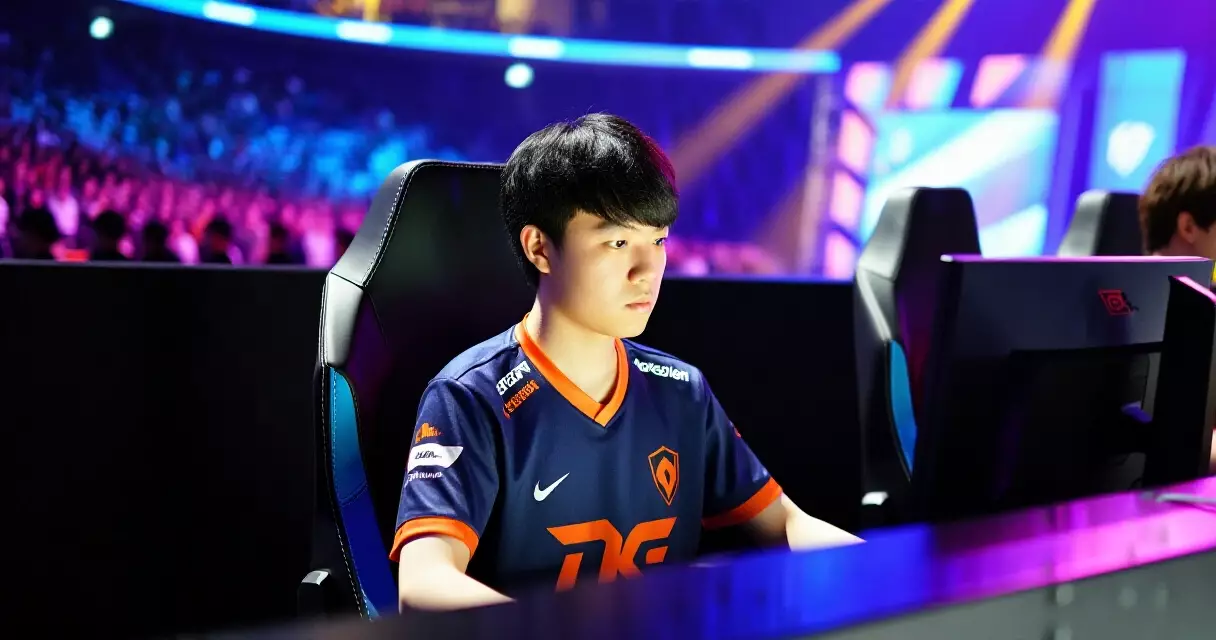
The most telling comparison is not between Faker and any single rival — it is between Faker’s career and the entire field of players who competed against him. Nobody else has been in the top four at Worlds in nine out of twelve seasons.
Faker’s Legacy in Esports: Why His Record Will Be Difficult to Break
The structural reasons why Faker’s record is unlikely to be surpassed soon are worth examining. League of Legends now has hundreds of professional players across dozens of regions. The LPL (China) has grown into arguably the most competitive domestic league in the world, producing world-class mid laners specifically developed to challenge the standard Faker set. Yet despite that competitive depth, no player had matched his six titles as of 31 August 2026.
For Singapore’s growing esports community, Faker’s career carries a specific relevance. The Singapore esports infrastructure, documented in Sport SG’s 2026 guide, increasingly emphasises competitive gaming pathways for young players. Faker’s example — a player who joined a professional roster at sixteen and built a career based on disciplined, adaptive play rather than one dominant style — provides a practical template for how sustained esports excellence is actually achieved.
The discussion around how long Faker can maintain his level is a genuine one. He is 30 years old as of mid-2026, an age at which reaction times and adaptability to constant meta shifts become legitimate concerns. The German Wikipedia entry on Lee Sang-hyeok describes him as still considered the best League of Legends player in the world — but acknowledges the ongoing debate about how long that assessment can remain accurate against younger competition. His three-title run from 2023 to 2025 suggests the answer, at least so far, is: longer than most critics expected.
Frequently Asked Questions About Faker
How many World Championships has Faker won?
According to Wikipedia’s English biography, Faker has won six World Championships: in 2013, 2015, 2016, 2023, 2024, and 2025. This is more than any other player in League of Legends history. His most recent title came at the 2025 World Championship, bringing his total to six across a career spanning more than twelve years.
What team does Faker play for?
Faker plays for T1, formerly known as SK Telecom T1, and has done so for his entire professional career since 2013. He is also a part-owner of the organisation. T1 competes in the LCK (League Champions Korea), the top-tier domestic league in South Korea.
What position does Faker play in League of Legends?
Faker plays mid lane, the central position in a standard League of Legends team composition. The mid laner typically has the highest individual carry potential and map-control responsibility on a roster, requiring both mechanical skill on a wide champion pool and strong strategic game-reading. Faker’s champion versatility across assassins, mages, and control champions throughout his career is frequently cited as a defining characteristic of his playstyle.
Has Faker ever played for a team other than T1?
No. Faker has played exclusively for T1 (previously SK Telecom T1) since joining the organisation in 2013. This single-organisation loyalty over more than a decade is itself considered one of the most remarkable aspects of his career, particularly given how frequently players at the top of the LCK change rosters.
Why is Faker compared to Michael Jordan?
The comparison reflects dominance, longevity, and a transformative effect on the broader sport rather than just individual performance. Like Jordan in basketball, Faker is widely credited with raising the standard of play for everyone who competed against him, demonstrating that a single player could remain the best in the world across multiple distinct competitive eras, and building a personal legacy that extended beyond any single title. The analogy appears in multiple language versions of his Wikipedia biography and is now a standard frame in mainstream esports coverage.
Is Faker still playing competitively in 2026?
Yes. As of August 2026, Faker remains an active professional player for T1 in the LCK. His continued participation in top-tier competition at age 30, following three consecutive World Championship victories from 2023 to 2025, is itself treated as a storyline in ongoing esports coverage. The question for the 2026 and 2027 competitive seasons is whether his most recent dynasty has concluded or whether he can extend it further.
Sources
- Faker (gamer) — Wikipedia — Retrieved August 31, 2026
- Faker — Wikipedia, la enciclopedia libre — Retrieved August 31, 2026
- Lee Sang-hyeok — Wikipedia, wolna encyklopedia — Retrieved August 31, 2026
- Faker — Wikipédia — Retrieved August 31, 2026
- Lee Sang-hyeok — Wikipedia (Deutsch) — Retrieved August 31, 2026
- Faker — Wikipedia Bahasa Melayu — Retrieved August 31, 2026
- Faker (jogador) — Wikipédia — Retrieved August 31, 2026
- Faker — Viquipèdia — Retrieved August 31, 2026
- Faker — Liquipedia League of Legends Wiki — Retrieved August 31, 2026
- Faker — Leaguepedia — Retrieved August 31, 2026