Summary
✓Reviewed by Laura Bennett The NBA Cup — the league's rebranded in-season tournament — has evolved meaningfully since its debut in the 2023-24 season, and the NBA in-season tournament format changes and what they mean for teams are now shaping...
Table of contents
- 1 How the NBA In-Season Tournament Has Evolved Since 2023
- 2 The Core Format: Groups, Wildcards, and Single Elimination
- 2.1 What Counts Toward Regular-Season Standings
- 2.2 Tiebreaker Rules and Group Draw Method
- 3 The 2026 Structural Change: Semifinals Move to Home Arenas
- 4 Prize Money Structure and What It Means for Roster Decisions
- 5 Schedule Impact: The 83rd Game and the Compressed Calendar
- 6 How NBA In-Season Tournament Format Changes Affect Team Strategy
- 6.1 Contenders vs. Rebuilding Teams: Divergent Incentives
- 7 Comparing the NBA Cup to In-Season Tournaments in Other Sports
- 8 Rule Change Spotlight: The 36-Foot Shot Attempt Rule
- 9 Frequently Asked Questions
- 9.1 What is the NBA Cup and how is it different from the regular season?
- 9.2 How do teams qualify for the NBA Cup knockout rounds?
- 9.3 Where are NBA Cup games played in 2026?
- 9.4 Do NBA Cup games affect playoff seeding?
- 9.5 How much money do players earn for winning the NBA Cup?
- 9.6 What happens to teams that don’t make the NBA Cup knockout rounds?
- 10 Sources
The NBA Cup — the league’s rebranded in-season tournament — has evolved meaningfully since its debut in the 2023-24 season, and the NBA in-season tournament format changes and what they mean for teams are now shaping roster construction, scheduling strategy, and player incentives in ways that were hard to predict at launch. As of July 29, 2026, the tournament enters its fourth iteration with one significant structural shift already locked in for the 2026 Cup: semifinal games will move from a neutral Las Vegas site to the home arenas of the higher-seeded teams, a change confirmed by the NBA Cup Wikipedia entry as applying from the 2026 edition onward. That single tweak alters the competitive calculus for every contender chasing a top seed in their conference group.
How the NBA In-Season Tournament Has Evolved Since 2023
The NBA launched its in-season tournament in November 2023 as the first competition of its kind in North American major professional basketball. Adam Silver and the league’s competition committee designed it explicitly to address a longstanding critique: that too many regular-season games lacked stakes. According to ABC News reporting from July 2023, the league used a World Cup-style draw process to place teams into their initial groups, signaling an ambition to borrow the international tournament model. The 2023-24 edition culminated in Las Vegas, with the Los Angeles Lakers winning the inaugural title. Subsequent seasons refined the scheduling calendar rather than overhauling the core bracket, allowing the league to study fan engagement before making structural alterations. The 2026 edition’s decision to bring semifinal games to home arenas is the most substantive format change since launch.
The Core Format: Groups, Wildcards, and Single Elimination
The foundation of the NBA Cup has remained consistent across every edition. According to ESPN’s 2025 Cup format guide, all 30 teams are divided into six groups of five — three from the Eastern Conference and three from the Western Conference. Each team plays the other four teams in its group once, producing four group-stage games that count toward the regular-season standings. The six group winners advance to the knockout bracket automatically. One wild-card team per conference (the best non-group-winner record in each conference) also qualifies, creating an eight-team single-elimination bracket with quarterfinals, semifinals, and a championship final.
What Counts Toward Regular-Season Standings
One of the most consequential structural decisions in the tournament’s design is that all games except the championship final count in the regular-season standings. As confirmed by the 2025-26 NBA season Wikipedia page, the final itself serves as an 83rd regular-season game for the two finalists. This dual-purpose design means no team can afford to treat group-stage games as meaningless exhibitions — a loss in late October can haunt a playoff seed calculation in April.
Tiebreaker Rules and Group Draw Method
Group placement has always carried strategic weight because tiebreakers can determine which team earns the automatic group-winner berth versus a wild-card slot. According to Olympics.com’s 2025 NBA Cup rules explainer, groups are drawn based on the prior season’s win-loss records, introducing a seeding logic that rewards recent success. Teams that finished higher in the previous standings are separated into different draw pots, reducing the chance that two dominant franchises land in the same group — a structural fairness mechanism borrowed from soccer’s UEFA Champions League group draw.
The 2026 Structural Change: Semifinals Move to Home Arenas
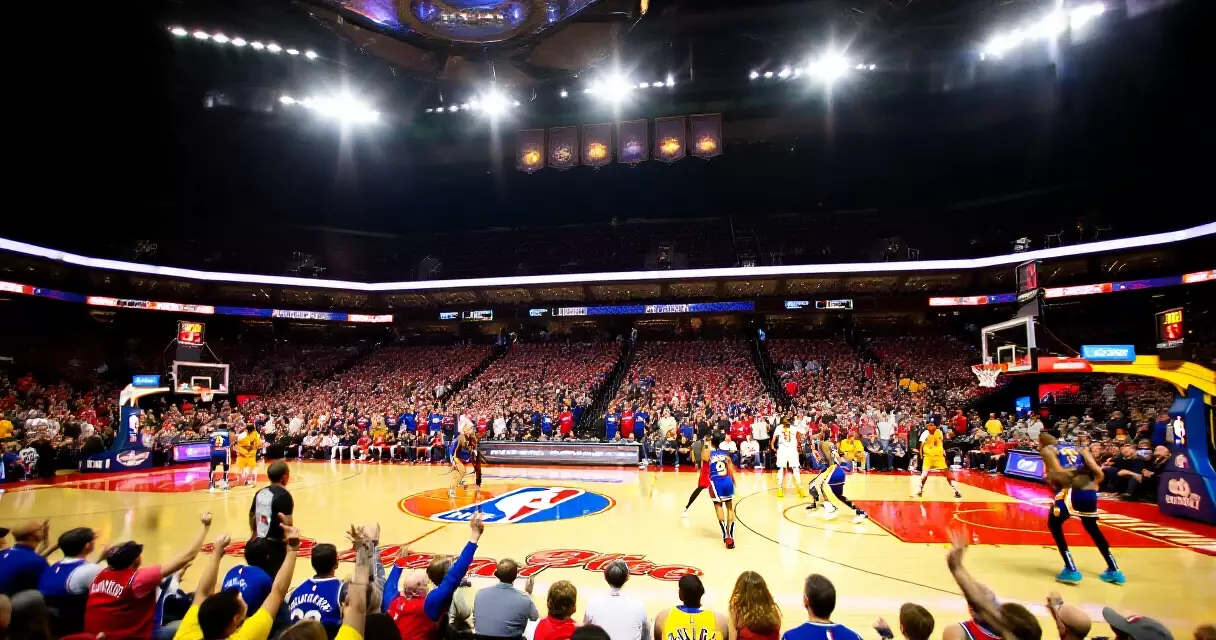
The single most significant NBA in-season tournament format change confirmed for 2026 is the relocation of semifinal games from Las Vegas to the home arenas of higher-seeded teams. According to the NBA Cup Wikipedia article, this shift was explicitly confirmed as a structural adjustment beginning with the 2026 Cup. Previously, all knockout-round games were played at a neutral Las Vegas venue — typically T-Mobile Arena — which gave the event a Super Bowl-style atmosphere but removed home-court advantage from the equation entirely. The new model rewards strong group-stage performance with a genuine home-court edge in the semifinals, fundamentally changing the incentive structure for top teams.
Moving the semifinals to home arenas is the most team-friendly change the NBA has made to the Cup format — it turns a group-stage win from a bracket ticket into a genuine competitive advantage.
For franchises like the Boston Celtics, Denver Nuggets, or Oklahoma City Thunder — teams with notoriously loud home environments — this adjustment could be the difference between reaching a final and an early exit. A team playing a semifinal at TD Garden or Ball Arena carries a measurable home-court edge that the neutral Las Vegas format never provided.
Prize Money Structure and What It Means for Roster Decisions
The prize pool is one of the tournament’s most discussed elements, and the figures reported by ESPN and ABC make clear why players treat these games with genuine competitive intent. According to ESPN and ABC Sports reporting on the tournament’s financial structure, players on the championship-winning team each receive $500,000, runners-up receive $200,000 each, semifinal losers each earn $100,000, and players eliminated in the quarterfinals receive $50,000 per player. For a mid-level roster player earning the veteran minimum, a $500,000 bonus represents a substantial percentage of their annual salary — a real financial incentive that translates directly into effort on the court during what would otherwise be low-stakes November games.
This prize structure also creates interesting roster-management tensions. Teams that are genuine Cup contenders have reason to play their starters in group-stage games even against back-to-back scheduling. Teams rebuilding or tanking for draft positioning face a dilemma: resting stars saves wear but sacrifices bonus money that those same stars often prefer to earn. The NBA Finals 2026 coverage at Daily Match Report explores how the cumulative fatigue of a full Cup run affected teams heading into the postseason.
Schedule Impact: The 83rd Game and the Compressed Calendar
The scheduling architecture of the NBA Cup creates a logistical puzzle that front offices must solve before the season begins. As noted in Wikipedia’s 2025-26 NBA season article, group-stage games are concentrated in the first six weeks of the regular season — from late October through late November. Teams eliminated before the knockout rounds are then scheduled additional regular-season games to ensure they still reach the standard 82-game count. The two finalists play an 83rd game (the Cup final itself), which counts in standings but creates an uneven schedule relative to first-round eliminees.
According to Bleacher Report’s 2025-26 NBA rule changes breakdown, the league typically releases 80 games in its initial schedule and inserts tournament-related games once group assignments are finalized, leaving placeholders for the knockout rounds. This means teams cannot fully plan travel logistics until groups are drawn — a minor but real operational complexity for franchises juggling charter flights, player recovery, and home game scheduling.
How NBA In-Season Tournament Format Changes Affect Team Strategy
The cumulative effect of these NBA in-season tournament format changes is that the Cup now demands a dedicated strategic approach rather than a passive one. Teams with deep benches and versatile rotations are best positioned: group games come quickly, injuries in November can eliminate a Cup contender before the knockout rounds even begin, and the compressed schedule rewards depth over star power alone. According to the Olympics.com 2025 NBA Cup format breakdown, group play runs from late October through late November, meaning teams face their group opponents during a stretch when players are still rounding into form after the preseason.
Contenders vs. Rebuilding Teams: Divergent Incentives
Championship contenders treat the Cup as a legitimate title and a tune-up for deeper playoff runs. Rebuilding teams face a more complex calculation: competing hard in group play costs minutes on young players who need development reps, but early exits reduce the financial bonus available to veterans on those same rosters. The wild-card qualification pathway — which rewards the best record among non-group winners — adds a second chance for teams that finish second in a tight group, slightly softening the penalty for narrowly missing a group title.
The wild-card berth is the NBA Cup’s most underrated feature — it keeps fringe contenders invested in group play even after an early loss, because that second-place finish still has a path to $500,000 per player.
Comparing the NBA Cup to In-Season Tournaments in Other Sports
The NBA Cup drew explicit comparisons to soccer cup competitions when it launched, and those parallels illuminate both its strengths and the format limitations the league is still resolving. The EFL Carabao Cup in English football operates on a similar early-season knockout model, but unlike the NBA Cup, it is entirely separate from league standings — wins there do not affect a team’s league table position. The NBA’s decision to keep group-stage results in the regular-season standings is a distinguishing feature that increases stakes but also creates the scheduling complexity described above. The Premier League midweek results analysis at Daily Match Report shows how mid-season fixture congestion affects title races — a parallel dynamic that NBA teams navigating Cup group play will recognize.
| Feature | NBA Cup (2025-26) | NBA Cup (2026, updated) |
|---|---|---|
| Group stage games | 4 per team (count in standings) | 4 per team (count in standings) |
| Knockout format | Single elimination, 8 teams | Single elimination, 8 teams |
| Semifinal venue | Las Vegas (neutral) | Home arena of higher seed |
| Championship venue | Las Vegas | Las Vegas |
| Championship game status | 83rd regular-season game for finalists | 83rd regular-season game for finalists |
| Winner prize (per player) | $500,000 | $500,000 |
Rule Change Spotlight: The 36-Foot Shot Attempt Rule
Alongside the Cup’s structural evolution, a 2025-26 on-court rule change intersects with tournament games in a notable way. According to Bleacher Report’s 2025-26 rule changes explainer, any shot attempted from at least 36 feet and taken within the final three seconds of the first three quarters now counts as a team shot attempt rather than an individual player attempt. This rule targets desperation heaves that had artificially inflated field goal attempt totals for specific players, particularly in statistical contexts that affect fantasy rankings and advanced analytics. While this change applies to all regular-season games, its effect on end-of-quarter strategy in high-stakes Cup games — where a single group-stage result can determine advancement — is meaningful for coaches reviewing shot selection data.
| Prize Tier | Result | Per-Player Amount | Source |
|---|---|---|---|
| Champions | Win the final | $500,000 | ESPN / ABC |
| Runners-up | Lose the final | $200,000 | ESPN / ABC |
| Semifinalists | Lose a semifinal | $100,000 | ESPN / ABC |
| Quarterfinalists | Lose in quarterfinals | $50,000 | ESPN / ABC |
Frequently Asked Questions
What is the NBA Cup and how is it different from the regular season?
The NBA Cup is the league’s in-season tournament, running from late October through mid-December. Unlike a standalone cup, all group-stage games count toward regular-season standings, and the two finalists play an 83rd regular-season game in the championship. It is an overlay on the regular season rather than a separate competition, according to the 2025-26 NBA season’s Wikipedia documentation.
How do teams qualify for the NBA Cup knockout rounds?
The six group winners — one from each of the six five-team groups — automatically qualify for the eight-team knockout bracket. Two additional wild-card spots are filled by the team with the best non-group-winner record in each conference. This gives second-place group finishers a realistic path to the knockout stage, as confirmed by ESPN’s 2025 Cup format guide.
Where are NBA Cup games played in 2026?
Group-stage and quarterfinal games are played at teams’ regular home arenas. Starting with the 2026 NBA Cup, semifinal games shift to the home arenas of the higher-seeded teams — a change from the prior neutral Las Vegas format. The championship final continues to be held in Las Vegas, per the NBA Cup Wikipedia article updated for the 2026 format.
Do NBA Cup games affect playoff seeding?
Yes. All group-stage games and knockout-round games (except the final) count in the regular-season standings, which directly determines playoff seeding. A team that goes 4-0 in group play gains a meaningful early-season edge in the standings. The championship final itself counts as an 83rd regular-season game for both finalists, making even the Cup’s last game relevant to seeding.
How much money do players earn for winning the NBA Cup?
Players on the NBA Cup champion team each receive $500,000 in bonus money. Runners-up earn $200,000 each, semifinalists receive $100,000 each, and quarterfinalists earn $50,000 per player. These figures were reported by ESPN and ABC Sports and represent some of the largest per-player bonuses in regular-season professional basketball.
What happens to teams that don’t make the NBA Cup knockout rounds?
Teams eliminated before the knockout rounds receive additional regular-season games so that every team still plays 82 games total. They lose the prize money opportunity and, under the 2026 format, the home-court semifinal advantage — but they are not penalized in terms of game count relative to advancing teams. According to the 2025-26 NBA season’s Wikipedia entry, this scheduling balancing act is built into the initial calendar structure.
Sources
- NBA Cup — Wikipedia — Retrieved July 29, 2026
- 2025-26 NBA Season — Wikipedia — Retrieved July 29, 2026
- NBA officially unveils format, groups for in-season tournament — ABC News — Retrieved July 29, 2026
- 2025 NBA Cup: Schedule, format, groups, updates — ESPN — Retrieved July 29, 2026
- Explaining NBA Rule Changes for 2025-26, Including NBA Cup Bracket Format — Bleacher Report — Retrieved July 29, 2026
- The NBA Cup 2025 explained: Schedule, format, rules — Olympics.com — Retrieved July 29, 2026