Summary
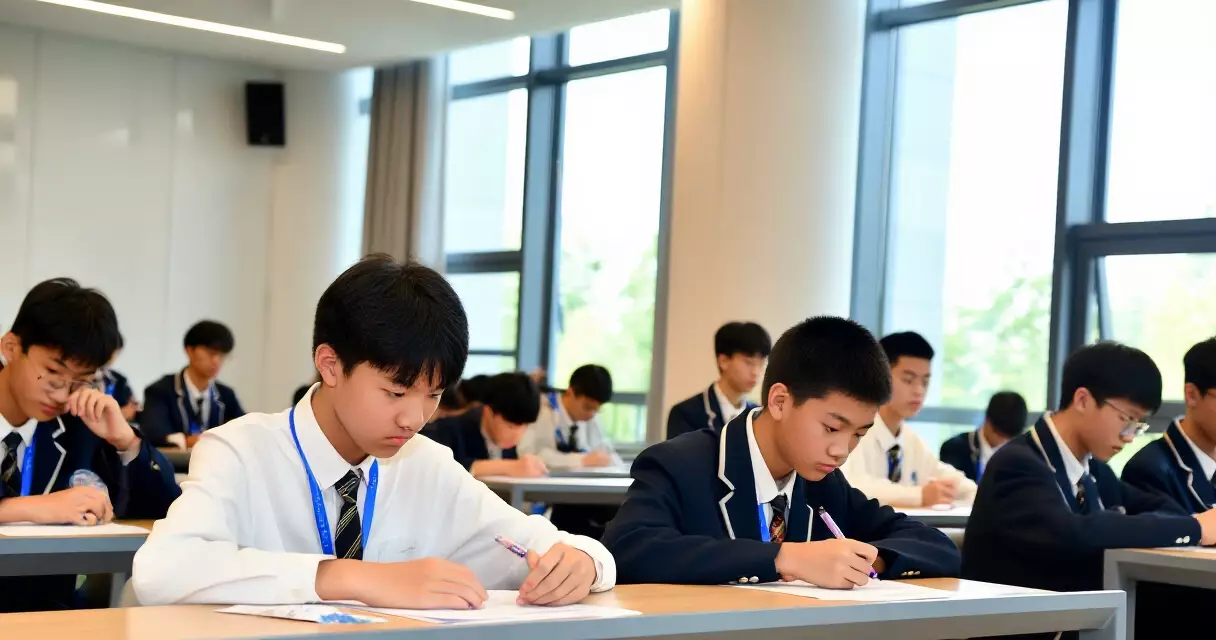
✓Reviewed by Laura Bennett A non sport competition description covers every structured, rule-governed contest in which individuals or teams compete for recognition, prizes, or advancement — yet no athletic activity defines the outcome. From the Scripps National Spelling Bee to...
Table of contents
- 1 What Is a Non Sport Competition? A Clear Definition
- 2 A Brief History of Organized Non Sport Competition in the United States
- 3 Core Elements of a Non Sport Competition Description
- 3.1 Name and Governing Body
- 3.2 Eligibility and Participant Categories
- 3.3 Scoring Method and Judging Criteria
- 4 Major Categories of Non Sport Competition in the U.S.
- 5 How Non Sport Competition Descriptions Differ by Context
- 6 Writing an Effective Non Sport Competition Description: Step-by-Step
- 7 Non Sport Competition vs. Sport: Key Differences for Official Records
- 8 Participation Trends Relevant to Non Sport Competition in 2026
- 9 Frequently Asked Questions About Non Sport Competition Description
- 9.1 What is the simplest one-sentence non sport competition description?
- 9.2 Does esports count as a non sport competition?
- 9.3 How should I describe a non sport competition on a college application?
- 9.4 Is a debate tournament a non sport competition?
- 9.5 Do non sport competitions affect athletic eligibility?
- 9.6 Where can I find official non sport competition descriptions for common programs?
- 10 Key Takeaways
- 11 Sources
A non sport competition description covers every structured, rule-governed contest in which individuals or teams compete for recognition, prizes, or advancement — yet no athletic activity defines the outcome. From the Scripps National Spelling Bee to Science Olympiad, from debate tournaments to robotics leagues, these competitions draw tens of millions of American participants each year and form a cornerstone of academic, civic, and creative life in the United States.
What Is a Non Sport Competition? A Clear Definition
The phrase “non sport competition description” refers to the formal explanation of any organized contest that falls outside traditional athletic sport. In everyday usage the term matters most when institutions — schools, employers, insurance providers, or scholarship committees — need to categorize a competitive activity for eligibility, liability, or records purposes. A non sport competition shares three features with athletic sport: defined rules, impartial judging or objective scoring, and a declared winner or ranking. What distinguishes it is that physical performance is not the primary determinant of success.
The distinction appears across several official frameworks. The NCAA explicitly limits its eligibility rules to athletic sport, meaning that a student who competes in chess, Science Olympiad, or a national debate tournament is governed by an entirely separate set of institutional rules. Understanding how to write an accurate non sport competition description is therefore practically important for student records, scholarship applications, and program funding.
A Brief History of Organized Non Sport Competition in the United States
Organized non-athletic competition in the U.S. has deep institutional roots. The Scripps National Spelling Bee was established in 1925, making it one of the oldest continuously running youth competitions in the country. Debate organizations such as the National Forensic League (now the National Speech and Debate Association) formalized interscholastic competition rules during the 1920s and 1930s. Science fairs gained national prominence after the founding of Science Service’s national competition in 1950, which later became the Regeneron (formerly Intel) International Science and Engineering Fair. Robotics competition entered the mainstream with the founding of FIRST (For Inspiration and Recognition of Science and Technology) in 1989 by Dean Kamen. Each of these milestones helped crystallize what a formal non sport competition description looks like in an academic setting: named organizer, defined eligibility criteria, official rulebook, impartial adjudication, and public results.
Core Elements of a Non Sport Competition Description
Whether written for a school record, a grant application, or an official program brochure, an accurate non sport competition description should include the following components.
Name and Governing Body
State the official name of the competition and the organization that administers it. For example: “Science Olympiad, administered by Science Olympiad Inc., a non-profit educational organization.” This single line anchors the description to a verifiable authority and signals legitimacy to reviewers.
Eligibility and Participant Categories
Specify who may enter: age groups, grade levels, geographic boundaries, membership requirements, or qualifying round thresholds. A complete description clarifies whether competition is individual or team-based, and whether it is open, invitational, or restricted to registered members of a national organization.
Scoring Method and Judging Criteria
Explain how winners are determined: objective scoring (number of correct answers, fastest completion time, accumulated points), subjective judging (rubric-based evaluation by qualified judges), or a hybrid of both. Transparency in scoring is what separates a recognized competition from an informal activity.
Major Categories of Non Sport Competition in the U.S.
Non-athletic competitions in the United States fall into several well-established categories, each with national-level organizing bodies and documented participation data.
| Category | Examples | National Governing Body | Competition Level |
|---|---|---|---|
| Academic / Quiz | Academic Decathlon, Science Olympiad, Quiz Bowl | USAD, Science Olympiad Inc., NAQT | School → State → National |
| Speech and Debate | Lincoln-Douglas, Policy Debate, Congressional Debate | National Speech and Debate Association (NSDA) | Local → Regional → National |
| Spelling and Language | Scripps National Spelling Bee, National Geographic Bee | E.W. Scripps Company; National Geographic Society | School → Regional → National |
| STEM and Robotics | FIRST Robotics Competition, Science Fair (Regeneron ISEF) | FIRST; Society for Science | Regional → National → International |
| Arts and Performance | Scholastic Art and Writing Awards, National Piano Competition | Scholastic Inc.; various conservatories | Regional → National |
| Esports | High School Esports League (HSEL), Varsity Esports Foundation | HSEL; PlayVS | School → State → National |
Each category above represents a mature competitive ecosystem with distinct rulebooks, qualification pathways, and award structures. Writing a non sport competition description for any of these requires consulting the governing body’s official documentation to cite the correct nomenclature.
“A non sport competition description is only as strong as its governing body citation — name the organization, the rulebook, and the judging method, and the legitimacy is self-evident.”
How Non Sport Competition Descriptions Differ by Context
The audience reading a non sport competition description shapes what the description must emphasize. Four common contexts each carry different requirements.
| Context | Primary Reader | Key Emphasis | Typical Length |
|---|---|---|---|
| College Application (Common App) | Admissions officer | Level achieved, recognition, hours committed | 150 characters |
| Scholarship Application | Review committee | Competitive rigor, national standing, judging criteria | 1–3 sentences |
| School/District Records | Registrar or counselor | Official name, date, placement | One line entry |
| Resume or LinkedIn | Employer or recruiter | Skills demonstrated, scope, outcome | 1–2 bullet points |
| Program Brochure or Website | Prospective participants | Format, eligibility, schedule, awards | 1–2 paragraphs |
For a college application, the Aspen Institute Project Play research on participation equity is a useful reminder that reviewers are increasingly aware of access barriers in organized competition — meaning that naming a local or regional competition at a high placement level can carry significant weight even if it lacks national branding.
Writing an Effective Non Sport Competition Description: Step-by-Step
Follow this sequence to produce a description that satisfies virtually any institutional requirement.
- Identify the official name. Use the exact title as published by the governing body — do not abbreviate or paraphrase.
- Name the administering organization. Include the full legal or registered name (e.g., “Society for Science” for ISEF, not just “science fair”).
- State the level and scope. Specify whether this is a school, regional, state, national, or international competition.
- Describe the format. Explain whether it is individual or team, timed or open-ended, written, oral, or performance-based.
- Explain the judging or scoring method. Objective, subjective, or hybrid; who judges (certified judges, faculty, industry professionals).
- State your placement or achievement. Use the same terminology the organizing body uses — “finalist,” “gold medalist,” “first place,” “national qualifier.”
- Add a date or season. Competitions can evolve; a year anchors the description to a verifiable edition.
Non Sport Competition vs. Sport: Key Differences for Official Records
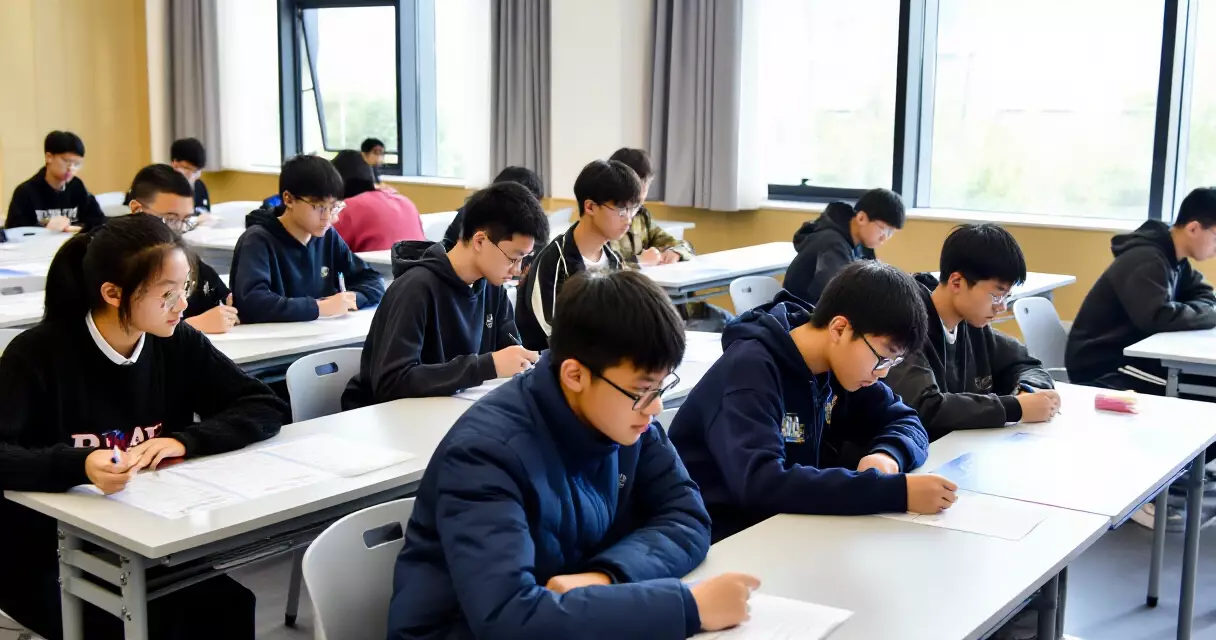
When completing official records for school transcripts, insurance waivers, or facility use agreements, the sport versus non-sport distinction carries practical consequences. Schools and districts typically use a bifurcated classification system: activities governed by the state athletic association (NFHS-member body) are classified as sport; everything else is non-sport. According to CDC/NCHS Data Brief 441, which tracked organized sports participation among children ages 6–17 using National Health Interview Survey data, the federal government itself uses participation in “organized sport” as a specific surveillance category, implying that non-organized and non-sport competitive activities occupy a separate statistical bucket.
This has downstream effects. A student who participates only in robotics and debate may not appear in state athletics participation counts even if they compete more intensively than many varsity athletes. Producing a clear non sport competition description ensures those competitive experiences are not lost in administrative classification.
“Students who compete only in non-sport activities risk having their achievements undercounted in official records — a precise competition description is the remedy.”
Participation Trends Relevant to Non Sport Competition in 2026
The broader competitive landscape in the United States is expanding. According to the SFIA’s 2025 Topline Participation Report, 247.1 million Americans participated in at least one physical or organized activity in 2024, the highest total since the association began annual tracking. While SFIA’s data encompasses athletic activity, the trend reflects a broader American enthusiasm for structured, competitive engagement that extends directly into non-sport domains.
The Aspen Institute’s State of Play 2025 report noted that 6% more children ages 6–17 played a team sport at least once in 2024 compared with 2023 — but the same infrastructure driving youth sport growth (school facilities, coaching pipelines, competitive scheduling) also supports non-sport competitions. Debate leagues, robotics clubs, and academic bowls increasingly share transportation budgets, faculty advisor time, and school scheduling resources with traditional athletic programs, making an accurate non sport competition description a practical necessity for budget and staffing allocations.
Frequently Asked Questions About Non Sport Competition Description
What is the simplest one-sentence non sport competition description?
A non sport competition is a structured, rule-governed contest in which individuals or teams compete for ranking, prizes, or recognition based on intellectual, creative, technical, or performative skill rather than physical athleticism. This sentence covers the essential elements — structure, rules, competition, and the distinguishing criterion — and works for most institutional forms.
Does esports count as a non sport competition?
Yes, in most institutional frameworks esports is classified as a non-sport competition. Organizations like the High School Esports League (HSEL) and PlayVS operate structured national competitions with official brackets, referees, and prize structures, yet they fall outside state athletic association jurisdiction in the vast majority of U.S. states. When describing an esports achievement on a college application or resume, treat it as you would any other non-sport competition: name the title (e.g., “HSEL Varsity League Season 8 State Qualifier”), the organizer, and your placement. For more context on esports competitive frameworks, see our coverage of esports match analysis tools.
How should I describe a non sport competition on a college application?
Use the Common App’s activities section and select “Other Club/Activity” rather than “Athletics: Club” or “Athletics: JV/Varsity.” In the 150-character description field, lead with the organization name, the competition level (regional, state, national), and your placement or role. Example: “Science Olympiad — State Competitor, 2026; 2nd place Experimental Design event, 23-member team.” Specificity of level and outcome matters most to admissions readers.
Is a debate tournament a non sport competition?
Yes. Competitive debate, whether Lincoln-Douglas, Policy, Public Forum, or Congressional format, is a prototypical non sport competition: it has official rules (governed by the NSDA), certified judges, defined eligibility, and public results. It is regularly cited in academic literature on youth competition as a structured alternative to athletic participation.
Do non sport competitions affect athletic eligibility?
In most cases, no. Because non-sport competitions fall outside the jurisdiction of state athletic associations and the NCAA, participation in them does not consume athletic eligibility or create amateurism concerns under standard NCAA rules. However, if a non-sport competition offers prize money or endorsement arrangements, athletes should review the relevant NCAA or NAIA rules with their compliance office before participating.
Where can I find official non sport competition descriptions for common programs?
Each governing body publishes its own official description. Reliable starting points include: the NSDA website for debate and speech, Science Olympiad Inc. for Science Olympiad, the Society for Science for ISEF, FIRST for robotics competitions, and the E.W. Scripps Company for the National Spelling Bee. For sports-adjacent reference data that puts competition in a broader participation context, resources like the Sports Reference examples guide on this site can help you understand how competitive data is structured across organized activities.
Key Takeaways
- A non sport competition description defines any organized, rule-governed contest whose outcome depends on intellectual, creative, technical, or performative skill rather than physical athleticism.
- Core components are: official name, governing body, eligibility criteria, competition format, scoring or judging method, placement achieved, and date.
- Context determines emphasis: admissions readers want level and outcome; employers want skills and scope; program brochures need format and schedule.
- Major U.S. non-sport competition categories include academic bowls, speech and debate, spelling and language, STEM and robotics, performing arts, and esports.
- The distinction from athletic sport matters for official records, insurance classifications, scholarship eligibility, and budget allocations at the institutional level.
- Participation in organized competitive activity continues to rise in the U.S., with non-sport competitions offering lower cost-of-entry pathways for students from lower-income households.
Sources
- Bureau of Labor Statistics — Athletes and Sports Competitors — Retrieved August 9, 2026
- Bureau of Labor Statistics — Common Sports and Exercise Activities (American Time Use Survey 2021–23) — Retrieved August 9, 2026
- NCAA — Probability of Competing Beyond High School — Retrieved August 9, 2026
- CDC/NCHS Data Brief No. 441 — Organized Sports Participation Among Children Ages 6–17 — Retrieved August 9, 2026
- SFIA — 2025 Topline Participation Report: 247.1 Million Americans Active in 2024 — Retrieved August 9, 2026
- Aspen Institute Project Play — State of Play 2025: Participation Trends — Retrieved August 9, 2026
- Pew Research Center — 5 Facts About Americans and Sports (2024) — Retrieved August 9, 2026
- PubMed/NCBI — Surveillance of Youth Sports Participation in the United States (2024) — Retrieved August 9, 2026