Summary
✓Reviewed by Laura Bennett BARCELONA, Spain — August 3, 2026 — Mauricio Pochettino has agreed to a four-year contract extension to remain head coach of the United States Men's National Team through the 2030 FIFA World Cup, U.S. Soccer announced...
Table of contents
- 1 Announcement Details and Contract Terms
- 2 What USSF President Cindy Parlow Cone Said
- 3 Pochettino’s Own Words on His Future
- 4 2026 World Cup Context: How Far Did the USMNT Go?
- 5 Timeline of the Extension Talks
- 6 What This Means for U.S. Soccer’s Long-Term Build
- 7 What to Watch Next
- 8 Related Coverage
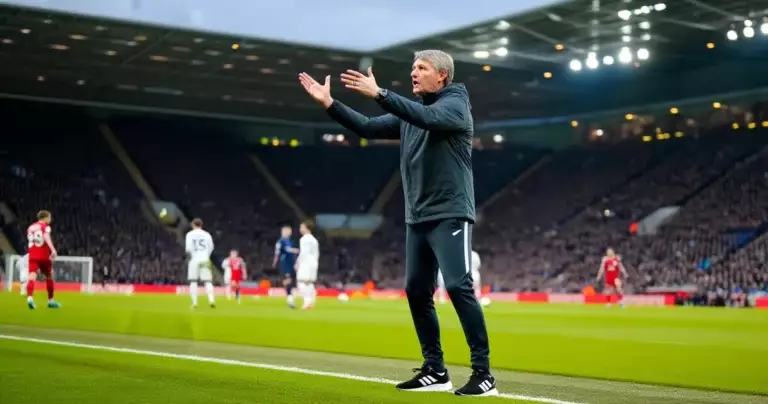
BARCELONA, Spain — August 3, 2026 — Mauricio Pochettino has agreed to a four-year contract extension to remain head coach of the United States Men’s National Team through the 2030 FIFA World Cup, U.S. Soccer announced on Monday, committing the 54-year-old Argentine manager to his first full World Cup cycle with the program following a mixed but ultimately encouraging debut at the 2026 tournament on home soil.
The extension, which runs through the end of the 2030 World Cup cycle, comes roughly three weeks after the USMNT was eliminated in the Round of 16 by Belgium at the 2026 FIFA World Cup co-hosted by the United States, Canada, and Mexico. Despite the tournament exit, U.S. Soccer officials said the Argentine’s tactical approach, player development record, and high-pressing style justified retaining him for the next competitive cycle.
Announcement Details and Contract Terms
U.S. Soccer formally announced the new deal on August 3, 2026, confirming that Pochettino and his coaching staff will continue leading the national program. According to the U.S. Soccer Federation’s official announcement, the contract covers the full build-up to the 2030 World Cup, which is co-hosted by Spain, Portugal, and Morocco, with additional matches in Argentina and Uruguay.
Pochettino originally took charge of the USMNT in October 2024 on a contract running through the 2026 World Cup. The extension represents the first time U.S. Soccer has retained a head coach through consecutive World Cup cycles since Jürgen Klinsmann’s tenure, and the first time since the federation adopted its current technical structure that an incumbent manager has earned a full four-year follow-on deal.
According to the Los Angeles Times, Pochettino was in Barcelona when the deal was finalized and signed, adding an international dimension to what U.S. Soccer described as a straightforward negotiation that concluded swiftly once both parties aligned on terms.
What USSF President Cindy Parlow Cone Said
U.S. Soccer Federation president Cindy Parlow Cone had signaled the outcome days before the formal announcement. Speaking to ESPN on July 30, 2026, Parlow Cone confirmed that contract talks had accelerated since the World Cup ended.
“The conversations with Maurício and his staff have been going very well,” Parlow Cone told ESPN. “I think we should have something to announce in the coming days.”
Parlow Cone’s comments came after weeks of speculation about Pochettino’s future. According to reporting by The Guardian, U.S. Soccer continued negotiating even immediately after the Round of 16 exit, underscoring that the federation viewed the World Cup performance as a foundation to build on rather than a failure to correct.
Pochettino’s Own Words on His Future
Pochettino himself had offered early signals that he was open to staying. On July 17, 2026 — just days after the Belgium elimination — the manager confirmed to USA Today that U.S. Soccer had already made him an offer.
“They (U.S. Soccer) have made me an offer to continue, and we will see,” Pochettino said at the time. “We are evaluating it, looking at it. Next week we will make a decision.”
According to Yahoo Sports, Pochettino received glowing praise from U.S. officials and external observers — including public comment from President Donald Trump — during the negotiation window, which multiple outlets described as a factor that accelerated the final agreement. Pochettino ultimately signed the extension on or around August 3, 2026, following weeks of back-and-forth that Bleacher Report characterized as moving “close” as of July 29.
2026 World Cup Context: How Far Did the USMNT Go?
Pochettino’s first World Cup with the USMNT ended in the Round of 16, where the co-hosts were beaten by Belgium. The exit was disappointing given the host-nation advantage and the pressure to perform on home soil, but multiple sources noted it was still the furthest the United States had advanced at a World Cup since reaching the quarterfinals in 2002.
According to Al Jazeera’s reporting on August 3, the Round of 16 result was framed as progress rather than failure: Pochettino “led the U.S. to the World Cup round of 16,” with the 54-year-old having taken charge less than two full years before the tournament began. The federation concluded that the compressed preparation window — combined with a difficult group-stage draw — made the knockout-round exit understandable and that Pochettino’s high-pressing, attacking system showed genuine promise at the highest level.
For context on the wider tournament picture from the U.S. perspective, see our earlier coverage of the FIFA World Cup 2026 Opener: Key Matchups and Opening Ceremony Details and the record-breaking Mexico vs. England viewership figures that underlined the tournament’s enormous commercial success on U.S. soil.
Timeline of the Extension Talks
| Date | Development |
|---|---|
| July 16, 2026 | USMNT eliminated by Belgium in Round of 16 at 2026 FIFA World Cup |
| July 17, 2026 | Pochettino confirms U.S. Soccer has offered him a new contract; says decision coming “next week” |
| July 29, 2026 | Bleacher Report and The Athletic report negotiations are “close” to conclusion |
| July 30, 2026 | USSF president Cindy Parlow Cone tells ESPN talks are “going very well” and announcement coming soon |
| August 3, 2026 | U.S. Soccer officially announces four-year contract extension through 2030 World Cup |
What This Means for U.S. Soccer’s Long-Term Build
Retaining Pochettino gives U.S. Soccer a significant continuity advantage heading into what will be a fiercely contested qualification cycle for the 2030 World Cup. CONCACAF qualifying is expected to begin in 2027, with the USMNT needing to navigate a competitive region that includes Mexico, Canada, and resurgent sides from Central America and the Caribbean.
Pochettino’s tactical fingerprints — a high defensive line, pressing triggers in the opposition half, and a preference for technically gifted wide players — are already embedded in the squad’s approach after nearly two years together. The extended contract means the next generation of U.S. youth talent, including players who will be in their prime by 2030, will develop within that same system rather than starting from scratch under a new manager.
USA Today noted that the extension “can work as long as spark remains,” framing the deal as one that depends heavily on Pochettino maintaining the same level of engagement and ambition that characterized his arrival. Several analysts and media commentators have pointed out that his previous club career — including stints at Tottenham Hotspur, Paris Saint-Germain, and Chelsea — showed both the ceiling of his management and the volatility that sometimes accompanied it. The international environment, with less daily club pressure and longer preparation windows, may suit him better.
The USMNT’s younger core players who emerged during the 2026 tournament are expected to be central to Pochettino’s plans for the 2030 cycle, with the next generation of academy-developed talent coming through MLS academies and European clubs already on the coaching staff’s radar.
What to Watch Next
With the extension confirmed, the immediate focus for Pochettino and U.S. Soccer will shift to autumn friendlies and the CONCACAF Nations League, which serves as both a competitive environment and a squad-building platform during non-qualifying windows. Player availability, roster depth, and the integration of younger talent into the senior squad will be the key indicators of how quickly the 2030 cycle gets up to speed.
Key questions heading into the next phase include: which players from the 2026 World Cup squad will retain central roles, whether Pochettino will look to adjust his tactical system after analyzing the Belgium defeat in detail, and how U.S. Soccer plans to support his program structurally — including youth development pipelines, scouting infrastructure, and the MLS-to-national-team pathway that has been a recurring point of debate among U.S. soccer observers.
The 2030 World Cup, notably, will mark the centenary of the FIFA World Cup — the first tournament was held in Uruguay in 1930 — making it one of the most symbolically significant editions in the competition’s history. For the United States, reaching the latter stages of a centenary World Cup would represent a defining moment in the sport’s growth in North America. Pochettino will now carry that responsibility as the federation’s long-term choice.
Related Coverage
- FIFA World Cup 2026 Opener: Key Matchups and Opening Ceremony Details
- Mexico vs. England at FIFA World Cup 2026 Draws Over 44 Million U.S. Viewers
- Top 5 Dark Horse Teams to Watch at the FIFA World Cup 2026
- Real Madrid’s Post-UCL Final Analysis: Key Tactical Takeaways
- Premier League Post-Match Analysis and Standings Impact Explained