Summary
The Premier League delivers more weekend football than any other top European division. A typical Saturday card runs six to eight fixtures, with Sunday adding two to four more, and the table can shift five or six positions in a...
Table of contents
- 1 How Premier League Weekends Are Structured
- 2 Where to Find Premier League Results This Weekend
- 3 Premier League Weekend Kickoff Times for US Viewers
- 4 How to Read a Premier League Results Page
- 5 Premier League Weekend Broadcast Platforms
- 6 What to Watch for During a Premier League Weekend
- 7 Background: How the Premier League Weekend Format Developed
- 8 FAQ – Premier League Results This Weekend
- 8.1 When do Premier League results come out?
- 8.2 How many Premier League games are played each weekend?
- 8.3 Where can US fans watch Premier League results live?
- 8.4 Why are Saturday 3 pm matches not shown live on UK television?
- 8.5 How does the Premier League table update after weekend results?
- 8.6 What happens if a Premier League weekend match is postponed?
- 8.7 How far in advance are Premier League weekend fixtures confirmed?
- 8.8 Can I get Premier League weekend results sent to my phone?
- 9 Sources
The Premier League delivers more weekend football than any other top European division. A typical Saturday card runs six to eight fixtures, with Sunday adding two to four more, and the table can shift five or six positions in a single afternoon. For the 2025-26 season, 380 matches across 38 gameweeks meant that virtually every weekend from August through May carried genuine consequences for the title race, the top-four battle, and the fight to stay up. This guide covers how Premier League weekends are structured, exactly where to find results, and what those scores mean for the standings.
How Premier League Weekends Are Structured
The Premier League weekend begins on Saturday. A standard matchday card opens with an early kick-off at 12:30 p.m. UK time, followed by the main 3 p.m. batch covering four to six matches, and a 5:30 p.m. closer. Sunday fixtures run at 2:00 p.m. and 4:30 p.m. UK time, with an occasional 7:30 p.m. evening slot tied to a broadcast deal or a rescheduled midweek fixture moved to the weekend slot.
Unlike many continental leagues, the Premier League deliberately staggers kick-off times. Simultaneous kick-offs only occur on specific occasions, notably the final day of the season when all ten matches start at 3 p.m. to keep the results fair for clubs chasing the title or battling relegation. For every other round, staggered times allow broadcasters to cover multiple fixtures without overlap and give fans in multiple time zones a reason to tune in across the entire Saturday.
The so-called “3 p.m. Saturday blackout” is one of the league’s most-discussed quirks. No live domestic television coverage of Saturday 3 p.m. kick-offs is permitted in the United Kingdom. The restriction originated in 1960 to protect lower-league attendances from competition with live television broadcasts (BBC Sport). It remains in force today. UK-based fans track 3 p.m. results through radio, official apps, and live text commentary rather than a video stream, while international viewers face no such restriction.
Where to Find Premier League Results This Weekend
Results are available within seconds of a final whistle from several authoritative sources. The Premier League’s official website publishes live scores, goalscorer names with minute markers, cards, and a running league table. BBC Sport’s football section carries the same data free of charge, with video highlights for UK audiences. In the United States, the Peacock app and nbcsports.com display scores alongside short match recaps posted within minutes of full-time.
For in-depth analysis, The Guardian’s football section publishes non-paywalled match reports for every Premier League fixture, live during the game and updated fully within an hour of full-time. The Athletic covers the same ground behind a subscription, with a sharper analytical focus on tactics. Wikipedia updates its dedicated season article within hours of each gameweek concluding, making it a reliable quick-reference for the running table and top scorers without requiring any account or payment.
Push notifications are the most passive option for US fans whose weekend overlaps with early morning kick-offs. The official Premier League app, BBC Sport app, and third-party apps such as FotMob all support club-specific alerts that fire at goals and full time. Setting those up before a Saturday morning removes the need to actively check a screen while fixtures are in progress across the Atlantic.
Premier League Weekend Kickoff Times for US Viewers
The time difference between the United States and the United Kingdom means Premier League weekends land during US Saturday and Sunday mornings. Eastern Time (ET) runs five hours behind UK time during GMT (roughly November to late March) and four hours behind during British Summer Time (BST, late March to late October). That seasonal one-hour shift means kick-off times in US hours vary depending on the time of year, which catches many new viewers off guard when the clocks change.
| UK Kick-off | ET (BST period) | ET (GMT period) | PT (BST period) | Typical Day |
|---|---|---|---|---|
| 12:30 pm | 8:30 am | 7:30 am | 5:30 am | Saturday |
| 3:00 pm | 11:00 am | 10:00 am | 8:00 am | Saturday |
| 5:30 pm | 1:30 pm | 12:30 pm | 10:30 am | Saturday |
| 2:00 pm | 10:00 am | 9:00 am | 7:00 am | Sunday |
| 4:30 pm | 12:30 pm | 11:30 am | 9:30 am | Sunday |
For US fans on the East Coast, the Saturday early kick-off at 12:30 p.m. UK arrives during morning coffee – making Premier League football one of the most-watched sports windows on American weekend television.
How to Read a Premier League Results Page
A results page shows more than a scoreline. Each entry typically displays the final score, goalscorer names with minute markers, yellow and red cards, and a brief statistical summary covering possession, shots, and shots on target. More advanced platforms add expected goals (xG), a metric that measures the quality of scoring chances independent of whether the ball crossed the line (Wikipedia, Expected goals). A team that dominated xG but lost 1-0 performed better than the scoreline suggests; a team that won despite a poor xG figure may have benefited from finishing efficiency or an opponent’s mistakes.
The league table snapshot below each result shows how points moved after that specific match. The Premier League ranks clubs by points (three for a win, one for a draw, zero for a loss), then goal difference, then goals scored. When two clubs remain tied on all three, alphabetical order applies as the final resort. That alphabetical tiebreaker has never been needed in the Premier League era since 1992, but the broader tiebreakers have mattered enormously (Wikipedia, Premier League).
Goal difference decided a title as recently as 2012. Manchester City and Manchester United both finished the 2011-12 season on 89 points. City won the championship on goal difference, secured by a stoppage-time comeback against Queens Park Rangers on the final day. That finish remains the most dramatic in Premier League history and a concrete reminder of why every goal, in every weekend fixture, carries mathematical weight that persists until the last gameweek.
Goal difference decided the 2011-12 Premier League title on the final day, proving that every fixture on every weekend – including routine mid-table clashes – can shape the entire season’s outcome.
Premier League Weekend Broadcast Platforms
Broadcast rights determine which platform carries each weekend fixture. In the UK, Sky Sports and TNT Sports (the rebrand of BT Sport) hold the majority of live matches across the current rights cycle. The BBC retains highlights only, via its Saturday evening Match of the Day programme and the Match of the Day 2 Sunday edition, which condenses every 3 p.m. fixture into a highlights package broadcast later that evening. Amazon Prime Video holds midweek rounds but not the standard weekend card.
In the United States, NBC Universal holds the rights under a deal running through 2028. Coverage is distributed across NBC, USA Network, and Peacock. The streaming shift is notable: a growing proportion of weekend matches are Peacock exclusives, requiring a subscription rather than a basic cable package. Viewers who rely solely on cable risk missing fixtures that have migrated to streaming. Checking the weekly broadcast schedule on NBC Sports before Saturday morning is the most reliable way to know which platform carries which game.
| Region | Primary Platform | Streaming Option | Notes |
|---|---|---|---|
| United Kingdom | Sky Sports / TNT Sports | Sky Go / discovery+ | BBC carries highlights only; 3pm blackout applies |
| United States | NBC / USA Network | Peacock | Growing share of Peacock-exclusive matches |
| Ireland | Sky Sports / Virgin Media | Sky Go | Select free-to-air matches available |
| Australia | Optus Sport | Optus Sport app | All 380 matches available live |
| Canada | DAZN | DAZN app | Full season coverage |
| India | Star Sports | Disney+ Hotstar | One of the largest global PL audience markets |
If you follow the Premier League from overseas and miss a live match, checking the Premier League results today page on Daily Match gives you a goal-by-goal summary and table movement without needing a broadcast subscription.
What to Watch for During a Premier League Weekend
Not every gameweek carries equal drama. Early-season weekends in August and September establish form, with newly promoted clubs often producing surprising results against top-half opponents unfamiliar with their playing style. The December and January fixture pile-up, caused by League Cup and FA Cup overlaps with the regular schedule, compresses the calendar and forces rotation, creating more volatility than at any other point in the campaign.
Derbies are the fixtures most likely to define a weekend card. The Manchester derby (City vs. United), the Merseyside derby (Liverpool vs. Everton), and the North London derby (Arsenal vs. Tottenham) are typically broadcast in standalone slots and attract the largest audiences of any domestic round. According to The Guardian’s football coverage, top-of-table derbies in prime Saturday evening slots have drawn over 5 million UK viewers in recent seasons, placing them among the most-watched club football broadcasts in Europe.
For those following the Premier League match results and table updates across the full season, the weekends in March and April carry the highest stakes. By that stage, the gap between title contenders stabilises, European qualification spots become clearer, and the relegation battle enters its most consequential phase, with survival genuinely uncertain for three to five clubs until the final few rounds.
Background: How the Premier League Weekend Format Developed
The Premier League was founded in 1992 when the First Division’s top clubs broke away from the Football League to negotiate their own broadcast deal with BSkyB. That founding season, 1992-93, established the template still in use today: Saturday afternoon fixtures forming the core, with Sunday games added as a premium broadcast slot. The BBC’s Match of the Day, which had aired since 1964, carried over into the new era as the highlights anchor and remains the most-watched football highlights programme in the world.
Sunday football was not always standard in England. The Football League banned Sunday matches until 1974, partly on cultural grounds tied to religious observance. By the time the Premier League launched, Sunday games were established but still viewed as a broadcast concession rather than a standard scheduling day. Today Sunday is fully integrated, and some of the season’s biggest fixtures are scheduled on Sundays specifically because the standalone slot maximises audience size and broadcast value.
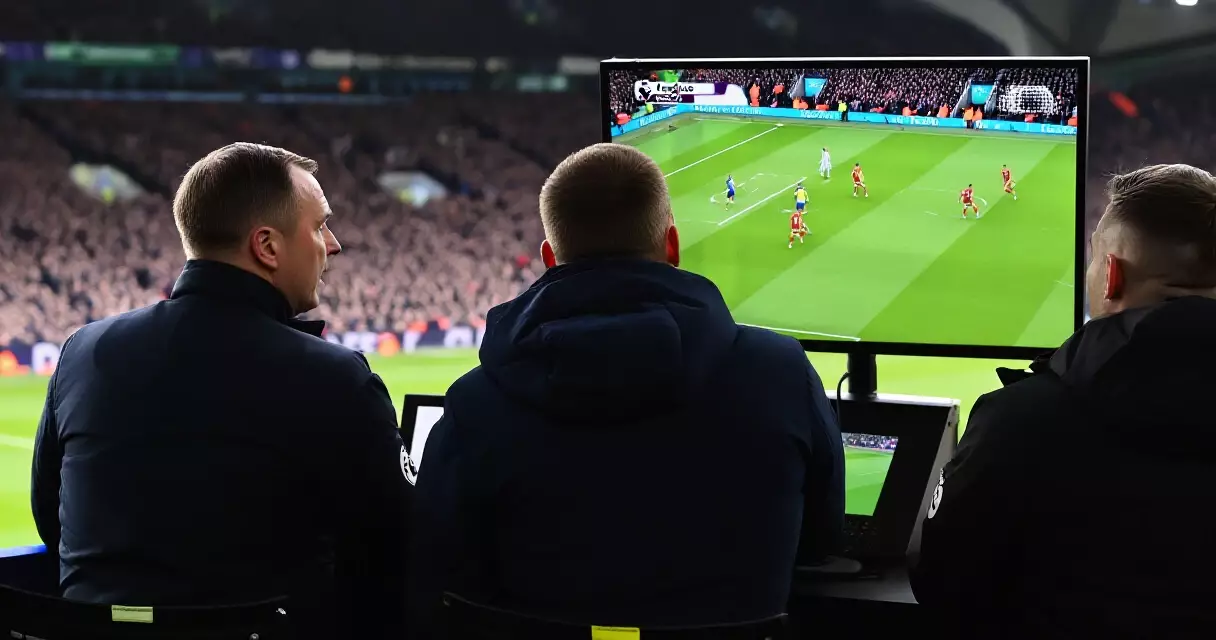
The VAR (Video Assistant Referee) system arrived in the 2019-20 season, adding a layer of post-full-time uncertainty to results pages. A goal celebrated in live apps at 2-0 might revert to 1-0 after a VAR check, or a disallowed goal might be reinstated. Most results platforms now include a short confirmation delay before marking goals as final to account for VAR reviews. For broader context on the European football calendar that occasionally overlaps with Premier League weekends, the Champions League match schedule is worth bookmarking alongside the Premier League fixture list.
FAQ – Premier League Results This Weekend
When do Premier League results come out?
Results post instantly at full-time. The final whistle triggers immediate updates on premierleague.com, BBC Sport, and every major football app. Saturday 3 p.m. UK fixtures typically end around 4:50 p.m. UK time, translating to roughly 11:50 a.m. Eastern during BST and 10:50 a.m. ET during GMT. Sunday results land at staggered times based on when each match started. There is no delay, embargo, or waiting period on scores. All results are public the moment the referee signals the end of the match, with goal-by-goal updates firing in real time from the first minute.
How many Premier League games are played each weekend?
A standard gameweek includes ten matches, covering all 20 Premier League clubs once each. Most fixtures split across Saturday and Sunday, with Monday or Friday games occasionally absorbing one or two matches based on broadcast scheduling. During congested periods such as midweek European rounds, the league may spread a single gameweek across Thursday to Monday. On the final day of the season, all ten matches kick off simultaneously at 3 p.m. UK time to prevent any club from gaming their approach based on rivals’ results happening elsewhere on the pitch at the same moment.
Where can US fans watch Premier League results live?
US viewers have several options under the NBC Universal rights deal running through 2028. Peacock carries the most fixtures, including an increasing number of exclusive matches unavailable on cable. USA Network covers selected games, and NBC broadcasts the highest-profile fixtures on free-to-air television. Telemundo and NBC Universo air selected matches in Spanish. For viewers without a streaming subscription, the NBC Sports website and app provide free live scores, table updates, and short match recaps for all fixtures regardless of which platform holds the live broadcast rights for that specific game.
Why are Saturday 3 pm matches not shown live on UK television?
The 3 p.m. Saturday blackout is a voluntary protection maintained by the Premier League to safeguard attendances at Football League and non-league clubs. The rule was introduced by the Football League in 1960 out of concern that live television would pull fans away from lower-division grounds on the same afternoon. The Premier League has maintained the convention since its founding in 1992. UK fans follow 3 p.m. fixtures through BBC Radio 5 Live, club audio streams, official apps, and live text commentary on BBC Sport. The blackout applies only to domestic UK broadcasts; international feeds in most countries carry 3 p.m. Saturday matches without any restriction.
How does the Premier League table update after weekend results?
The table updates automatically and continuously as each match ends. Points accumulate on the live standings in real time throughout the afternoon and evening. For simultaneous kick-offs, standings reflect partial results until all matches complete. Three points go to the winner, one each for a draw, and zero for the losing side. Goal difference is the second tiebreaker after points, calculated as goals scored minus goals conceded across all matches. Third is total goals scored. In the unlikely event two clubs finish level on points, goal difference, and goals scored, head-to-head record and then alphabetical order would apply as final tiebreakers, though the Premier League has not needed those steps in its history.
What happens if a Premier League weekend match is postponed?
Postponements are rescheduled to a midweek slot, typically within three to six weeks of the original date. The Premier League publishes confirmed rearranged fixtures on its official website within a few days of the postponement announcement. Common causes include extreme weather, overlapping FA Cup or League Cup commitments, and club requests for exceptional circumstances such as bereavement. A postponement temporarily distorts the standings because clubs may have played different numbers of matches. Standings tables note this with a games-played column or a “games in hand” notation next to clubs with fewer matches completed than the current leader.
How far in advance are Premier League weekend fixtures confirmed?
The full fixture list for each season is published in June before the campaign begins, but at that point kick-off times display as “TBC” for most rounds. Exact times are confirmed five to six weeks ahead of each gameweek once Sky Sports, TNT Sports, and Peacock have finalized their broadcast selections. The Premier League updates the schedule on its official website as each round is confirmed, and clubs announce times through their own channels simultaneously. Late changes are rare but possible, usually tied to cup rescheduling or stadium availability. Checking the official schedule one week before a weekend is the safest way to confirm kick-off times before setting calendar reminders or travel plans.
Can I get Premier League weekend results sent to my phone?
Yes. The official Premier League app on iOS and Android sends push notifications for goals, red cards, and full-time results, and allows users to choose specific clubs to follow rather than receiving alerts for every match across the card. BBC Sport’s app offers the same service with the additional option of audio commentary clips. Third-party apps including FotMob and OneFootball cover the Premier League and let users customise notification preferences down to the individual event type. Setting up notifications before a Saturday is the most reliable way to follow results without needing a live stream or an active screen during the match.
Sources
- Wikipedia – Premier League
- Wikipedia – Expected goals (xG)
- BBC Sport – Premier League coverage
- The Guardian – Premier League
- Premier League – Official Results
Cricket Match Scorecards: Test, ODI & T20 Results Database