Summary
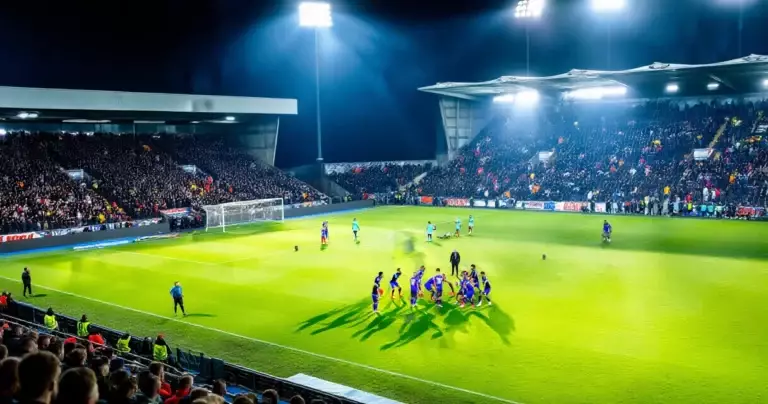
Every weekend from August through May, more than 39,000 fans pack into Premier League stadiums across England while hundreds of millions more track the action on their screens. With matches spread across Saturday and Sunday mornings in the United States,...
Table of contents
- 1 Where to Find Premier League Results Right Now
- 2 How the Premier League Season Is Structured
- 3 Common Premier League Kickoff Times for US Fans
- 4 What a Premier League Result Actually Tells You
- 5 How Results Shape the Premier League Table
- 6 Following Premier League Results as a US Fan
- 7 How Premier League Results Tracking Has Changed
- 8 Stream Problems on Match Day
- 9 FAQ: Premier League Results Today
- 9.1 What time do Premier League matches kick off today?
- 9.2 Where can I find Premier League results for free?
- 9.3 How long does a Premier League match last?
- 9.4 What does HT/FT mean in a Premier League result?
- 9.5 How are Premier League standings determined when teams are level on points?
- 9.6 Can I watch Premier League highlights for free in the US?
- 9.7 Which app is best for Premier League goal alerts?
- 9.8 What is the VAR process and how does it affect the final result?
- 10 Sources
Every weekend from August through May, more than 39,000 fans pack into Premier League stadiums across England while hundreds of millions more track the action on their screens. With matches spread across Saturday and Sunday mornings in the United States, knowing exactly where to get Premier League results today – and how to read them – makes the difference between staying connected and missing the moment. The Premier League broadcasts to 189 countries (Premier League, 2024), generating a cumulative global audience no other football league can match. This guide walks through every resource, every data point, and every context clue that turns a scoreline into a story.
Where to Find Premier League Results Right Now
The single quickest route to a live Premier League score is typing the match name or “Premier League results” directly into Google. The search engine surfaces a live score widget at the top of results, pulling data from official league feeds. But Google is an entry point only. For depth – goalscorers, cards, substitutions, and expected goals – dedicated platforms deliver substantially more.
The official Premier League website at premierleague.com is the authoritative source. It carries live match centres updated by Opta, the sports data company that has held the league’s official data partnership since the 1990s. Every goal, card, and substitution is logged in near real time, typically within 30 seconds of the on-field event.
BBC Sport’s Premier League page is the other go-to for fans wanting a clean, accessible experience. BBC Sport has provided free live football scores for over two decades and receives more than 25 million unique users per month in the United Kingdom (BBC Annual Report, 2024). The layout is direct: match by match, kickoff time, running score, and a link to live text commentary that captures the pace of play.
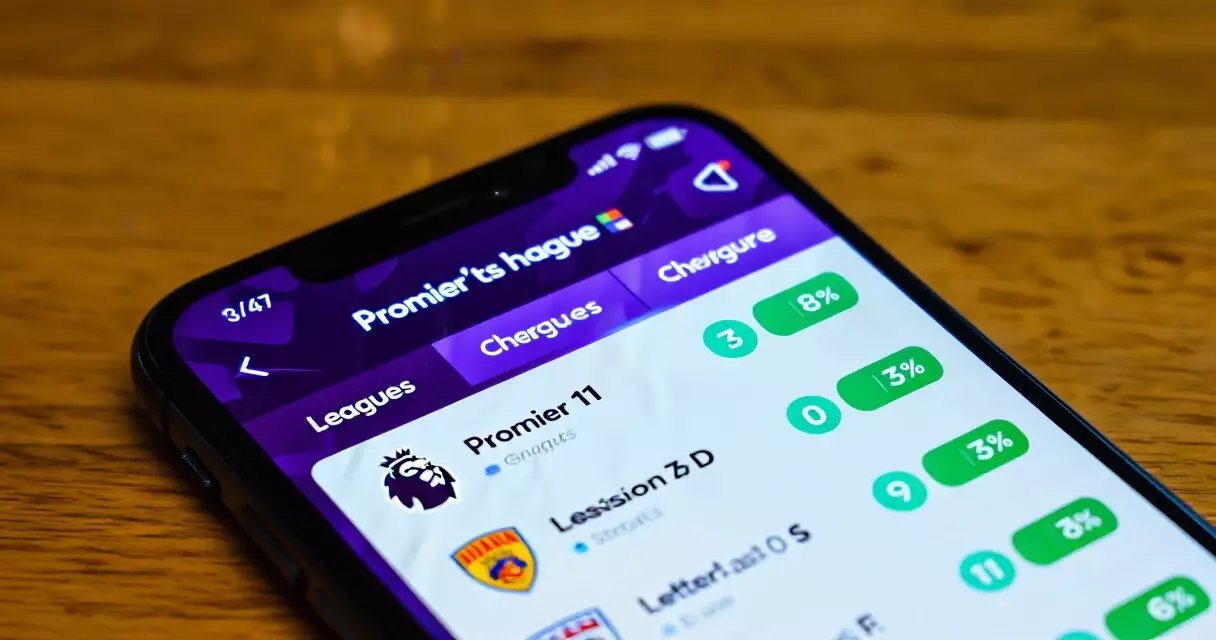
Third-party aggregators – Sofascore, FlashScore, and WhoScored – go further still. These platforms ingest data from multiple providers simultaneously and layer in advanced metrics: possession percentages, shots on target, heat maps, and xG (expected goals). FlashScore covers over 6,000 competitions worldwide and delivers push notifications the moment a goal is confirmed.
How the Premier League Season Is Structured
Tracking any single result requires knowing where it sits in the season’s structure. The Premier League is a round-robin competition featuring 20 clubs, each playing 38 matches – 19 at home and 19 away. That produces 380 games running from mid-August to mid-May. According to Wikipedia’s Premier League article, the competition was founded in 1992 when the top clubs broke away from the Football League First Division, permanently transforming English football’s commercial structure.
The season divides into recognisable phases. August brings straightforward scheduling: Saturday afternoon kick-offs at 3pm UK time plus Sunday and Monday games. December triggers the “festive fixture pile-up,” with matches on Boxing Day, December 27, and New Year’s Day – the densest stretch of Premier League action in any campaign. Missing results during this window means missing pivotal table movement that often defines a club’s final standing.
Midweek rounds appear several times throughout the campaign, typically in September, October, January, and April. These Tuesday and Wednesday games matter significantly for clubs also in European competition. A team playing Thursday night in the UEFA Europa League faces compressed recovery before a Saturday result that could shift them three places in the table. For the Champions League format and how it interacts with the Premier League calendar, our guide on Champions League match schedules covers the full picture.
Common Premier League Kickoff Times for US Fans
One of the biggest practical questions for US-based fans is when matches actually happen. The time difference between the East Coast and London runs at five hours during US Eastern Standard Time, dropping to four hours during the brief window when UK clocks shift before US clocks do. Knowing these windows in advance means you can plan alerts rather than accidentally miss a 7:30am Saturday result.
| UK Kickoff | Eastern (EST) | Central (CST) | Pacific (PST) | Typical Day |
|---|---|---|---|---|
| 12:30pm GMT | 7:30am | 6:30am | 4:30am | Saturday (televised lead-off) |
| 3:00pm GMT | 10:00am | 9:00am | 7:00am | Saturday (UK blackout slot) |
| 5:30pm GMT | 12:30pm | 11:30am | 9:30am | Saturday (late televised) |
| 2:00pm GMT | 9:00am | 8:00am | 6:00am | Sunday (early) |
| 4:30pm GMT | 11:30am | 10:30am | 8:30am | Sunday (afternoon) |
| 7:00pm GMT | 2:00pm | 1:00pm | 11:00am | Sunday Super Sunday |
| 8:00pm GMT | 3:00pm | 2:00pm | 12:00pm | Monday / midweek |
What a Premier League Result Actually Tells You
A scoreline alone – say, 2–1 – is only a fraction of what today’s result contains. The match centre on any major platform breaks a game into several data layers, each revealing something distinct about the performance behind the number.
Goalscorers and minutes are the most immediate layer. A goal in the 88th minute carries psychological and tactical weight that a 12th-minute opener does not. Late goals – those scored after the 80th minute – are tracked separately by analysts because they disproportionately affect momentum heading into the following fixture. Own goals, penalty conversions, and VAR-overturned calls are all flagged distinctly in official data.
Expected goals (xG) has become a standard feature of Premier League result coverage. Developed from academic research and commercialised by companies including StatsBomb and Opta, xG assigns a probability score to every shot based on historical conversion rates from that position and angle on the pitch. A team winning 1–0 with an xG of 0.4 versus the opponent’s 2.1 signals that the scoreline may not reflect the underlying balance of play – relevant context for anyone assessing form.
Discipline data – yellow cards, red cards, and the exact minute they occurred – matters for fantasy football managers and for understanding why a match shifted in the second half. A red card in the 55th minute changes the tactical reality for 35 minutes of play, often producing a scoreline that misrepresents both teams’ actual performance levels.
How Results Shape the Premier League Table
Every confirmed result feeds directly into the Premier League standings, updated in real time the moment a final whistle sounds. The points system is simple at its core: three points for a win, one for a draw, zero for a loss. What separates teams equal on points is goal difference first, then total goals scored, then head-to-head record across the two league meetings that season.
| Result | Points Awarded | Table Consequence |
|---|---|---|
| Win | 3 | Can leapfrog multiple teams depending on rivals’ results |
| Draw | 1 (each club) | Minimal movement unless rivals also drop points |
| Loss | 0 | Teams below can leapfrog with a win of their own |
The table’s upper section determines European competition. Finishing in the top four earns a UEFA Champions League berth. Fifth and sixth place typically secure Europa League spots, while seventh can reach the UEFA Conference League depending on FA Cup and League Cup outcomes. The full Premier League results and table tracker on Daily Match keeps standings updated across every gameweek with goal scorers and attendance figures.
At the bottom, relegation is brutal in financial terms. The three clubs finishing 18th, 19th, and 20th drop to the Championship. According to Deloitte’s Annual Review of Football Finance (2024), relegation costs clubs an estimated £100–200 million in lost broadcast revenue over the following years, which is why a single result in April can define a club’s next half-decade.
Relegation costs Premier League clubs an estimated £100–200 million in broadcast revenue – which is why a single April result can shape a club’s next five years.
Following Premier League Results as a US Fan
In the United States, Peacock (NBCUniversal’s streaming platform) holds Premier League broadcast rights through the 2028–29 season under a deal reportedly worth $2.7 billion (Sports Business Journal, 2022). Every Premier League match is available live on Peacock, making it the most important single tool for American fans tracking results as they happen rather than after the fact.
NBC Sports’ broadcast schedule also includes selected matches on NBC’s main free-to-air channel on Sundays, giving casual viewers access without a streaming subscription. The Peacock app’s soccer section refreshes live scores, posts highlight clips within minutes of each goal, and carries full match replays once a game has finished – useful for fans in Pacific time who would otherwise be watching at 4:30am.
ESPN FC and the ESPN app aggregate Premier League results alongside analysis from commentators including Alexis Lalas and Steve Nicol. The ESPN soccer hub refreshes live scores and allows club-specific alerts that push the moment a goal is confirmed. For fans who want to stream the match itself rather than just track the score, our article on how to watch top European football in the US covers the platform landscape across competitions.
Social media has also become a core results channel. The official Premier League account on X (formerly Twitter) posts goal clips, final scores, and table updates within minutes of each match ending. Individual club accounts publish reactions immediately, and fan communities on Reddit’s r/soccer fill in with result threads that provide real-time sense of mood around every result.

How Premier League Results Tracking Has Changed
When the Premier League launched in August 1992, fans discovered results primarily through teletext on television, Saturday evening newspaper editions, and the BBC Radio 5 Live classified results broadcast at 5pm. The reading of scores – a specific monotone cadence delivering results alphabetically – became a cultural institution that older supporters can still recall word for word.
The internet reshaped results consumption from the late 1990s. Websites including BBC Sport and the newly-launched ESPN Soccernet offered minute-by-minute text updates, replacing the wait for the evening paper. The smartphone era from 2007 onwards accelerated the shift completely: suddenly every fan carried a live score tracker in their pocket, with no delay between the on-field event and the fan notification.
Data depth expanded alongside delivery speed. Early match reports contained a scorer’s name and a half-time score. Today’s Premier League result page on Sofascore or WhoScored carries over 50 distinct data points per match: passes completed, duels won, aerial battles, progressive carries, pressing intensity per 90 minutes, and more. The Wikipedia Premier League article tracks much of this evolution – from the league’s founding broadcast deal to the multi-billion-dollar global rights packages that now fund the data infrastructure fans use daily.
From Saturday teletext to real-time xG dashboards in three decades – the Premier League result has become one of sport’s most data-rich single moments.
Stream Problems on Match Day
Tracking a result live sometimes means dealing with a stream that buffers or drops at the worst moment. Technical issues on Peacock or CBS Sports are most common during simultaneous high-demand kick-offs – the 7:30am EST Saturday slot when multiple matches start at once. If the stream fails during a match, our streaming fix guide covers the most common causes including VPN conflicts, DNS issues, and CDN routing problems that affect sports streams specifically.
FAQ: Premier League Results Today
What time do Premier League matches kick off today?
Premier League matches on Saturdays typically kick off at 12:30pm UK time (7:30am EST), 3:00pm UK (10:00am EST), and 5:30pm UK (12:30pm EST). Sunday fixtures usually start at 2:00pm UK (9:00am EST) and 4:30pm UK (11:30am EST), with a “Super Sunday” evening game at 7:00pm UK (2:00pm EST). Midweek matches on Tuesday and Wednesday generally kick off at 7:45pm UK (2:45pm EST) or 8:00pm UK (3:00pm EST). These times shift slightly for rescheduled or rearranged fixtures, and the 3pm Saturday slot in the UK carries no broadcast coverage domestically. Always confirm via the official Premier League app or premierleague.com before the first whistle.
Where can I find Premier League results for free?
Several platforms deliver free Premier League results without a subscription. BBC Sport’s scores and fixtures page at bbc.com/sport updates in near real time and carries a brief text commentary alongside each live score. Google’s search results surface a live score widget the moment you search for a match name. Sofascore and FlashScore both offer free apps and websites with goalscorers, cards, and basic statistics included in the free tier. The official Premier League app is also free to download and delivers the most detailed official data for each match. For US fans specifically, ESPN’s free score tracker covers all Premier League matches, though full match replays require an ESPN+ or Peacock subscription to access after the final whistle.
How long does a Premier League match last?
A Premier League match consists of two 45-minute halves plus injury time at the end of each period. The referee determines how much stoppage time to add based on time lost to injuries, substitutions, VAR reviews, and other stoppages. Since the 2022–23 season, following FIFA directives, referees have added substantially more injury time – second halves regularly run to seven, eight, or even ten additional minutes in high-VAR games. Including a 15-minute half-time interval, you should expect a typical Premier League match to run approximately 100–115 minutes from first whistle to last. There is no extra time or penalty shootout in standard league fixtures: a draw stays a draw, and both teams collect one point.
What does HT/FT mean in a Premier League result?
HT stands for “half time” and FT stands for “full time.” A result shown as HT 1–0 / FT 2–1 means the first half ended with the home side leading 1–0 and the final score was 2–1 to the home team. Most live score trackers display both figures so you can reconstruct which team scored when during the match and whether a comeback or a collapse occurred in the second period. HT scores are especially useful for assessing second-half momentum shifts. In cup competitions you may also see AET (after extra time) and PSO or PKS (penalty shootout), though neither notation applies to standard Premier League results where matches end at full time regardless of the scoreline.
How are Premier League standings determined when teams are level on points?
When two or more clubs finish level on points in the Premier League table, the first tiebreaker is goal difference – total goals scored minus total goals conceded across all 38 matches. If goal difference is also equal, the next separator is total goals scored. If that is still the same, the clubs are split by their head-to-head points total across the two league meetings that season, then head-to-head goal difference. This hierarchy means that late-season heavy wins can matter as much as simply earning three points: a 4–0 win when a 1–0 would suffice may decide final positioning. The full tiebreaker rules are published at premierleague.com under “Premier League Explained.”
Can I watch Premier League highlights for free in the US?
Yes, with some caveats on depth and timing. The official Premier League YouTube channel posts highlight clips for most matches, typically short goal-package videos rather than extended match replays. NBC Sports and Peacock publish fuller highlight packages, with some available without a subscription and others behind the Peacock paywall. The “Premier League Mornings” show on Peacock provides a weekly round-up of all goals and key moments from each gameweek. Peacock also offers a full match-replay feature for subscribers who want to watch a complete game after it has ended. Rights restrictions mean that free, full-match replays are not widely available outside the subscription tier, but goal highlights for every match are generally accessible within an hour of the final whistle via YouTube or social media.
Which app is best for Premier League goal alerts?
The official Premier League app (free on iOS and Android) sends push notifications for goals, substitutions, cards, and full-time scores filtered to your chosen clubs. It uses official Opta data and is typically the fastest confirmed source for goals, usually beating broadcast commentary by 15–30 seconds. Sofascore is the preferred alternative for fans following multiple clubs or wanting richer context alongside each alert – its notifications include the scorer’s name, the minute, and the updated score. FlashScore is a strong option for fans tracking results across multiple leagues simultaneously. All three are free to download; the Premier League app’s notification features do not require a paid subscription.
What is the VAR process and how does it affect the final result?
VAR (Video Assistant Referee) was introduced to the Premier League in the 2019–20 season. A team of officials at Stockley Park in London reviews footage of incidents flagged by the on-field referee or identified during live monitoring. VAR can overturn decisions on goals, red cards, penalties, and cases of mistaken identity. When a VAR check is underway, the on-field referee draws a rectangle in the air to signal a review is in progress. The confirmed result – whether a goal stands or is disallowed – is the figure that counts in the official match record and in the Premier League table. VAR checks have extended average second-half injury time considerably since the technology was introduced, which is why modern Premier League results pages log each decision separately.
Sources
- Premier League official website – broadcast reach, official match data, tiebreaker rules, xG integration
- Wikipedia: Premier League – historical overview, competition structure, founding, broadcast evolution
- BBC Sport – Premier League – live scores, fixtures, editorial coverage; monthly user data from BBC Annual Report 2024
- Deloitte Annual Review of Football Finance, 2024 – relegation financial impact estimates for Premier League clubs
- BBC Annual Report 2024 – BBC Sport monthly unique visitor figures cited in text
Cricket Match Scorecards: Test, ODI & T20 Results Database