Summary
✓Reviewed by Laura Bennett World Athletics president Sebastian Coe issued a pointed warning on August 15, 2026, urging politicians to stay out of sport's decision-making after U.S. President Donald Trump personally phoned FIFA president Gianni Infantino to push for the...
Table of contents
- 1 Coe Draws a Line: Politicians Must Stay Off the Pitch
- 2 What Happened: The Balogun Red Card and Trump’s Intervention
- 3 The Match: United States Eliminated 4-1 by Belgium Despite Balogun’s Availability
- 4 Why This Story Matters for Global Sport Governance
- 5 USMNT Context: Balogun’s Role and the Wider World Cup Picture
- 6 Islam Makhachev Sets UFC Record in Parallel Sports Headline
- 7 What Happens Next: Calls for FIFA Transparency and Rule Clarification
- 8 Related Coverage
- 9 Sources
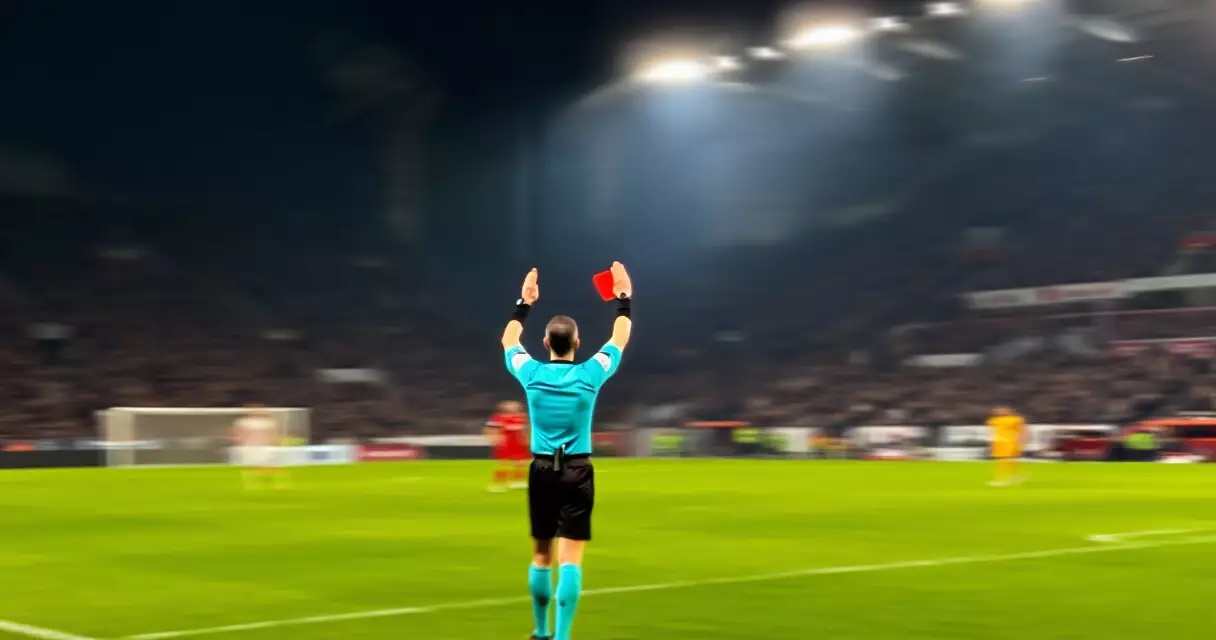
World Athletics president Sebastian Coe issued a pointed warning on August 15, 2026, urging politicians to stay out of sport’s decision-making after U.S. President Donald Trump personally phoned FIFA president Gianni Infantino to push for the overturn of American striker Folarin Balogun‘s red-card suspension during the 2026 FIFA World Cup — a move critics say set a dangerous precedent for political interference in independent sports governance.
Coe Draws a Line: Politicians Must Stay Off the Pitch
In remarks published by Al Jazeera on August 15, 2026, Coe cited the Trump-Balogun episode as a prime example of why governing bodies must protect their autonomy. His phrase — politicians should be “kept on the bus but out of sport’s driving seat” — immediately circulated across the international sports media. Coe argued that while heads of state can be enthusiastic supporters of sport, any attempt to influence disciplinary or eligibility rulings directly threatens the integrity of competition and public trust in sporting institutions.
Coe’s comments were framed around a broader pattern he sees emerging, one that involves not just the United States and FIFA but also pressures being applied around the Olympic movement. “When political leaders begin picking up the phone to change a referee’s call — even an administrative one — every athlete, every team, and every fan has reason to question whether the sport they love still operates on a level field,” Coe said, according to Al Jazeera’s report.
What Happened: The Balogun Red Card and Trump’s Intervention
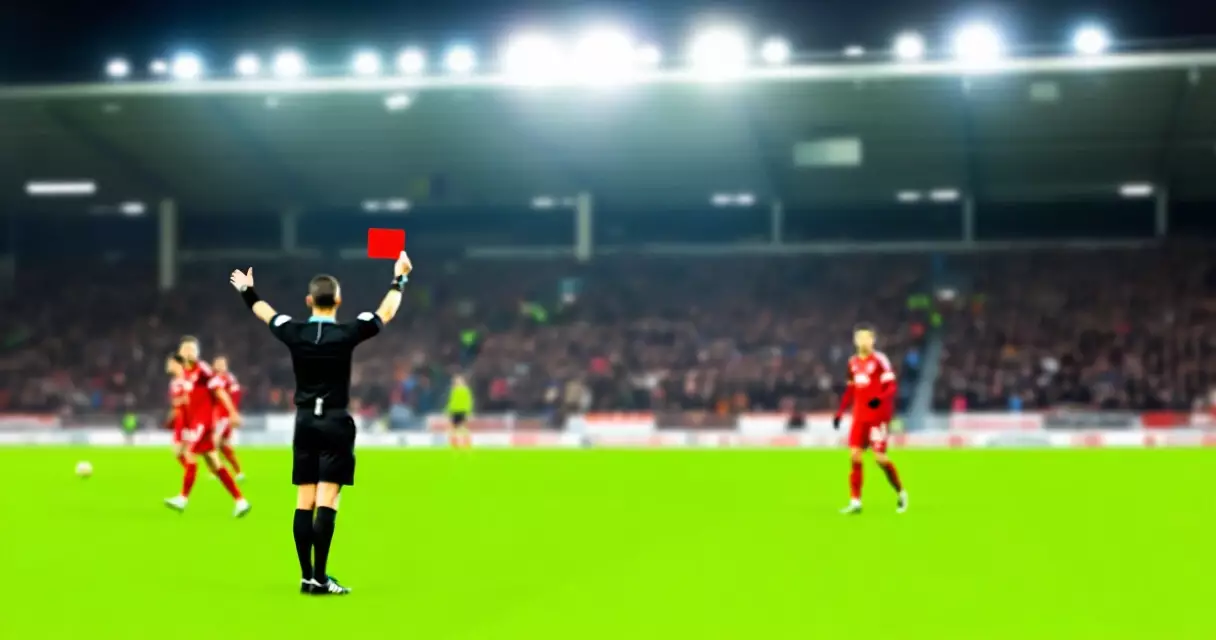
The sequence of events began during the United States’ group-stage match against Bosnia-Herzegovina at the 2026 World Cup. Balogun, the USMNT’s starting striker, received a red card that triggered an automatic one-match suspension under Article 10.5 of FIFA’s World Cup disciplinary rules. The timing was critical: the suspension would have benched Balogun for the Round of 16 showdown against Belgium on July 7, 2026.
According to Yahoo Sports reporting from July 6, 2026, Trump confirmed he had spoken directly to Infantino about the case. “They made the right decision,” Trump said, according to Yahoo Sports, framing his intervention as correcting an injustice to the American team and its star forward. FIFA subsequently announced that, citing Article 27 of the FIFA Disciplinary Code (FDC), Balogun’s automatic ban would be suspended for a probationary period of one year — effectively clearing him to play Belgium.
FIFA’s disciplinary statement confirmed the regulatory mechanism: “By operation of Article 27 FDC, the implementation of the automatic match suspension for USA player Folarin Balogun is suspended for a probationary period of one (1) year.” The language drew immediate scrutiny from legal analysts and sports administrators who noted that Article 27 discretionary suspensions are rarely — if ever — applied to reverse automatic red-card bans in knockout-round fixtures.
The Match: United States Eliminated 4-1 by Belgium Despite Balogun’s Availability
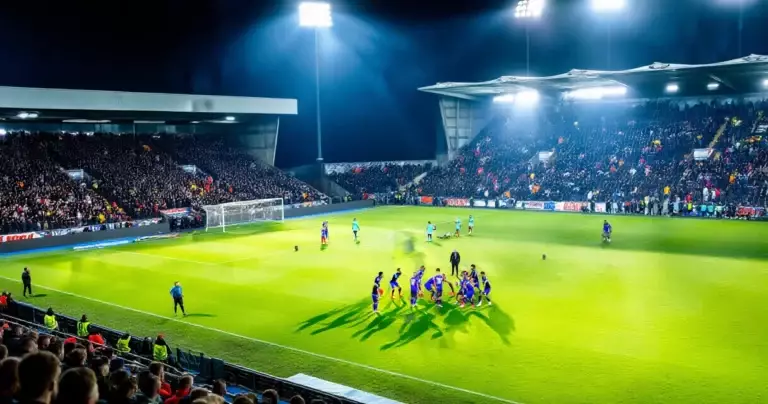
The intervention ultimately did not spare the United States from elimination. ABC News reported on July 7, 2026 that the USMNT lost 4-1 to Belgium in the Round of 16, ending the host nation’s World Cup run in front of a stunned home crowd. The loss came despite Balogun’s eligibility being restored — a result that deepened the controversy rather than resolving it, with critics questioning whether the diplomatic effort had been worthwhile and whether it had compromised FIFA’s standing regardless of the scoreline.
| Date | Event | Key Detail |
|---|---|---|
| Group Stage, July 2026 | Balogun red card vs. Bosnia-Herzegovina | Automatic 1-match ban triggered under Article 10.5 |
| July 6, 2026 | Trump calls Infantino | President lobbies FIFA to overturn suspension |
| July 6, 2026 | FIFA announces ban suspended | Article 27 FDC cited; Balogun placed on 1-year probation |
| July 7, 2026 | USA vs. Belgium, Round of 16 | Balogun plays; USA eliminated 4-1 |
| August 15, 2026 | Sebastian Coe issues warning | Al Jazeera publishes Coe’s call to keep politics out of sport |
Why This Story Matters for Global Sport Governance
The debate that Coe has elevated goes beyond one player, one match, or one World Cup. It strikes at the institutional design of international sporting bodies — organizations like FIFA, the IOC, and World Athletics that have long claimed independence from governmental control as a foundational principle. That principle underwrites everything from anti-doping enforcement to eligibility decisions, from the drawing of fixtures to the adjudication of results.
Critics note that if it becomes normalized for a head of state to phone a governing body’s president and influence a disciplinary outcome, the deterrent value of red cards, suspensions, and code-of-conduct rules diminishes sharply. “Sport’s credibility depends on everyone knowing the rules apply equally,” said one sports governance analyst quoted in Al Jazeera’s coverage. “Once you introduce a phone call from a president as a variable, you’ve changed the game.”
Supporters of Trump’s intervention counter that Article 27 of the FIFA Disciplinary Code exists precisely to allow discretionary review of automatic sanctions, and that FIFA exercised a legitimate legal mechanism rather than bowing to political pressure. FIFA has not publicly commented on whether the presidential call influenced the final decision. The governing body’s silence has, in itself, become part of the story.
USMNT Context: Balogun’s Role and the Wider World Cup Picture
Folarin Balogun was one of the most important players in the USMNT’s 2026 World Cup campaign, functioning as the team’s primary striker and goal threat during the group stage. His red card against Bosnia-Herzegovina came as the United States had already secured progress to the knockout rounds, making the disciplinary implications the immediate focus rather than qualification itself.
The broader USMNT context is one of a team that entered the tournament with high domestic expectations as one of three co-hosts — alongside Canada and Mexico — of a 48-team World Cup. A fourth-quarter exit at the Round of 16 stage, regardless of the Balogun controversy, represented a disappointment relative to those expectations. For coverage of how the United States entered the tournament and the key matchups that defined the group stage, see our earlier analysis: FIFA World Cup 2026 Opener: Key Matchups and Opening Ceremony Details.
The Pochettino-era USMNT had built considerable optimism heading into the home tournament, following the national team’s coaching stability and qualifying campaign. For context on the USMNT’s long-term planning and Pochettino’s contract status, see: Daily Match Report home coverage.
Islam Makhachev Sets UFC Record in Parallel Sports Headline
While the Coe-Trump-Balogun story dominated the governance conversation on August 16, 2026, the weekend also produced one of the most notable individual sports achievements in recent memory. According to The Athletic, Islam Makhachev broke Anderson Silva’s UFC record with his 17th consecutive win, doing so in a title defense. Silva’s streak had spanned June 2006 to October 2012 and had included 10 consecutive title finishes — a UFC record that had stood for over a decade. Makhachev’s achievement was widely described as one of the defining feats in mixed martial arts history.
The juxtaposition of these two stories — one about sport’s greatest individual achievement, the other about sport’s governance coming under political pressure — captures the full range of what competition means in 2026: at its peak, sport produces moments of individual greatness that transcend borders; at its most contested, it becomes a arena in which political power and institutional independence come into direct conflict.
What Happens Next: Calls for FIFA Transparency and Rule Clarification
Following Coe’s August 15 remarks, sports governance observers are calling on FIFA to clarify publicly under what conditions Article 27 of the FIFA Disciplinary Code can be applied to suspend automatic red-card bans in knockout fixtures — and whether any external communications with heads of state or other political figures are permitted to inform those decisions.
Several football associations are understood to be monitoring the situation closely, aware that the precedent could be cited by other governments seeking to influence disciplinary decisions affecting their own national teams in future tournaments. The 2030 World Cup and the ongoing expansion of FIFA’s tournament calendar mean that the governance framework around player suspensions will face further tests in the years ahead.
For Balogun personally, the year-long probation period attached to his suspended ban means that any further red card within the next 12 months could trigger both the new ban and enforcement of the original one-match suspension. The clock started running from FIFA’s July 2026 ruling.
Coe’s intervention — framed around principles rather than personalities — has given the sports governance community a fresh vocabulary for a problem that, as the World Cup’s host-nation dynamics illustrated, is only going to become more acute as major events concentrate in countries with powerful, activist governments.
Related Coverage
Sources
- FIFA World Cup and Olympics cited as Coe warns of politicians near … — aljazeera.com
- President Trump confirms role in FIFA reviewing, overturning Folarin … — sports.yahoo.com
- ABC News reported on July 7, 2026 — abcnews.com
- 2026 Trump–FIFA red card controversy – Wikipedia — en.wikipedia.org
- US crashes out of World Cup as storm over Trump … — reuters.com