Summary
✓Reviewed by Laura Bennett When fans debate the most thrilling events in world sport, Tennis vs Motorsports: ATP Finals vs Formula 1 Sprint Race surfaces as one of the sharpest format contrasts imaginable — an elite season-ending tennis championship on...
Table of contents
- 1 What Is the ATP Finals? Format, Field, and Stakes
- 2 What Is the F1 Sprint Race? A Brief History of the Format
- 3 Tennis vs Motorsports: How Points and Prestige Differ
- 4 Format Comparison: ATP Finals vs Formula 1 Sprint Race Side by Side
- 5 Why the ATP Finals Format Rewards Season-Long Excellence
- 5.1 Group Stage vs. Knockout: How the ATP Finals Plays Out
- 5.2 Year-End No. 1 Implications
- 6 Why the F1 Sprint Favors Aggression Over Strategy
- 7 Spectator and Broadcast Value: Which Event Delivers More?
- 8 Tennis vs Motorsports in 2026: Current Season Context
- 9 Frequently Asked Questions
- 9.1 How many players compete in the ATP Finals?
- 9.2 How long is an F1 Sprint Race?
- 9.3 Does winning an F1 Sprint count as a Grand Prix win?
- 9.4 How many ranking points does the ATP Finals winner receive?
- 9.5 How many Sprint weekends are there in a Formula 1 season?
- 9.6 Which event is more prestigious — the ATP Finals or an F1 Sprint Race?
- 10 Sources
When fans debate the most thrilling events in world sport, Tennis vs Motorsports: ATP Finals vs Formula 1 Sprint Race surfaces as one of the sharpest format contrasts imaginable — an elite season-ending tennis championship on one side, a 30-minute wheel-to-wheel dash on the other. Both formats squeeze maximum drama into a compressed window, yet they operate on entirely different competitive logics, points structures, and spectator experiences. Understanding how each works — and why each was designed the way it is — gives sports fans, analysts, and fantasy competitors a clearer lens on the modern sports calendar.
What Is the ATP Finals? Format, Field, and Stakes
The ATP Finals, currently sponsored as the Nitto ATP Finals and held in Turin, Italy, is the season-ending championship of the ATP Tour. According to Wikipedia’s ATP Finals entry, the event invites the top eight men’s singles players and the top eight doubles pairs in the year-end rankings. Players compete in a round-robin group stage before moving to knockout semifinals and a final. The format rewards consistency across an entire season: only the elite handful who have accumulated the most ranking points by late November earn a place at the table.
The points on offer are substantial. As documented by Wikipedia’s ATP Tour overview, winning the ATP Finals delivers 1,500 ranking points, with the runner-up collecting 1,100. That makes it one of the highest point-value events on the entire tour — behind only the four Grand Slams. The prize money in 2024 stood at US$15,250,000, according to the same source, underscoring the event’s commercial and competitive weight.
What Is the F1 Sprint Race? A Brief History of the Format
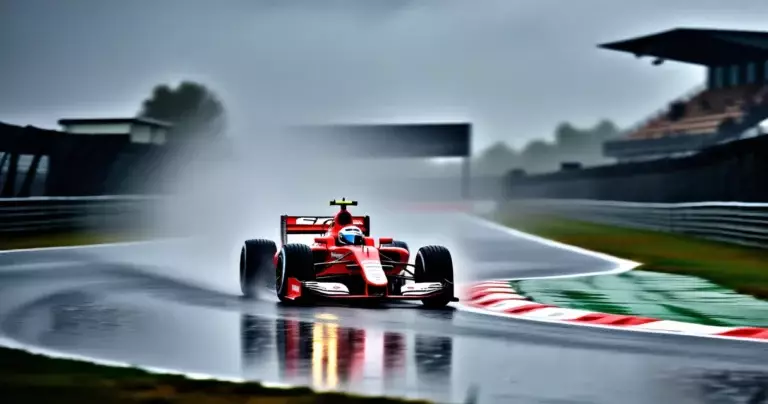
Formula 1 introduced the Sprint as an experimental format in 2021, adding a short race on Saturdays at select Grand Prix weekends to generate additional wheel-to-wheel action and television audience moments. According to Formula 1’s official 2024 Sprint explainer, the format entered its fourth season that year and has since continued into 2026. The key design principle, as described by Silverstone Circuit’s beginner’s guide, is simplicity: 100 km, no mandatory pit stops, and points awarded only to the top eight finishers on an 8-7-6-5-4-3-2-1 scale.
Crucially, a Sprint victory does not count as a Grand Prix win in a driver’s career statistics. The Sprint sits inside a wider Grand Prix weekend rather than replacing it — meaning fans attending or watching a Sprint weekend receive a standard qualifying session, a Sprint qualifying session, the Sprint itself, and then the full Grand Prix. One analysis cited by RaceFans found that Sprint weekends actually offered fewer total track minutes (270 minutes maximum) than traditional Grand Prix weekends (345 minutes maximum) — a point of ongoing debate among promoters and fans.
Tennis vs Motorsports: How Points and Prestige Differ
The contrast in points value between these two events is stark and tells you a great deal about how each sport weights its competitions. In Formula 1, winning a full Grand Prix yields 25 championship points; winning a Sprint yields 8 — roughly a third, as confirmed by Sky Sports’ 2026 Sprint guide. In tennis, the ATP Finals winner collects 1,500 ranking points against a Grand Slam winner’s 2,000 — a gap, but a much smaller one proportionally. The ATP Finals is ranked second only to the Grand Slams, whereas the Sprint sits at a significant discount to the Grand Prix even within its own championship.
This points differential shapes the strategic calculus for athletes in each sport. In Formula 1, drivers and constructors fight for Sprint points because every single point matters in a tight championship battle, but no team sacrifices their Grand Prix strategy for a Sprint result. In tennis, a player who reaches the ATP Finals has already secured an elite status for the season; what the Finals delivers is both prestige and a ranking cushion — or potentially a year-end world No. 1 ranking. According to the ATP Tour’s own reporting on the 2025 Finals, Carlos Alcaraz led Jannik Sinner by 1,050 points in the ATP Live Race to Turin before the event, illustrating how tightly the year-end ranking can hinge on Finals performance.
Format Comparison: ATP Finals vs Formula 1 Sprint Race Side by Side
A direct format comparison reveals how differently these events are constructed despite sharing the quality of compressed, high-stakes competition. The table below draws from Wikipedia, Formula 1’s official Sprint explainer, and Sky Sports’ 2026 Sprint guide.
| Attribute | ATP Finals (Tennis) | F1 Sprint Race |
|---|---|---|
| Frequency per year | Once (season-ending) | Multiple — 6 weekends in 2024 |
| Participants | Top 8 men’s singles players | All 20 F1 drivers |
| Duration | ~8 days (group + knockout) | ~30 minutes |
| Points to winner | 1,500 ranking points | 8 championship points |
| Prize pool (2024) | US$15,250,000 | No separate Sprint prize |
| Does a win count as a career title? | Yes — ATP title | No — not a Grand Prix victory |
| Pit stops required? | N/A | No mandatory pit stop |
| Points awarded to how many? | Based on match wins/losses | Top 8 finishers only |
Why the ATP Finals Format Rewards Season-Long Excellence
The exclusivity of the ATP Finals is by design. Only eight singles players qualify, meaning a single hot week cannot get a player through the door — the entire season must be navigated with consistent results. This stands in sharp contrast to the F1 Sprint, which all 20 drivers on the grid contest, regardless of their championship position. The Finals’ qualification mechanism means that even a defending Grand Slam champion can miss the event if their year-end ranking slips outside the top eight.
The round-robin group stage adds another layer of strategic depth. Players must manage energy and tactics across multiple matches before reaching the knockout rounds — a mental and physical challenge with no equivalent in a 30-minute Sprint race. The ATP Finals thus functions as a genuine test of breadth: best-of-three sets, multiple opponents, and consecutive days of high-level play. For tennis followers tracking the Wimbledon favorites and Grand Slam contenders throughout the year, the Finals represent the definitive end-of-season verdict on who the season’s best player truly was.
Group Stage vs. Knockout: How the ATP Finals Plays Out
Each of the eight qualified singles players is drawn into one of two groups of four. Every player faces the other three in their group in round-robin matches. The top two finishers from each group advance to the semifinals, where the format switches to standard elimination. A loss in the group stage does not end a player’s tournament — a player can lose one match and still progress if they win the other two. This structure frequently produces scenarios where a player who lost their opening match goes on to win the title, adding to the drama.
Year-End No. 1 Implications
The ATP Finals carries an additional competitive dimension beyond the title itself: year-end world No. 1 ranking. Because the Finals is the last event of the season, its ranking points are the final variable in the year-end standings calculation. According to ATP Tour reporting on the 2025 Finals, the race to year-end No. 1 between Carlos Alcaraz and Jannik Sinner was separated by 1,050 points before the tournament, meaning the Finals outcome had direct implications for which player ended the season ranked first in the world. No equivalent end-of-season swing exists in F1 Sprint races.
Why the F1 Sprint Favors Aggression Over Strategy
The Sprint’s design philosophy is the inverse of a Grand Prix’s. As described in Silverstone Circuit’s Sprint guide, the 100 km distance and absence of mandatory pit stops push drivers toward all-out aggression from the opening lap. There is no long-run tire management to calculate, no undercut strategy to execute, and no need to protect the car for a race that ends in 30 minutes. The result is typically a more frenetic, overtaking-rich session that rewards qualifying pace and racecraft over strategic planning.
An academic analysis published on arXiv (July 2025) examining predictive power of qualifying performance in Formula 1 races found that qualifying position is the most significant predictor of final race placement — a finding that applies with even greater force to the Sprint, where there is less time for strategic variation to reassert itself. Fans following the Monaco Grand Prix results will recognize how qualifying position can lock in a race outcome; in Sprint format, that effect is amplified.
“A Sprint isn’t just a shorter Grand Prix — it’s designed to reward aggressive racing” — Silverstone Circuit’s official beginner’s guide to F1 Sprint races.
Spectator and Broadcast Value: Which Event Delivers More?
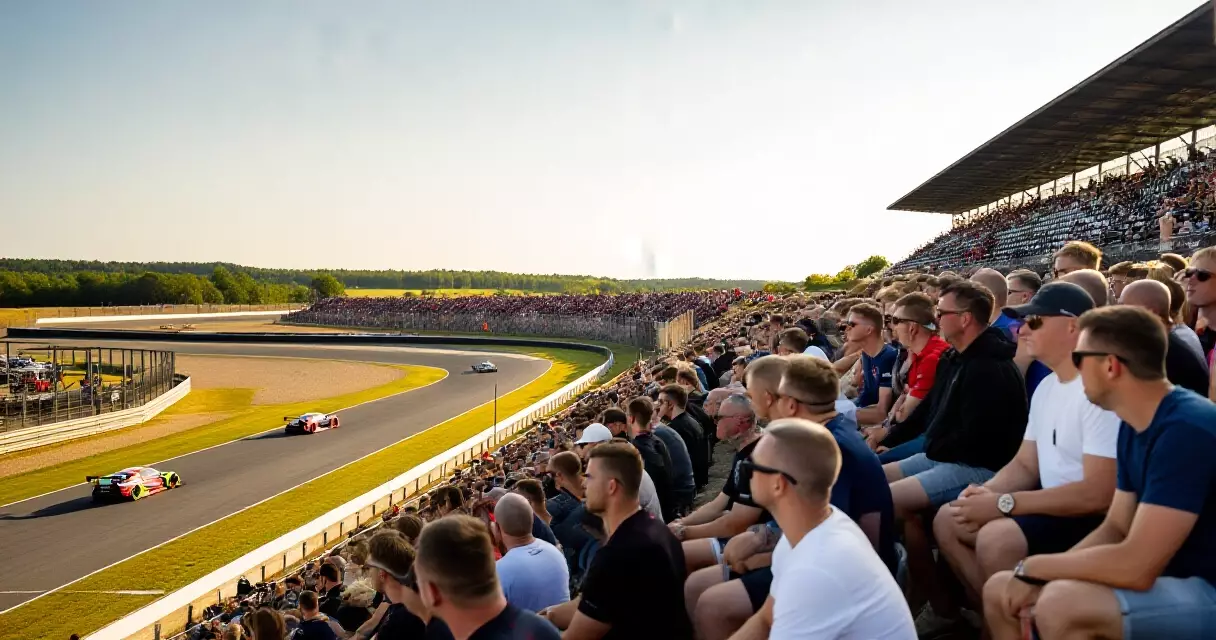
From a broadcast and live attendance perspective, the ATP Finals and the F1 Sprint occupy very different roles. The Finals unfolds across eight days in Turin, offering a sustained narrative arc — early group matches, mid-week form shifts, and a climactic weekend of semifinals and a final. Fans can follow the drama across an extended period, with storylines building across multiple sessions.
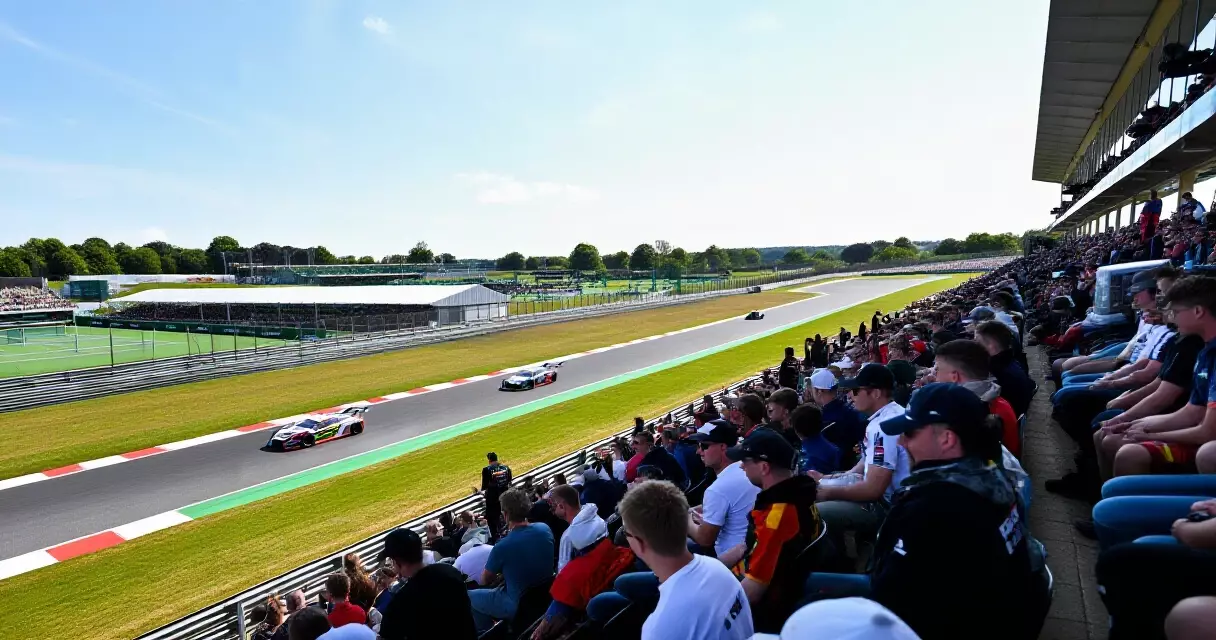
The F1 Sprint is engineered for the opposite experience: appointment viewing that lasts half an hour. Sky Sports’ 2026 Sprint guide notes that the 36 total points available across all eight scoring positions create genuine tension even for midfield teams fighting over a single championship point. However, the trade-off in track time is real. Data compiled by RaceFans showed Sprint weekends provide a maximum of 270 minutes of total session time, compared to 345 minutes on a traditional weekend — 75 fewer minutes of on-track action, despite the addition of the Sprint race itself.
| Broadcast Dimension | ATP Finals | F1 Sprint Race |
|---|---|---|
| Total event duration | ~8 days | ~30 minutes of racing |
| Narrative arc | Extended (group + knockout) | Single session, no build-up within event |
| Points drama | Year-end No. 1 often at stake | Max 8 pts for winner (vs 25 in Grand Prix) |
| Exclusivity factor | Top 8 only — season-long gate | All 20 drivers eligible |
| Total track/match time | Multiple best-of-3 matches | Max 270 min per Sprint weekend (RaceFans) |
Tennis vs Motorsports in 2026: Current Season Context
As of August 1, 2026, both sports are mid-season. The ATP Tour is in its summer hard-court swing heading toward the U.S. Open series, with the Finals still months away in November. The 2026 Formula 1 season, as documented by Sky Sports’ 2026 Sprint schedule, continues to incorporate Sprint weekends at select circuits — with the same 8-7-6-5-4-3-2-1 points distribution to the top eight finishers that has been in place since the format was refined.
Both sports are in a competitive era defined by close rivalries at the top. Tennis fans tracking the ATP rankings after the French Open 2026 results will find the Finals field taking shape through summer results, while F1 followers watching each Grand Prix weekend assess how Sprint points are gradually shifting championship standings race by race. The convergence of elite individual competition in both sports makes August an important month for establishing who arrives at each sport’s November climax with momentum.
“The Sprint has clearly become a standardized part of the modern F1 product, not an experiment” — framing consistent with McLaren’s 2026 F1 Sprint guide and Sky Sports’ 2026 season coverage.
Frequently Asked Questions
How many players compete in the ATP Finals?
Eight men’s singles players and eight doubles pairs qualify for the ATP Finals, according to Wikipedia’s entry on the tournament. Entry is determined by year-end ATP rankings, with the top eight singles players in the Race to Turin earning automatic berths. This makes it one of the most exclusive fields in professional tennis.
How long is an F1 Sprint Race?
An F1 Sprint Race covers approximately 100 km — roughly one-third of a standard Grand Prix distance — and lasts about 30 minutes, per Formula 1’s official Sprint explainer and the Silverstone Circuit beginner’s guide. There are no mandatory pit stops, which keeps the racing continuous and pushes drivers into more aggressive approaches from the opening lap.
Does winning an F1 Sprint count as a Grand Prix win?
No. According to Formula 1’s official rules documentation, a Sprint victory does not count toward a driver’s Grand Prix win total in their career statistics. The Sprint is a separate competitive session within a Grand Prix weekend, not a standalone race in its own right. Only the Grand Prix itself, held on Sunday, constitutes an official race win.
How many ranking points does the ATP Finals winner receive?
The ATP Finals winner earns 1,500 ranking points, while the runner-up receives 1,100, as listed in Wikipedia’s ATP Tour overview. These points are among the highest on the tour outside of Grand Slams, which award 2,000 points to the winner. The Finals therefore represents a critical opportunity to reshape the year-end ranking in the final weeks of the season.
How many Sprint weekends are there in a Formula 1 season?
The 2024 Formula 1 season featured six Sprint weekends at Shanghai, Miami, Spielberg, Austin, São Paulo, and Lusail, per Formula 1’s official 2024 Sprint explainer. The format has continued into 2026, with Sky Sports’ 2026 season coverage confirming that Sprint weekends remain a feature of the calendar. The exact number of Sprint events can vary season to season based on commercial and scheduling decisions by Formula 1 and the FIA.
Which event is more prestigious — the ATP Finals or an F1 Sprint Race?
In terms of sporting prestige, the ATP Finals significantly outranks an individual F1 Sprint Race. The Finals is tennis’s second-most prestigious event after the Grand Slams, carries a US$15,250,000 prize pool (2024), and determines the year-end world No. 1 ranking. An F1 Sprint, by contrast, awards only 8 championship points to the winner — a fraction of the 25 points available in a Grand Prix — and carries no separate prize fund or career-win credit. The comparison is less about one being inherently superior and more about two formats serving fundamentally different roles in their respective sports.
Sources
- ATP Finals — Wikipedia — retrieved August 1, 2026
- ATP Tour — Wikipedia — retrieved August 1, 2026
- ATP Tour Records — Wikipedia — retrieved August 1, 2026
- Everything you need to know about the 2024 F1 Sprint format — Formula 1 official — retrieved August 1, 2026
- F1 Sprint: Schedule, points, results format explained — Sky Sports — retrieved August 1, 2026
- Beginner’s guide to Formula 1 Sprint races — Silverstone Circuit — retrieved August 1, 2026
- Sprint races give fans worse value, says one F1 promoter — RaceFans — retrieved August 1, 2026
- Alcaraz vs. Sinner: World No. 1 scenarios at Nitto ATP Finals 2025 — ATP Tour — retrieved August 1, 2026
- Evaluating the Predictive Power of Qualifying Performance in F1 — arXiv (2025) — retrieved August 1, 2026