Summary
✓Reviewed by Laura Bennett WASHINGTON, D.C. — August 1, 2026. Key provisions of a White House executive order aimed at overhauling the governance of American collegiate athletics took effect on Saturday, August 1, 2026, as the SEC and Big Ten...
Table of contents
- 1 What the Executive Order Actually Does
- 2 SEC and Big Ten Back the Senate Bill
- 3 Why August 1, 2026 Is a Pivotal Date
- 4 What Conferences and Schools Are Saying
- 5 Timeline: College Sports Reform in 2026
- 6 Broader Context: Why This Matters for U.S. Sports
- 7 What to Watch Next
- 8 Related Coverage
- 9 Sources
WASHINGTON, D.C. — August 1, 2026. Key provisions of a White House executive order aimed at overhauling the governance of American collegiate athletics took effect on Saturday, August 1, 2026, as the SEC and Big Ten — the two most powerful conferences in college sports — signaled their backing for the accompanying bipartisan Senate bill, according to reporting by the New York Post and documents published by the White House. The development marks one of the most consequential regulatory shifts in the history of college athletics, arriving as conferences, universities, and athletes negotiate the contours of a post-NIL, post-settlement landscape.
What the Executive Order Actually Does
The executive order, titled Urgent National Action to Save College Sports and signed in April 2026, directed federal agencies to begin implementing new regulatory and policymaking measures for collegiate athletics. Sections 3 through 6 of the order — the operative provisions covering athlete compensation rules, third-party enforcement mechanisms, and conference revenue-sharing frameworks — became active on August 1, 2026, the deadline stipulated in the original text.
The White House confirmed in language published alongside the order that agencies were instructed to “immediately begin work” on the requirements ahead of the effective date, so that implementation could proceed without delay once the provisions activated. Sections 1 and 2, which establish general intent and definitions, had been effective from the date of signing.
SEC and Big Ten Back the Senate Bill
The activation of the executive order’s core provisions coincides with a crucial moment in congressional negotiations. The New York Post reported on August 1, 2026 that both the SEC and the Big Ten — conferences that together account for the majority of Power Five football revenue and drive the most watched college sports broadcasts in the United States — “are on board with the Senate’s new bill regarding collegiate sports.” Conference support of this magnitude had been seen as a prerequisite for the legislation to advance through committee.
The bipartisan Senate bill is designed to complement rather than conflict with the executive order, establishing statutory guardrails that would give the regulatory changes a durable legal foundation independent of any future administration. Supporters argue that without a federal law, the patchwork of state-level NIL regulations and ongoing litigation — most prominently from the House v. NCAA settlement — will continue to create competitive imbalances between programs in different states.
The NFL’s college-sports infrastructure interests, broader athletic conference realignment, and the ongoing conversation about which college sports are profitable enough to survive under restructured economics all intersect here. For context on how shifting governance structures affect team performance and media value, see our coverage of NBA In-Season Tournament format changes — a parallel case study in how top-tier leagues navigate governance overhauls.
Why August 1, 2026 Is a Pivotal Date
The August 1 effective date was not arbitrary. It aligns with the start of college football’s preseason camp window, giving conferences, schools, and student-athletes the clearest possible signal of the new regulatory environment before the 2026 season kicks off. Schools are already adjusting roster management, scholarship accounting, and NIL deal structures in anticipation of what the operative sections require.
According to the White House text, the provisions that activate today address:
- Section 3: Standardized athlete compensation disclosure requirements for universities receiving federal funding
- Section 4: Uniform NIL contract oversight thresholds and conflict-of-interest rules for third-party collectives
- Section 5: Revenue-sharing reporting mandates for Power conference television deals
- Section 6: A federal enforcement backstop allowing the Department of Education to investigate compliance violations
The specific regulatory text implementing each section is expected to be published in the Federal Register within 30 days, according to language in the order directing agencies to finalize measures “as soon as possible after the effective date.”
What Conferences and Schools Are Saying
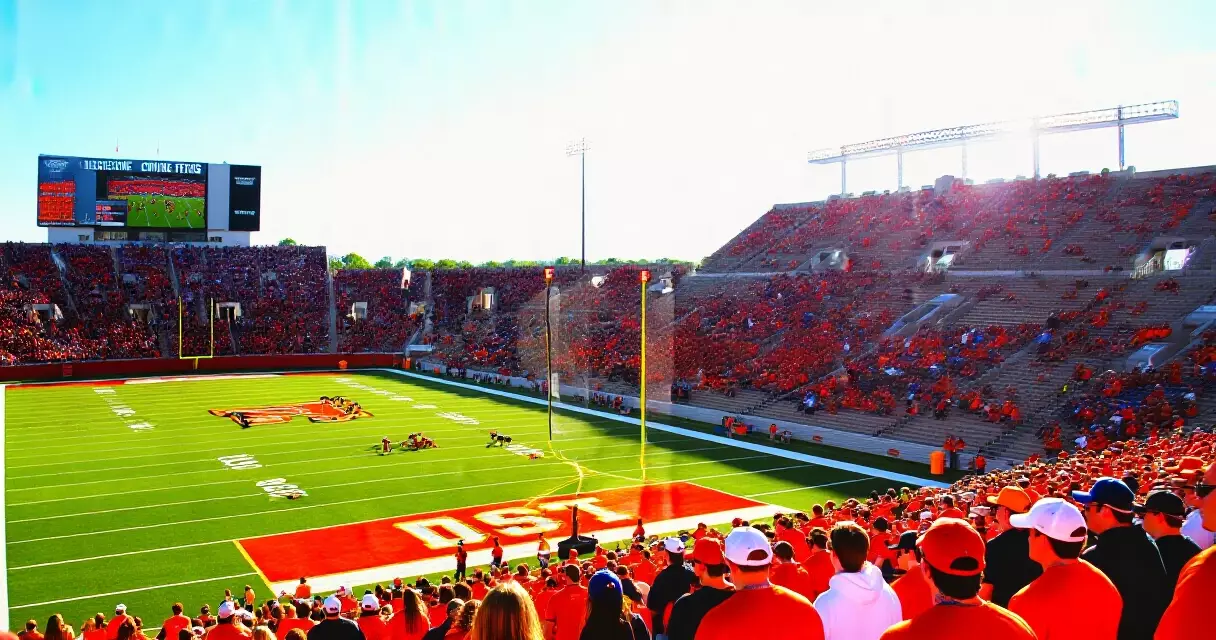
The SEC and Big Ten’s joint willingness to back the Senate legislation is being read by observers as a strategic calculation: both superconferences stand to benefit from federal uniformity that would limit smaller conferences and independent programs from undercutting them on NIL spending or recruiting inducements. Sources familiar with conference-level discussions, cited by the New York Post on August 1, indicated that commissioner-level talks with Senate staff had been ongoing since June 2026.
For fans and analysts tracking which programs are positioned to thrive — or struggle — as the college sports financial model shifts, the competitive stakes are significant. Programs in states with aggressive NIL laws and active third-party collectives may face the largest near-term compliance adjustments, while historically well-resourced programs in both the SEC and Big Ten are expected to adapt more smoothly given their existing legal and finance infrastructure.
College football’s transformation also has downstream implications for American football broadcasting and betting markets in a year already dominated by major sporting events. For reference on how the broader U.S. sports calendar is stacked, see our NFL Game Recaps hub, which tracks professional football’s own parallel governance and format changes.
Timeline: College Sports Reform in 2026
| Date | Event |
|---|---|
| April 3, 2026 | White House signs Urgent National Action to Save College Sports executive order; Sections 1–2 effective immediately |
| April–June 2026 | Federal agencies begin drafting implementing regulations; conference commissioners engage Senate staff on bipartisan bill |
| July 15, 2026 | White House order language updated to confirm August 1 effective date for operative sections |
| August 1, 2026 | Sections 3–6 take effect; SEC and Big Ten publicly back Senate bill; college football preseason camps open |
| Within 30 days of Aug. 1 | Specific regulatory text expected in Federal Register; agency enforcement protocols to be published |
Broader Context: Why This Matters for U.S. Sports
The college sports reform push is unfolding against an unusually crowded backdrop for American sport. August 2026 is simultaneously the height of the college football preseason, the latter stages of the MLB regular season, and the post-group-stage phase of the FIFA World Cup 2026 hosted on U.S. soil. For the World Cup’s context and the enormous attention it has brought to American sports infrastructure, see our FIFA World Cup 2026 opener coverage and analysis of top dark horse teams at the tournament.
The executive order and accompanying Senate bill reflect a recognition at the highest levels of government that college athletics — a sector generating billions of dollars annually — cannot continue to operate under a legal framework built for an era of pure amateurism. The House v. NCAA settlement, which cleared key hurdles in 2025, had already committed schools to sharing revenue directly with athletes. Today’s regulatory activation extends that framework with federal enforcement authority for the first time.
For women’s sports specifically, observers are watching whether the new framework strengthens or complicates Title IX compliance obligations as revenue-sharing models scale. The WNBA’s parallel professionalization trajectory offers a reference point; see our WNBA 2026 season analysis for how professional women’s leagues are navigating a related transformation in athlete compensation and media rights.
What to Watch Next
Several developments in the coming weeks will clarify how consequential today’s effective date proves to be:
- Senate bill floor vote timeline: With SEC and Big Ten behind it, the bipartisan bill is expected to move to a floor vote before the end of August 2026. Any amendments added in committee could alter which provisions survive into law.
- Federal Register publication: The specific regulatory language implementing Sections 3–6 will determine exactly what disclosures and enforcement actions schools must prepare for.
- Legal challenges: Athlete rights groups and some smaller conferences have signaled they may seek injunctions against portions of the order they argue favor the wealthiest programs, potentially delaying implementation of Section 6’s enforcement backstop.
- Conference revenue-sharing disclosures: The first mandatory reporting cycle under Section 5 is expected to cover fiscal year 2026–27, meaning actual data will not be public until mid-2027 — but the obligation to collect it begins now.
As college football’s 2026 season opens, every Power conference program is now operating under a fundamentally different legal environment than existed even 90 days ago. Whether the bipartisan Senate bill passes before the regular season kicks off will determine whether today’s executive order remains the primary governance instrument — or becomes the foundation of something more permanent.
Related Coverage
- NBA In-Season Tournament Format Changes and What They Mean for Teams
- NFL Game Recaps: Match Reports & Post-Game Analysis
- FIFA World Cup 2026 Opener: Key Matchups and Opening Ceremony Details
- Top 5 Dark Horse Teams to Watch at the FIFA World Cup 2026
- WNBA 2026 Season Predictions: Breakout Stars and Championship Favorites