Summary
The Champions League now packs 189 matches into a single season, and 144 of them sit inside a league phase that did not exist three years ago, according to UEFA. That expansion, introduced for the 2024-25 season, reshaped how supporters...
Table of contents
- 1 From Group Stage to League Phase: How the Calendar Changed
- 2 How the New Champions League Schedule Works
- 3 The 2025-26 League Phase Matchday Dates
- 4 Kickoff Times and How to Read Them in the U.S.
- 5 The Knockout Phase and Final: Key Dates
- 6 How to Find and Track Official Fixtures
- 7 Why the Schedule Matters Beyond the Pitch
- 8 How to Watch the Champions League in the U.S.: Platforms and Costs
- 9 Common Scheduling Mistakes U.S. Fans Make and How to Avoid Them
- 10 Frequently Asked Questions
- 10.1 When does the Champions League season start?
- 10.2 How many matches does each team play in the league phase?
- 10.3 What time do Champions League matches kick off in the U.S.?
- 10.4 Why do all the final-matchday games start at the same time?
- 10.5 When and where is the 2026 Champions League final?
- 10.6 How is the new league phase different from the old group stage?
- 10.7 Where can I find the official fixture list?
- 11 Sources
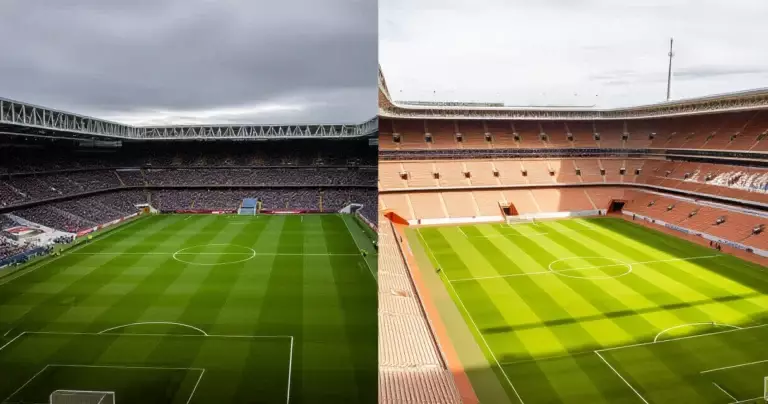
The Champions League now packs 189 matches into a single season, and 144 of them sit inside a league phase that did not exist three years ago, according to UEFA. That expansion, introduced for the 2024-25 season, reshaped how supporters plan their viewing week. Following the Champions League match schedule today means tracking eight league-phase matchdays, two knockout windows, and a single-venue final spread from September to late May. This article breaks down the dates, the kickoff slots, and how to convert them for viewers across the United States.
Fixtures fall on Tuesdays and Wednesdays through most of the autumn and winter, then shift into dedicated knockout weeks in spring. UEFA confirms two standard kickoff slots during the league phase, 18:45 and 21:00 Central European Time. For an American audience, those windows translate into afternoon viewing rather than the late nights European fans keep. Each section below maps a stage of the calendar so you can plan around it.
From Group Stage to League Phase: How the Calendar Changed
The European Cup launched in 1955 and ran as a straight knockout for decades before a group stage arrived in 1992, according to the competition history compiled on Wikipedia. For more than thirty years afterward, 32 clubs split into eight groups of four, with each side playing six matches between September and December. That structure stayed familiar to several generations of fans. Everything shifted for the 2024-25 season.
UEFA scrapped the groups in favor of a single league phase, a Swiss-model table of 36 clubs, as reported by Reuters when the reform was confirmed. Each club now plays eight matches against eight different opponents rather than six against the same three. That redesign lifted the total fixture count across the competition and stretched the opening phase into late January. Supporters gained more variety, while the calendar gained two extra matchdays.
How the New Champions League Schedule Works
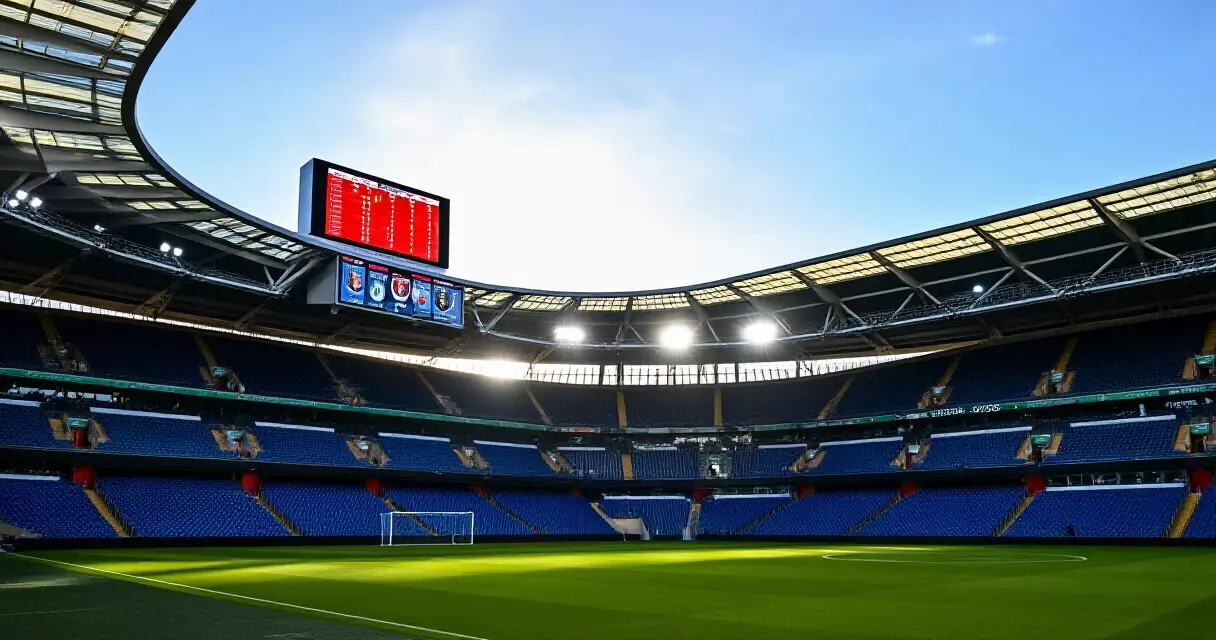
A season opens with qualifying rounds across July and August, where smaller clubs and several national runners-up compete for the last league-phase places. Once the 36-team field is set, the league phase runs over eight matchdays from mid-September to the end of January, per UEFA. Every club receives four home games and four away games, drawn from four seeding pots. No team faces the same opponent twice in this phase.
Final standings then decide everything that follows. The top eight clubs advance straight to the round of 16, while sides placed ninth through twenty-fourth enter a two-legged knockout play-off, under UEFA’s published format rules. Clubs finishing twenty-fifth or lower leave Europe entirely, with no drop into another competition. That single table, ranked one through thirty-six, is the spine of the whole schedule. Readers tracking standings week to week can follow them through our pillar on UEFA Champions League matches results and standings.
The 2025-26 League Phase Matchday Dates
Eight matchdays anchored the 2025-26 league phase, opening in mid-September and closing with a synchronized round in late January, as listed in the season summary on Wikipedia. The table below shows each scheduled window.
| Matchday | Dates (2025-26) |
|---|---|
| Matchday 1 | 16–18 September 2025 |
| Matchday 2 | 30 September – 1 October 2025 |
| Matchday 3 | 21–22 October 2025 |
| Matchday 4 | 4–5 November 2025 |
| Matchday 5 | 25–26 November 2025 |
| Matchday 6 | 9–10 December 2025 |
| Matchday 7 | 20–21 January 2026 |
| Matchday 8 | 28 January 2026 (all games simultaneous) |
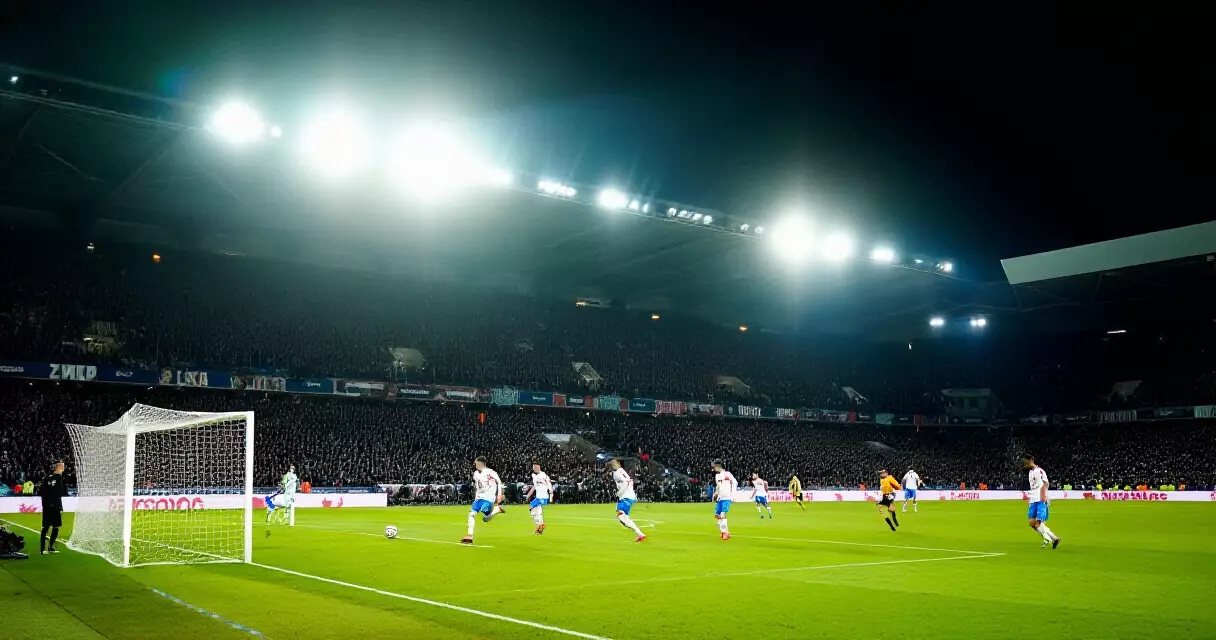
Matchday eight stands out from the rest. All 18 games kicked off at the same moment on 28 January 2026, so that no club could gain an advantage from knowing other results first. UEFA carried that simultaneous-kickoff rule over from the old final group round, where it had long protected the integrity of qualification. Earlier matchdays, by contrast, spread their fixtures across two days and two time slots.
Kickoff Times and How to Read Them in the U.S.
Two kickoff slots cover nearly every league-phase fixture, 18:45 and 21:00 Central European Time, according to UEFA scheduling. Converted for the United States, the early slot lands around the lunch hour on the East Coast and mid-morning on the West Coast. The later slot suits a mid-afternoon audience nationwide. The table below shows the standard winter conversions.
| Kickoff (CET) | Eastern | Central | Mountain | Pacific |
|---|---|---|---|---|
| 18:45 | 12:45 PM | 11:45 AM | 10:45 AM | 9:45 AM |
| 21:00 | 3:00 PM | 2:00 PM | 1:00 PM | 12:00 PM |
| Final, 21:00 CEST | 3:00 PM | 2:00 PM | 1:00 PM | 12:00 PM |
One wrinkle deserves attention. European clocks fall back in late October, so September and early-October matches run on summer time and sit an hour earlier in U.S. terms than the winter table suggests. American clocks also change in early November, which can briefly widen the gap. Checking the local conversion for each specific matchday avoids missed openings. Our companion piece, the 2026 U.S. viewer’s guide to watching Champions League matches, walks through broadcasters and streaming options in more detail.
The Knockout Phase and Final: Key Dates
Spring belongs to the knockout rounds. A knockout play-off in February feeds the round of 16, and the bracket then narrows across April and early May toward a single final, as detailed on Wikipedia. The 2025-26 knockout calendar ran as follows.
| Round | Legs / Date (2026) |
|---|---|
| Knockout play-off | 17–18 and 24–25 February |
| Round of 16 | 10–11 and 17–18 March |
| Quarter-finals | 7–8 and 14–15 April |
| Semi-finals | 28–29 April and 5–6 May |
| Final | 30 May, Puskás Aréna, Budapest |
Each knockout tie before the final is decided over two legs, home and away, with the play-off and round of 16 stacked closely in the calendar. The final itself is a single match at a neutral venue, scheduled for 30 May 2026 at the Puskás Aréna in Budapest, according to Wikipedia’s season page. A year earlier, Paris Saint-Germain lifted the trophy at the Allianz Arena in Munich on 31 May 2025, their first European Cup. Future seasons follow the same template, with the 2026-27 league phase expected to open in mid-September 2026.
How to Find and Track Official Fixtures
The official UEFA website and app publish the full fixture list, including confirmed kickoff times and venue assignments once each draw is complete. National broadcasters mirror that schedule in their own listings, and major outlets such as the BBC maintain running fixture and results pages through the season. Calendar subscriptions let you import matchdays straight into a phone, which helps when European and American clocks drift apart. Fans who like to plan a whole year of viewing often build a single sports calendar, much like our tennis tournament calendar for 2026.
Live tracking matters most on the busy nights when many games run at once. Score services and second-screen apps update goals, cards, and standings in near real time, which is essential on matchday eight when 18 fixtures play together. The same real-time habits travel across sports, as our overview of following live tennis results explains. Bookmarking the official table also lets you see how a single result reshuffles the league standings instantly.
Why the Schedule Matters Beyond the Pitch
Money rides on every matchday. UEFA distributed roughly €2.467 billion to participating clubs under the new format, with a base participation fee near €18.62 million per club, according to figures published by UEFA. League-phase results also carry direct rewards, reported at about €2.1 million for a win and €700,000 for a draw. Those incentives keep even mid-table clubs motivated deep into January. The standings, in short, are worth following closely.
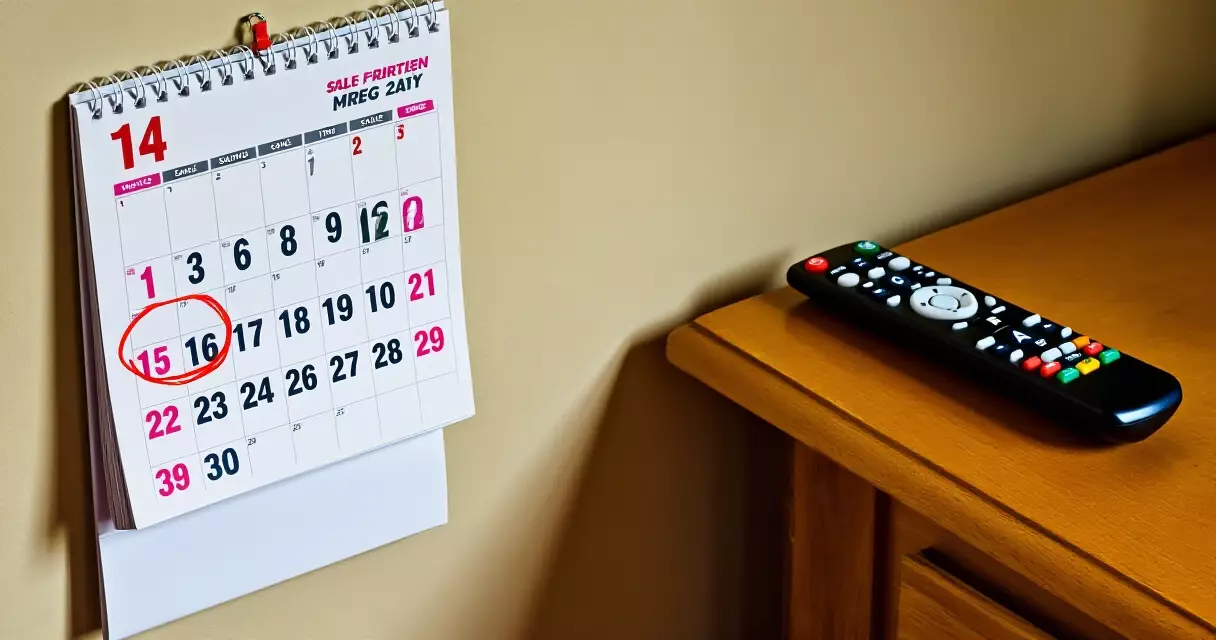
For ordinary fans, the schedule shapes a viewing routine. Knowing that league-phase games cluster on Tuesdays and Wednesdays, while knockout legs spread across two weeks, makes it easier to set aside the right afternoons. Travelers and expatriates benefit from converting kickoff slots in advance, since a 21:00 CET start is a workday afternoon in the United States. Planning ahead turns a sprawling nine-month competition into a manageable rhythm.
How to Watch the Champions League in the U.S.: Platforms and Costs
Knowing the kickoff dates only helps if you can actually stream the match. In the United States, Paramount+ holds the exclusive English-language rights to the UEFA Champions League, a deal CBS Sports extended in 2023 to run through the 2029-30 season (CBS Sports 2023). Spanish-language coverage runs on TUDN and ViX, owned by TelevisaUnivision (TelevisaUnivision 2024). That split matters: if you want English commentary plus the CBS studio show, Paramount+ is the only legal route, while bilingual households may prefer ViX.
Pricing changed in mid-2024 when Paramount raised both tiers (Paramount+ 2024). The table below compares the realistic options for a U.S. viewer who only cares about Champions League football.
| Service | Monthly price | Annual price | Notes |
|---|---|---|---|
| Paramount+ Essential | $7.99 | $59.99 | Has ads, carries all UCL matches (Paramount+ 2024) |
| Paramount+ with Showtime | $12.99 | $119.99 | Ad-free, includes local CBS for the final (Paramount+ 2024) |
| ViX Premium | $6.99 | $69.99 | Spanish-language only (TelevisaUnivision 2024) |
For most fans, the Essential tier at $7.99 per month is the cheapest legal way to follow every matchday. If you plan to watch only the knockout rounds and final, an annual plan rarely pays off, but a serious follower of the full league phase, which UEFA expanded to eight matches per club from six (UEFA 2024), will stream roughly 18 matchdays of action. At that volume the $59.99 annual Essential plan works out to under $5 per month, beating month-by-month billing.
Common Scheduling Mistakes U.S. Fans Make and How to Avoid Them
Tracking a European competition from the United States invites predictable errors. The most expensive one is misreading the time zone gap. UEFA lists kickoffs in Central European Time, and during the league phase most matches start at 18:45 or 21:00 CET (UEFA 2025). For a viewer on the U.S. East Coast that translates to 12:45 p.m. and 3 p.m. Eastern, six hours behind. Treating a “9 p.m.” fixture as a U.S. evening match is the single most common cause of missed games.
A related trap is the daylight saving shift. The U.S. moves clocks in early November while the European Union switches in late October (U.S. Department of Transportation 2024). For roughly one week the usual offset changes, so a fixture that was six hours ahead briefly becomes five. Always confirm the converted local time during late October and early November rather than assuming a fixed gap.
Avoid these mistakes with a short routine:
- Add fixtures from the official UEFA.com calendar, which auto-converts to your device time zone, instead of copying CET times by hand.
- Double-check converted times in the first week of November, when the DST offset is unstable.
- Note that league phase matchdays run Tuesday through Thursday, not just Tuesday and Wednesday as in the old group stage (UEFA 2024).
- Set calendar alerts 30 minutes before the converted kickoff, not the CET kickoff.
The other frequent error is assuming your team plays a fixed opponent twice. Under the league phase format each club faces eight different opponents once, so there is no automatic home-and-away reverse fixture to fall back on (UEFA 2024). Fans who skip an early matchday expecting a rematch later in the season often discover that game never comes, making each individual fixture on the schedule harder to write off.
Frequently Asked Questions
When does the Champions League season start?
Qualifying rounds begin in early July, well before the main draw, and run through August as smaller clubs and national runners-up fight for the last places. The league phase, where the famous names enter, opens in mid-September. In 2025-26 the first matchday fell across 16 to 18 September 2025, according to Wikipedia’s season summary. From there, the competition runs almost continuously to a late-May final. If you only follow the marquee clubs, mid-September is the date to mark, but qualifying drama starts the calendar a full two months earlier.
How many matches does each team play in the league phase?
Every club in the 36-team field plays eight league-phase matches, four at home and four away, against eight different opponents, per UEFA’s format rules. That is two more than the six games of the old group stage. The opponents are drawn from four seeding pots, so each side meets two clubs from each pot. No team plays the same opponent twice in this phase. Across all 36 clubs, the league phase totals 144 matches over eight matchdays, which is the bulk of the 189 fixtures UEFA lists for the whole competition.
What time do Champions League matches kick off in the U.S.?
League-phase games use two slots, 18:45 and 21:00 Central European Time, as set by UEFA. In winter conversions, 18:45 CET is 12:45 PM Eastern and 9:45 AM Pacific, while 21:00 CET is 3:00 PM Eastern and 12:00 PM Pacific. Daylight saving complicates early-autumn fixtures, because European clocks change in late October and U.S. clocks change in early November. Checking the conversion for a specific matchday is the safest approach. Either way, American fans generally watch in the afternoon rather than the late evening.
Why do all the final-matchday games start at the same time?
Simultaneous kickoffs on the last matchday protect competitive fairness. With the single 36-team table so tightly bunched, knowing another club’s score could let a team manage its own result to climb or avoid the play-off. UEFA therefore scheduled all 18 league-phase games for the same moment on 28 January 2026. The rule mirrors the old final group round, where matches in a group always kicked off together. For viewers, it means one packed window of action rather than a staggered evening, and standings that move minute by minute until the final whistles.
When and where is the 2026 Champions League final?
The 2025-26 final was scheduled for 30 May 2026 at the Puskás Aréna in Budapest, Hungary, according to Wikipedia’s season page. The match is a single game at a neutral venue, with the host stadium chosen by UEFA years in advance. Kickoff sits in the 21:00 slot in local time, which lands at 3:00 PM Eastern for U.S. viewers. The previous edition, in 2025, was played at the Allianz Arena in Munich, where Paris Saint-Germain won their first title. Each season rotates the final to a different European city.
How is the new league phase different from the old group stage?
The change replaced eight separate groups of four with one combined table of 36 clubs, as Reuters reported when UEFA approved the reform for 2024-25. Instead of six games against three repeat rivals, each side now plays eight games against eight distinct opponents. Qualification works on the single table: the top eight go straight to the round of 16, places nine to twenty-four enter a play-off, and the rest are eliminated. The format adds variety and more matchdays, while removing the old safety net of dropping into a secondary European competition.
Where can I find the official fixture list?
UEFA’s official website and app are the primary source for confirmed dates, kickoff times, and venues, updated as each draw completes. National broadcasters publish localized listings, and premier outlets such as the BBC keep season-long fixture and results pages. Calendar subscriptions can import matchdays directly to your devices, which helps reconcile European and U.S. time zones. For live nights, a score-tracking app or service keeps pace with multiple simultaneous games. Relying on the official table also lets you see how each result reshapes the standings without waiting for a summary.
Sources
- UEFA, official Champions League site – https://www.uefa.com/uefachampionsleague/
- Wikipedia, 2025-26 UEFA Champions League – https://en.wikipedia.org/wiki/2025%E2%80%9326_UEFA_Champions_League
- Wikipedia, UEFA Champions League – https://en.wikipedia.org/wiki/UEFA_Champions_League
- Reuters, soccer coverage – https://www.reuters.com/sports/soccer/
- BBC Sport, Champions League – https://www.bbc.com/sport/football/champions-league
Cricket Match Scorecards: Test, ODI & T20 Results Database