Summary
When UEFA retired the 32-team group stage after the 2023-24 season, it did not simply tweak a few rules. The 2024-25 Champions League replaced eight tidy four-team groups with a single 36-team table, and the match count jumped from 125...
Table of contents
- 1 What actually changed in 2024
- 2 League phase vs group stage: side by side
- 3 How qualification for the knockouts now works
- 4 Why UEFA scrapped the group stage
- 5 How the new format changed the matches themselves
- 6 What it means for fans and viewers
- 7 Frequently asked questions
- 7.1 What is the difference between the league phase and the group stage?
- 7.2 Why did UEFA change the Champions League format?
- 7.3 How many matches are there in the new league phase?
- 7.4 What happens if a club finishes in the bottom 12?
- 7.5 How do teams get drawn against opponents now?
- 7.6 Is the league phase the same as the Super League?
- 7.7 Did the new format make matches more competitive?
- 8 Sources
When UEFA retired the 32-team group stage after the 2023-24 season, it did not simply tweak a few rules. The 2024-25 Champions League replaced eight tidy four-team groups with a single 36-team table, and the match count jumped from 125 to 189 across the tournament, according to UEFA and figures compiled by Wikipedia. For viewers used to predictable Tuesday and Wednesday groups, the change reshaped how teams qualify, how often the giants meet early, and how much a single result is worth.
What actually changed in 2024
The old system was simple to follow. Thirty-two clubs were drawn into eight groups of four, every team played its three rivals home and away, and the top two advanced while third place dropped into the Europa League. That structure ran, with minor tweaks, from 2003 until the summer of 2024.
The league phase borrows its shape from chess. UEFA adopted what it calls a “Swiss model”: one combined standings table where all 36 clubs are ranked together, yet each club faces only eight of the others rather than all 35. Opponents are drawn two from each of four seeding pots, with four games at home and four away. If you want the rule-by-rule breakdown, our guide to how the Champions League works walks through every stage.
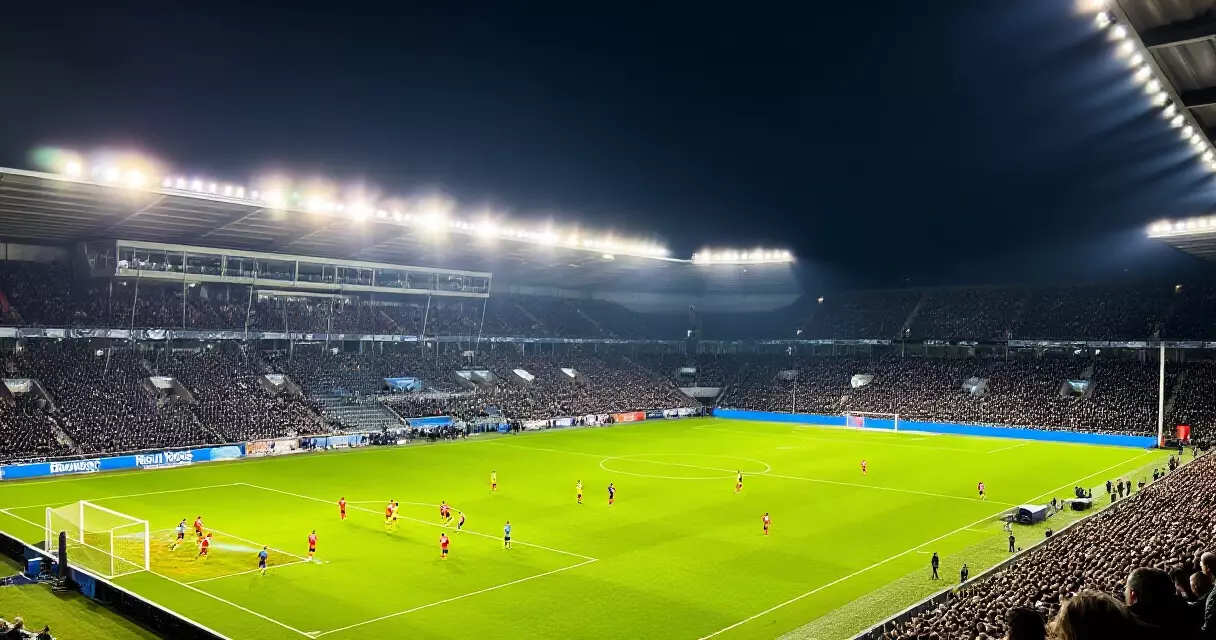
UEFA’s Executive Committee approved the overhaul on 10 May 2022, after an earlier 10-match version drew pushback from clubs worried about fixture congestion, as reported by BBC Sport. The final design landed on eight matches per club, which still added two extra games for everyone compared with the old six.
League phase vs group stage: side by side
The clearest way to see the shift is to put the two formats next to each other. Almost every structural lever moved at once: the number of clubs, the number of games, the route into the knockouts, and the safety net below.
| Feature | Group stage (to 2023-24) | League phase (from 2024-25) |
|---|---|---|
| Teams | 32 | 36 |
| Structure | 8 groups of 4 | Single 36-team table |
| Matches per team | 6 | 8 |
| Opening-phase matches | 96 | 144 |
| Total tournament matches | 125 | 189 |
| Direct to round of 16 | Top 2 of each group (16) | Top 8 of the table |
| Extra knockout round | None | Play-off for places 9-24 |
| Drop to Europa League | Yes (3rd in group) | No safety net |
How qualification for the knockouts now works
The biggest practical change sits at the bottom of the table. There is no longer a parachute into the Europa League for clubs that fall short. Finish in the bottom 12 and the European season is over.
Above that line, the table splits into three bands. The top eight go straight to the round of 16. Clubs ranked 9th to 24th enter a two-legged knockout play-off in February, with the higher-ranked sides seeded and given the home leg second. Places 25 to 36 are eliminated outright.
| League-phase finish | What it earns | Seeding |
|---|---|---|
| 1st – 8th | Direct entry to round of 16 | Seeded in the bracket |
| 9th – 16th | Knockout play-off round | Seeded (home leg second) |
| 17th – 24th | Knockout play-off round | Unseeded |
| 25th – 36th | Eliminated, no Europa League drop | – |
The 2024-25 season showed how steep that ladder can be. Liverpool topped the league phase with 21 points from seven wins, sealing a top-eight place with games to spare, while Manchester City finished 22nd and were forced into the play-off round, as reported by The Guardian. A club of City’s stature scrapping to survive in late January would have been unthinkable under the old groups.
Finish 8th and you rest in February; finish 24th and you fight a two-legged tie just to reach the last 16.
Why UEFA scrapped the group stage
The group format had a long run, but its weaknesses were well known. Many groups were decided early, leaving dead-rubber final matchdays where qualified clubs rested players and eliminated clubs had nothing to chase. Broadcasters and sponsors disliked those flat nights, and bigger clubs pushed for more guaranteed meetings with one another.
Pressure also came from outside. The breakaway Super League project of April 2021 collapsed within days, yet it forced UEFA to answer the same demand its rebels had raised: more marquee fixtures and more revenue for the elite. The league phase was UEFA’s counter-offer, expanding the field to 36 and promising that every club would face a tougher, more varied schedule. The wider story of how European club football reached this point is covered well by Wikipedia.
Four extra places had to be filled. Two went to the associations whose clubs performed best across all UEFA competitions the previous season, named the European Performance Spots, which for 2024-25 went to Italy and Germany. One added place went to a domestic champion through the qualifying path, and one to the third-ranked club of the association sitting fifth in UEFA’s rankings.
How the new format changed the matches themselves
More games meant more money on the table, and UEFA rewired its payouts to match. Each league-phase win is worth €2.1 million and each draw €700,000, on top of a fixed participation fee that UEFA set at €18.62 million per club for 2024-25. The total pool distributed to clubs climbed to roughly €2.47 billion, according to UEFA’s financial distribution figures.
The calendar stretched, too. The league phase runs across eight matchdays from September into late January, two more than the old six. UEFA also introduced a simultaneous final matchday, with all 18 games kicking off at the same time on 29 January 2025 so that no club could game the standings by knowing other results. If you plan your viewing around fixtures, our breakdown of the Champions League match schedule tracks those dates.
On the field, the seeding meant the heavyweights met sooner. Reigning winners, domestic champions and historic powers were spread across the pots, so opening-week bills routinely paired former finalists. The season ended with Paris Saint-Germain lifting the trophy after a 5-0 win over Inter Milan in Munich on 31 May 2025, the most lopsided final on record, as reported by Reuters.
The league phase did not just add fixtures; it turned the autumn into one long, ranked race with no soft landing at the bottom.
What it means for fans and viewers
For supporters, the practical upside is variety. Instead of facing the same three opponents twice, each club now meets eight different sides, which spreads famous names across more cities and more broadcast windows. The trade-off is added load on players and tighter domestic calendars, a concern raised repeatedly by player unions such as FIFPRO.
Following the table also takes more attention. A single 36-row standings page changes every matchday, and the line between 8th and 9th, or between 24th and 25th, can swing on goal difference. Readers in the United States who want kickoff times and channels can use our guide to watching Champions League matches, while live tables and results sit on the main Champions League results hub.
Frequently asked questions
What is the difference between the league phase and the group stage?
The group stage, used through 2023-24, split 32 clubs into eight groups of four, with each club playing six matches only against its three group rivals. The league phase, introduced in 2024-25, puts 36 clubs into one combined table where each club plays eight matches against eight different opponents. The two formats also differ at the exits: groups sent the top two to the round of 16 and dropped third place into the Europa League, while the league phase sends the top eight straight through and offers no Europa League safety net, according to UEFA.
Why did UEFA change the Champions League format?
UEFA wanted more high-profile matches, fewer meaningless final-day games, and more revenue for clubs, pressures that sharpened after the failed Super League launch in April 2021. The Executive Committee approved the new model on 10 May 2022. Expanding to 36 clubs and giving everyone two extra games was UEFA’s way of keeping the biggest clubs inside its competition while widening access for others. The reworked prize structure, worth roughly €2.47 billion to clubs in 2024-25, reflects that commercial goal.
How many matches are there in the new league phase?
The league phase itself contains 144 matches, since 36 clubs each play eight games and every match counts for two of them. That is up from 96 matches in the old group stage. Counting qualifying playoffs, the round of 16, quarter-finals, semi-finals and the final, the full tournament now runs to 189 matches, compared with 125 under the previous format, per figures compiled by Wikipedia from UEFA data. The increase of 64 matches is the largest single expansion in the competition’s modern history.
What happens if a club finishes in the bottom 12?
Clubs that finish 25th to 36th in the league phase are eliminated from European competition for the rest of that season. Unlike the old group stage, there is no consolation transfer to the Europa League. This is one of the harshest features of the new format, because a single poor run in autumn ends a club’s continental season entirely. Clubs ranked 9th to 24th avoid that fate but must win a two-legged knockout play-off in February to reach the round of 16, as set out in UEFA’s competition regulations.
How do teams get drawn against opponents now?
The 36 clubs are split into four pots of nine based on UEFA coefficients, with the holders and league champions seeded into Pot 1. Each club is drawn to face two opponents from each of the four pots, giving eight fixtures with four at home and four away. Because the combinations are so numerous, UEFA ran the 2024-25 draw with automated software in Monaco on 29 August 2024. Clubs from the same domestic association cannot be drawn together, and there are limits on how many same-country opponents any club faces.
Is the league phase the same as the Super League?
No. The breakaway European Super League, announced in April 2021, was a closed competition controlled by a group of founder clubs and collapsed within 48 hours under fan and government opposition. The league phase is UEFA’s own reform inside the existing Champions League, and it keeps open qualification through domestic leagues. The names sound similar because both responded to the same demand for more elite fixtures, but the league phase remains a merit-based UEFA competition rather than a private closed league.
Did the new format make matches more competitive?
Early evidence suggests yes, at least in terms of jeopardy. Because clubs are ranked in one table and the cut-off lines between automatic qualification, the playoff, and elimination are tight, far fewer matches were dead rubbers in 2024-25. Several powerhouse clubs, including Manchester City, were dragged into late-January survival fights, while Liverpool’s 21-point haul set an early benchmark for topping the table. The simultaneous final matchday on 29 January 2025 added further drama, since standings shifted live across all 18 games at once.
Sources
- UEFA, official Champions League site – https://www.uefa.com/uefachampionsleague/
- Wikipedia, “UEFA Champions League” – https://en.wikipedia.org/wiki/UEFA_Champions_League
- BBC Sport, Football – https://www.bbc.com/sport/football
- The Guardian, Champions League – https://www.theguardian.com/football/champions-league
- Reuters, Soccer – https://www.reuters.com/sports/soccer/
Cricket Match Scorecards: Test, ODI & T20 Results Database