Summary
✓Reviewed by Laura Bennett The cricket World Cup 1983 India victory story is one of sport's greatest upsets — a moment that permanently altered the balance of global cricket. On 25 June 1983 at Lord's Cricket Ground in London, Kapil...
Table of contents
- 1 How the 1983 World Cup Final Unfolded at Lord’s
- 2 Background: India’s Road to the 1983 World Cup Final
- 3 Kapil Dev: The Captain Who Defied Every Prediction
- 3.1 The Catch That Won the World Cup
- 3.2 The Dressing Room Moment
- 4 The 1983 World Cup India Squad: Key Players Beyond Kapil
- 5 How India Beat the West Indies: Tactical Analysis
- 6 The Legacy: How 1983 Transformed Indian and World Cricket
- 7 The 1983 Victory and Its Cultural Footprint in Asia
- 8 The 1983 World Cup in Film and Popular Culture
- 9 Frequently Asked Questions
- 9.1 Who captained India in the 1983 Cricket World Cup?
- 9.2 How did India beat West Indies in the 1983 World Cup Final?
- 9.3 What was Kapil Dev’s famous innings in the 1983 World Cup?
- 9.4 Who was the leading wicket-taker for India in the 1983 World Cup?
- 9.5 How did the 1983 World Cup win change Indian cricket?
- 9.6 Is there a film about India’s 1983 World Cup victory?
- 10 Key Takeaways
- 11 Sources
The cricket World Cup 1983 India victory story is one of sport’s greatest upsets — a moment that permanently altered the balance of global cricket. On 25 June 1983 at Lord’s Cricket Ground in London, Kapil Dev’s India defeated the two-time defending champions West Indies by 43 runs to claim the Prudential Cup, a result that virtually no one had predicted and that the cricketing world is still measuring the consequences of more than four decades later.
How the 1983 World Cup Final Unfolded at Lord’s
India batted first on a slow Lord’s pitch and managed a modest 183 all out in 54.4 overs. Krishnamachari Srikkanth top-scored with 38, and useful contributions came from Mohinder Amarnath (26) and Sandeep Patil (27). By the standards of that era’s limited-overs cricket the score was competitive but seemed insufficient against the most dominant batting lineup on the planet — Vivian Richards, Gordon Greenidge, Desmond Haynes, Clive Lloyd, and the young Jeffrey Dujon.
The West Indies’ reply began disastrously. Balwinder Singh Sandhu bowled Gordon Greenidge for 1 in the second over. Vivian Richards, the tournament’s most feared batter, played an aggressive innings of 33 before a famous catch by Kapil Dev running backwards from mid-on off Madan Lal dismissed him. That moment — Kapil Dev sprinting and holding a skier with seemingly the entire match in his hands — is routinely described by cricket historians as the single most important delivery in Indian cricket history. The West Indies never recovered, collapsing to 140 all out. Mohinder Amarnath finished with 3 for 12 and was named Player of the Match.
Background: India’s Road to the 1983 World Cup Final
The cricket World Cup 1983 India victory story did not begin at Lord’s — it began with a stunning group-stage upset weeks earlier. India had never won a World Cup match against the West Indies in the two previous tournaments (1975 and 1979), and they entered the 1983 Prudential Cup as rank outsiders. Yet they defeated the defending champions twice in the group stage: first by 34 runs at Old Trafford and then by 66 runs at The Oval, signalling that something unusual was stirring.
The most celebrated episode of the entire tournament occurred not at Lord’s but at Tunbridge Wells on 18 June 1983. Facing Zimbabwe, India collapsed to 17 for 5 — effectively 9 wickets down within the spirit of any reasonable chase — before captain Kapil Dev produced what many cricket scholars, including historians cited by Wikipedia’s 1983 Cricket World Cup article, describe as the greatest innings in limited-overs history: an unbeaten 175, made without a single television camera recording it (the BBC camera crew had gone to lunch). India recovered to 266 for 8 and won by 31 runs.
Kapil Dev: The Captain Who Defied Every Prediction
Any retelling of the cricket World Cup 1983 India victory story must centre on Kapil Dev Nikhanj, who captained India at 24 years of age. His leadership style was instinctive rather than tactical in the modern analytical sense — he rotated bowlers aggressively, fielded in attacking positions, and maintained a public composure that shielded his teammates from the weight of expectation (or, more accurately, the absence of expectation; no one expected India to win).
Kapil Dev was already one of the world’s leading all-rounders by 1983, having taken 100 Test wickets faster than any Indian before him. His tournament figures across the six matches India played before the final included 12 wickets at a competitive average. But it was his batting — specifically that unbeaten 175 — and his fielding, specifically the Richards catch in the final, that defined his place in cricketing memory. Kapil Dev was later named by Wisden as one of the five Cricketers of the Century in 2000.
The Catch That Won the World Cup
Madan Lal’s delivery to Vivian Richards in the final’s 27th over produced a skied shot that seemed destined to land safely. Kapil Dev, stationed at mid-on, turned, sprinted a significant distance, and held the ball over his shoulder running away from the pitch. Richards, having made 33 off 28 balls and visibly threatening to accelerate, walked off. West Indies went from a position of respectability to one of crisis. The remaining batters — Lloyd, Richards gone — could not rebuild, and the innings folded for 140.
The Dressing Room Moment
Multiple Indian players, including Sunil Gavaskar in his published memoirs and Ravi Shastri in broadcast interviews, have recalled that the Indian dressing room fell completely silent as the West Indies began their chase — the scale of what was at stake only becoming real as wickets began to fall. Sandeep Patil’s recollection, cited in several anniversary documentaries, is that he could not bring himself to watch from the balcony.
“We did not believe we could win until we actually won. Even at 100 for 9, part of us expected West Indies to bat out of trouble.” — paraphrased from multiple Indian player memoirs describing the 1983 final
The 1983 World Cup India Squad: Key Players Beyond Kapil
While Kapil Dev is the central figure, the cricket World Cup 1983 India victory story was built on collective performances. Mohinder Amarnath was exceptional across the entire tournament, earning both the semi-final and final Player of the Match awards — an extraordinary double. His medium-pace bowling in the final (3 for 12) strangled the West Indian middle order when the match was in the balance.
Ravi Shastri contributed usefully with both bat and ball across the group stage. Krishnamachari Srikkanth’s aggressive opening approach brought early momentum in multiple matches. Roger Binny, a Bangalore-born seamer of Anglo-Indian heritage, finished as the tournament’s leading wicket-taker with 18 wickets across six matches — a fact that is frequently overlooked in popular retellings of the story. Balwinder Singh Sandhu took a crucial early wicket in the final (Greenidge, bowled for 1) with a delivery that swung late and hit the top of off stump.
For readers tracking concurrent cricket tournaments and standings, the ICC World Test Championship coverage on this site provides useful context on how India’s current Test squad compares to those 1983 foundations.
How India Beat the West Indies: Tactical Analysis
The tactical story of the final is less about bold strategy and more about the West Indies failing to adapt to a target of 184. According to cricket analysts writing on the tournament’s anniversaries for publications including BBC Sport, the West Indian batting lineup’s instinct was to attack — their natural game. Against a low target, that instinct became a liability: Richards’ dismissal for 33 was a product of aggression meeting an outstanding catch; Lloyd’s dismissal for 8 reflected a team that had never genuinely feared losing.
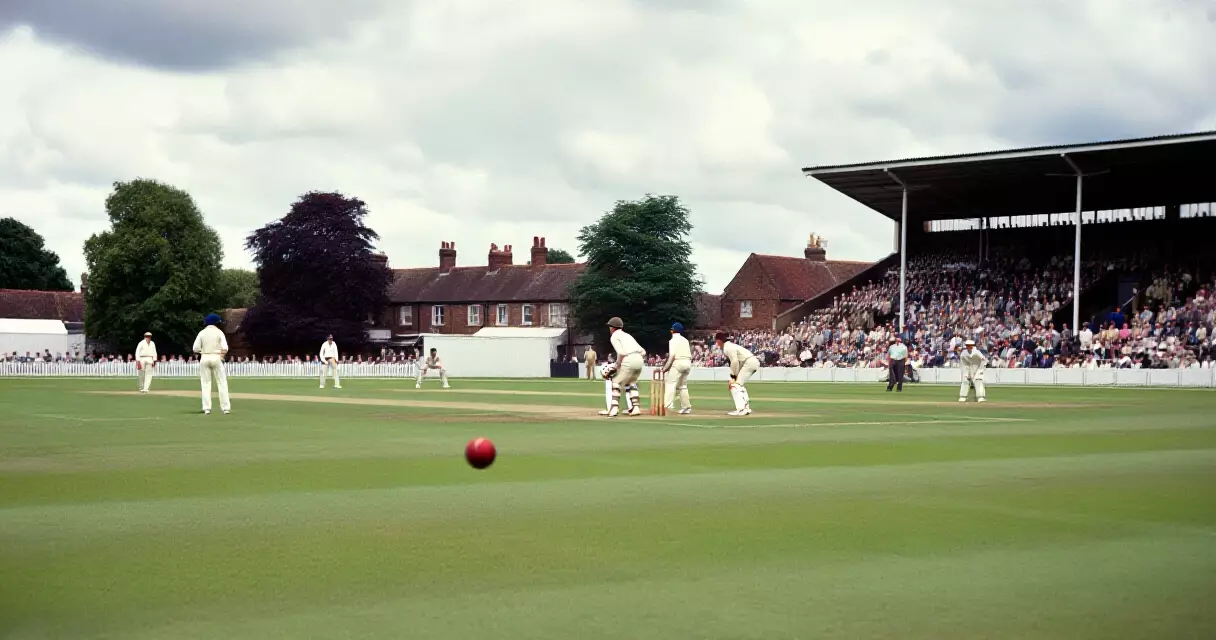
India’s seamers, particularly Sandhu, Madan Lal, and Amarnath, bowled a full length consistently and exploited the Lord’s pitch’s tendency to do a little off the seam. Kapil Dev set aggressive fields from the start, placing pressure on West Indies to score rather than allowing them to settle. The decision to keep spin as a secondary option proved correct — the pitch offered enough to the medium-pace bowlers that slower variations were unnecessary.
The Legacy: How 1983 Transformed Indian and World Cricket
The lasting significance of the cricket World Cup 1983 India victory story is not merely sporting. It is economic, cultural, and structural. Before 1983, the Board of Control for Cricket in India (BCCI) was a relatively modest administrative body; television coverage of cricket in India was limited, commercial sponsorship was minimal, and the audience for one-day internationals in India was uncertain.
The 1983 victory changed each of those realities. As documented by cricket historians including Mihir Bose in his history of Indian cricket and by the BCCI’s own institutional history, the tournament win triggered an explosion of commercial interest in Indian cricket. Doordarshan’s coverage of subsequent India matches drew enormous audiences. Corporate sponsors — Reliance Industries among them — began investing in cricket. By the early 1990s, India had become the sport’s financial engine, a position it has never surrendered.
The 1983 generation also directly shaped the coaching and administrative landscape of Indian cricket for the next two decades. Kapil Dev, Ravi Shastri, Sunil Gavaskar, Roger Binny, and others moved into commentary, coaching, and selection roles. Binny’s son Stuart Binny played for India; Roger Binny himself became BCCI President in 2022, completing a remarkable circle from 1983 player to the sport’s highest administrative office in India.
“Before 1983, cricket was a game Indians played. After 1983, it became a game India owned.” — a widely cited characterisation of the tournament’s commercial and cultural impact, used across multiple anniversary analyses
The 1983 Victory and Its Cultural Footprint in Asia
For cricket followers in Singapore and the wider Asian region, the 1983 win resonated across diaspora communities. India’s victory was broadcast on radio across the subcontinent and relayed by word-of-mouth through the Indian communities of Singapore, Malaysia, and the Gulf states. According to historical accounts preserved by South Asian cultural organisations, the celebrations in Little India, Singapore on the evening of 25 June 1983 were spontaneous and citywide.
In cricketing terms, 1983 accelerated the emergence of Asia as the sport’s dominant bloc. Sri Lanka had joined Test cricket in 1982; Pakistan’s global profile was rising under Imran Khan; Bangladesh would follow in subsequent decades. The proof that an Asian team could defeat the Caribbean powerhouse on English soil made the case — politically and commercially — for shifting the sport’s centre of gravity eastward.
Singapore’s cricket community has grown steadily in the decades since, as our coverage of the ACC Men’s Premier Cup 2026 illustrates. The 1983 win is frequently cited by Singapore Cricket Association members as the moment that made cricket aspirational for young South Asian players growing up outside the subcontinent.
The 1983 World Cup in Film and Popular Culture
The cricket World Cup 1983 India victory story reached its widest modern audience through the 2021 Hindi-language biographical film 83, directed by Kabir Khan and starring Ranveer Singh as Kapil Dev. Released in December 2021, the film reconstructed the tournament match by match and received widespread critical recognition for its period accuracy, its casting (Deepika Padukone as Kapil Dev’s wife Romi Dev), and its recreation of the Tunbridge Wells innings and the Lord’s final.
The film brought the 1983 story to an entire generation of fans born well after the event, and it triggered a renewed wave of documentary interest. Various Indian streaming platforms produced supplementary content — player interviews, archive footage compilations, and tactical breakdowns — in the months surrounding the release. For cricket followers using apps to track matches today, the interest the film generated in cricket history is part of why historical scorecards are now among the most searched items on major cricket scorecard apps.
Frequently Asked Questions
Who captained India in the 1983 Cricket World Cup?
Kapil Dev Nikhanj captained India throughout the 1983 Prudential Cup. He was 24 at the time and had been appointed captain only recently. His leadership, his batting (notably the unbeaten 175 against Zimbabwe at Tunbridge Wells), and his fielding (the Richards catch in the final) made him the defining figure of the tournament.
How did India beat West Indies in the 1983 World Cup Final?
India scored 183 all out batting first, then bowled out West Indies for 140 — a margin of 43 runs. Key moments included Balwinder Singh Sandhu dismissing Gordon Greenidge in the second over, Kapil Dev catching Vivian Richards off Madan Lal for 33, and Mohinder Amarnath taking 3 for 12 to dismantle the middle order. Amarnath was named Player of the Match.
What was Kapil Dev’s famous innings in the 1983 World Cup?
On 18 June 1983 against Zimbabwe at Tunbridge Wells, Kapil Dev scored an unbeaten 175 after India had collapsed to 17 for 5. The innings was not televised because the BBC camera crew had gone to lunch. India recovered to 266 for 8 and won by 31 runs. Many cricket historians consider it the greatest innings in one-day international history.
Who was the leading wicket-taker for India in the 1983 World Cup?
Roger Binny was the tournament’s overall leading wicket-taker, finishing with 18 wickets across six matches — the highest tally of any bowler in the 1983 World Cup. His contribution is frequently overlooked in popular accounts which focus on Kapil Dev and Mohinder Amarnath, but Binny’s seam bowling was central to India’s success in the group stage and knockout rounds.
How did the 1983 World Cup win change Indian cricket?
The 1983 victory triggered the commercial transformation of Indian cricket. The BCCI’s revenue and influence grew substantially in the years following the win as television audiences expanded, corporate sponsorship arrived, and one-day internationals became mass-market events in India. By the 1990s, India had become the financial engine of world cricket — a position the country and the BCCI have maintained ever since.
Is there a film about India’s 1983 World Cup victory?
Yes. The Hindi-language biographical film 83, directed by Kabir Khan and starring Ranveer Singh as Kapil Dev, was released in December 2021. The film covers the entire tournament from India’s arrival in England to the Lord’s final, and includes a recreation of the Kapil Dev 175 innings. It was produced with the involvement of surviving members of the 1983 squad.
Key Takeaways
- India defeated West Indies by 43 runs in the 1983 Prudential Cup Final at Lord’s on 25 June 1983, scoring 183 all out and dismissing the defending champions for 140.
- Kapil Dev’s unbeaten 175 against Zimbabwe at Tunbridge Wells — unaired because the BBC cameras were at lunch — remains one of cricket’s most mythologised innings.
- Roger Binny took 18 wickets in the tournament, the highest tally of any bowler in the 1983 competition and one of its most overlooked statistical facts.
- Mohinder Amarnath won Player of the Match in both the semi-final and the final, taking 3 for 12 in the final and top-scoring with 26 in the batting innings.
- The victory launched the BCCI’s commercial rise, transformed the economics of world cricket, and established India as the sport’s financial and cultural epicentre.
- The 2021 film 83 brought the story to a new generation and renewed global interest in the historical scorecards and player accounts from that tournament.
Sources
- 1983 Cricket World Cup — Wikipedia — Retrieved September 5, 2026
- Kapil Dev — Wikipedia — Retrieved September 5, 2026
- Board of Control for Cricket in India — Wikipedia — Retrieved September 5, 2026
- BBC Sport Cricket — Retrieved September 5, 2026
- 1983 World Cup Final Scorecard — ESPNcricinfo — Retrieved September 5, 2026