Summary
When the 2023 ICC Men's Cricket World Cup final drew a global television audience that the International Cricket Council reported in the hundreds of millions, a quieter number told a parallel story: tens of millions of those fans followed the...
Table of contents
- 1 A short history of the digital cricket scorecard
- 2 What to look for in a cricket scorecard app
- 3 The major apps for following professional cricket
- 4 Apps for scoring your own matches
- 5 Apps versus websites: which still matters
- 6 Data accuracy and where the numbers come from
- 7 Choosing the right tool for your needs
- 8 Frequently asked questions
- 8.1 Which cricket app is the most accurate for live scores?
- 8.2 Are cricket scorecard apps free to use?
- 8.3 What is the best app for scoring my own club matches?
- 8.4 Do I still need a cricket website if I have an app?
- 8.5 How do cricket apps get their ball-by-ball data?
- 8.6 Which app has the deepest cricket statistics?
- 8.7 Are the official ICC and national board apps better than third-party ones?
- 8.8 Can I follow women’s and domestic cricket on these apps?
- 9 Sources
- 9.1 Further reading
- 9.2 Further reading
When the 2023 ICC Men’s Cricket World Cup final drew a global television audience that the International Cricket Council reported in the hundreds of millions, a quieter number told a parallel story: tens of millions of those fans followed the ball-by-ball action on a phone rather than a screen in the living room. According to Google Play Store listings recorded in 2026, the two best-known cricket information apps, ESPNcricinfo and Cricbuzz, sit in the tens-of-millions and hundreds-of-millions install brackets respectively. Choosing between them, and between the dozen other tools that now publish live scorecards, is no longer a trivial decision for anyone who wants accurate data quickly. This article compares the leading cricket scorecard apps and websites, weighs their strengths for different kinds of fans, and explains what separates a reliable scoring tool from a flashy one.
The comparison below covers apps built for following professional matches, tools designed for scoring your own club games, and the websites that still anchor much of cricket’s statistical record. If you are new to reading these screens at all, our companion piece on how to read cricket scorecards is a useful starting point before you pick a platform.
A short history of the digital cricket scorecard
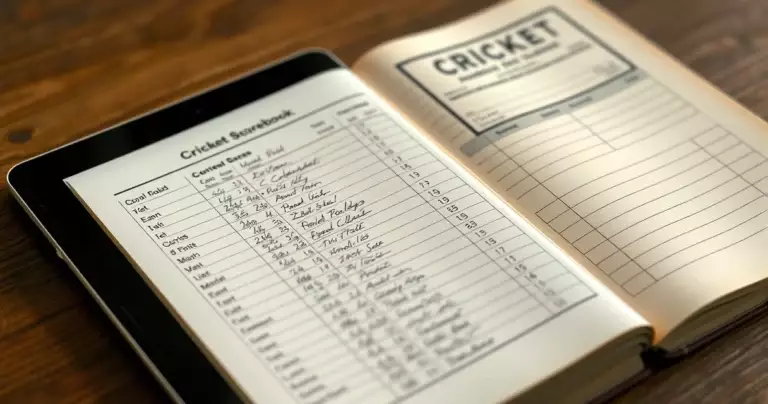
Cricket’s move from printed scorecards to live digital ones began earlier than most other sports. Cricinfo, the service that later became ESPNcricinfo, launched in 1993 as a volunteer-run project that relayed match updates over early internet relay channels, according to its entry on Wikipedia. The Walt Disney Company’s ESPN unit acquired the site in 2007, folding a community resource into a major sports media operation. That lineage matters, because much of the structured ball-by-ball data that modern apps display traces back to the archives Cricinfo began compiling more than three decades ago.
Cricbuzz arrived later, founded in 2004 and acquired by Times Internet, the digital arm of India’s Times Group, in 2014 as Wikipedia records. Its rise tracked the smartphone boom across South Asia, where cricket commands the largest audiences. The governing body itself entered the app market too: the International Cricket Council, which traces its origins to 1909 as the Imperial Cricket Conference, now publishes an official app carrying live scores for events it sanctions. These three threads, the archive-driven media site, the mobile-first aggregator, and the governing body’s own channel, still define the landscape a reader navigates today.
One technical shift reshaped what scorecards could show. The Decision Review System, introduced into international cricket around 2008 and 2009 according to Wikipedia, generated a stream of ball-tracking and edge-detection data that apps gradually surfaced as wagon wheels, pitch maps, and dismissal replays. The scorecard stopped being a static table of runs and wickets and became a gateway to a richer record. Understanding that record is easier once you know the shorthand, which our guide to cricket scorecard symbols and abbreviations sets out in plain terms.
What to look for in a cricket scorecard app
Before comparing individual products, it helps to fix the criteria that actually matter. A pretty interface counts for little if the data lags behind the live broadcast or omits lower-tier competitions you care about. Five factors tend to separate a tool you keep from one you delete within a week.
- Coverage depth. Does the app carry only marquee international fixtures, or does it reach domestic first-class competitions, women’s cricket, and associate-nation matches?
- Update speed. How quickly does the score refresh after each ball, and does it depend on a manual scorer or an automated feed?
- Statistical detail. Beyond runs and wickets, does it offer partnership breakdowns, bowling economy, strike rates, and historical head-to-head records?
- Offline and notification handling. Can it push wicket alerts and innings summaries without draining the battery or flooding your lock screen?
- Cost and advertising. Is the core scorecard free, and how intrusive are the ads or paywalled features?
A fan tracking only the national team during a World Cup will weigh these differently from a club statistician scoring a Saturday league fixture. The sections that follow group the tools by that intent rather than ranking them on a single scale, because the best choice genuinely depends on what you are trying to do. Readers who want to push past the surface numbers may also find our notes on analyzing cricket statistics from scorecards helpful when judging how much detail an app really gives you.
The major apps for following professional cricket
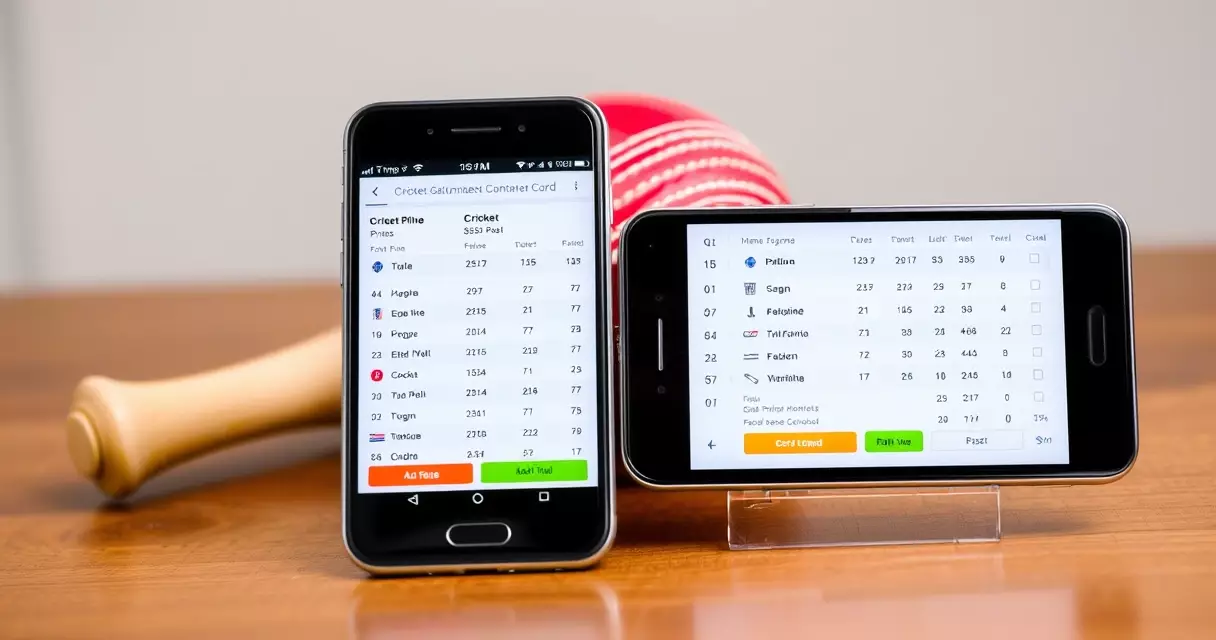
Most fans want one thing above all: a fast, accurate live score for matches they cannot watch in full. Four products dominate this category, each with a distinct character. ESPNcricinfo leans on its archive and editorial depth. Cricbuzz prioritizes speed and a clean live feed. The ICC’s own app focuses on the events it runs. Cricket Exchange, a newer entrant, has built a following around its low-latency ball-by-ball updates and compact design.
ESPNcricinfo remains the reference point for statistics. Its Statsguru database, which grew out of the original Cricinfo archive, lets users filter career and match records in ways no rival matches. The trade-off is a heavier interface and an app that some users find slower to load during peak traffic. Cricbuzz, by contrast, was engineered around the live experience, and its commentary refresh is frequently a step ahead during high-profile matches. For events such as the men’s and women’s World Cups or the ICC Champions Trophy, the official ICC app carries authoritative scoring straight from the governing body, though its coverage stops at the tournaments the council sanctions.
The table below sets out how these four compare on the criteria above. Install-bracket figures come from Google Play Store listings recorded in 2026 and describe Android installs only; Apple does not publish equivalent figures, so the true cross-platform totals are higher.
| App | Owner | Android install bracket (Google Play, 2026) | Coverage strength | Standout feature | Core cost |
|---|---|---|---|---|---|
| ESPNcricinfo | ESPN / Disney | 50 million+ | Global, deep archive | Statsguru records database | Free with ads |
| Cricbuzz | Times Internet | 100 million+ | Global, fast live feed | Low-latency commentary | Free with ads; ad-free tier |
| ICC Official App | International Cricket Council | 10 million+ | ICC events only | Authoritative tournament data | Free |
| Cricket Exchange | Cricket Exchange | 10 million+ | Global live scores | Compact, fast updates | Free with ads |
No single product wins every category. A statistics-minded follower who enjoys digging into career records will reach for ESPNcricinfo. Someone who simply wants the freshest score during a tense run chase often prefers Cricbuzz or Cricket Exchange. During an ICC tournament, the council’s own app removes any doubt about data provenance. Many serious fans keep two of these installed and switch between them depending on the fixture.
Apps for scoring your own matches
A separate class of software exists not to report professional cricket but to let players, clubs, and leagues record their own. These scoring apps replace the paper scorebook, calculate totals automatically, and in many cases publish a shareable scorecard the moment a match ends. The category has grown quickly as amateur cricket has digitized.
CricHeroes is the most visible name here, describing itself as a grassroots cricket scoring platform used by amateur players across many countries. It handles ball-by-ball scoring on a phone, generates batting and bowling figures, and builds player profiles over a season. In England and Wales, Play-Cricket occupies a more official role: it is run by the England and Wales Cricket Board, as the ECB sets out on its own website, and serves as the result and statistics system for affiliated leagues and clubs. For statisticians who want desktop-grade control, CricketStatz has long offered detailed scoring and analysis tools aimed at scorers rather than casual fans.
| Scoring tool | Best for | Platform | Publishes shareable scorecard | Operator |
|---|---|---|---|---|
| CricHeroes | Amateur clubs and tournaments | Mobile (Android, iOS) | Yes | CricHeroes |
| Play-Cricket | Affiliated leagues in England and Wales | Web and mobile | Yes | England and Wales Cricket Board |
| CricketStatz | Dedicated scorers and analysts | Desktop and mobile | Yes | CricketStatz |
| Cricket LMS / league systems | Local league administration | Web | Yes | Various national boards |
The choice here turns on your league’s requirements as much as personal taste. A club playing in an ECB-affiliated competition will usually be told to submit results through Play-Cricket, leaving little discretion. An independent weekend tournament organizer, by contrast, may pick CricHeroes precisely because it bundles live streaming-style scorecards, player rankings, and social sharing into one free app. Whatever the tool, the underlying scorecard follows the same conventions used at the professional level, which is why learning to read one transfers directly between amateur and elite cricket.
Apps versus websites: which still matters
It would be easy to assume apps have made cricket websites obsolete. They have not. Several of the most valuable scorecard resources remain primarily web destinations, and for certain tasks a browser still beats a phone screen. The ESPNcricinfo and Cricbuzz websites carry the same live data as their apps but expose far more of it at once, which suits anyone comparing multiple matches or scrolling a long Test-match scorecard without endless tapping.
Websites also hold the deep historical record. Statsguru on the ESPNcricinfo site, for example, is far more workable on a wide monitor than on a phone, and the same applies to the structured match archives that journalists and researchers rely on. Premier news organizations add another layer: BBC Sport publishes live scorecards and over-by-over commentary on its cricket pages, giving readers an editorially independent view alongside the dedicated cricket platforms. For desktop research, a browser tab open to a results database often outperforms any single app.
Apps win decisively on portability and notifications. A wicket alert that buzzes your phone during a meeting is something no website matches, and offline caching lets an app hold the last-known score through a patchy signal. The realistic answer for most engaged fans is to use both: an app for live alerts on the move and a website for any task that benefits from a larger canvas. Our overview of the broader cricket match scorecards results database explains how those web archives are organized across formats.
Data accuracy and where the numbers come from
An app is only as good as the data behind it, and not all scorecards are equal. For international and major franchise cricket, official scoring is performed by accredited scorers working under the relevant board, and the resulting record is the authoritative one. Apps that license or mirror that official feed will, in principle, match the printed record. Discrepancies usually appear in the lag between a ball being bowled and the figure reaching your screen, or in lower-tier matches where data entry is manual and slower.
Ball-tracking graphics deserve particular caution. The Decision Review System data that feeds wagon wheels and pitch maps comes from optical tracking technology, and the International Cricket Council itself frames such tools as aids rather than infallible measurements. A scorecard’s run and wicket totals are facts; a predicted-path graphic is a model. Treating the two with the same confidence is a common mistake, and a careful reader keeps the distinction in mind. The differences in how each format records its data also matter, a point our comparison of Test, ODI and T20 scorecard differences works through in detail.
For amateur cricket, accuracy rests entirely on the human scorer using the app. A mistyped run or a missed wide propagates straight into the published figures, because there is no second official feed to correct against. This is why league-mandated systems such as Play-Cricket build in result confirmation steps, and why experienced club scorers still keep a paper backup. Trusting an app blindly, at any level, invites avoidable errors into the record.

Choosing the right tool for your needs
Pulling the comparison together, the decision becomes simpler once you name your primary use. The recommendations below map common reader profiles to the tools that tend to serve them best, based on the coverage, speed, and detail trade-offs discussed throughout this article.
- Casual fan following the national team: Cricbuzz or Cricket Exchange for fast live scores, plus the ICC app during global tournaments.
- Statistics enthusiast: ESPNcricinfo, on the web where possible, for Statsguru and the deepest archive.
- Club player or captain: CricHeroes for personal and team profiles, or your league’s mandated system.
- League or club administrator in England and Wales: Play-Cricket, as required by the ECB structure.
- Researcher or journalist: Website-based databases plus a premier news source such as BBC Sport for cross-checking.
None of these choices locks you in. The apps are free to install and quick to test, so the practical advice is to try two against the same match and keep whichever surfaces the data you reach for most. Cricket’s scorecard, in print or on a screen, has stayed remarkably consistent for over a century, and the tool that helps you read it fluently is the right one regardless of brand.
Frequently asked questions
Which cricket app is the most accurate for live scores?
For international and major franchise matches, the differences in accuracy between leading apps are small because most draw on official scoring feeds. The practical gap is in speed rather than correctness: Cricbuzz and Cricket Exchange are frequently praised for refreshing the score a beat faster, while ESPNcricinfo is valued for the depth and reliability of its archive. During an ICC event such as a World Cup, the council’s own official app removes any question about data provenance, since it publishes straight from the governing body. For amateur cricket, accuracy depends entirely on the human scorer entering each ball, so no app can guarantee a flawless record on its own.
Are cricket scorecard apps free to use?
The core live-score function is free on every major app discussed here, including ESPNcricinfo, Cricbuzz, the ICC official app, and Cricket Exchange. Revenue comes mainly from advertising, and several apps offer an optional paid tier that removes ads or adds extra features. Scoring tools follow a similar pattern: CricHeroes is free for basic scoring with premium options for clubs and tournaments, while Play-Cricket is provided through the England and Wales Cricket Board structure to affiliated members. You can therefore follow professional cricket or score a club match without paying, though the free experience usually includes advertising that a subscription can remove.
What is the best app for scoring my own club matches?
The answer depends on whether your league mandates a particular system. Clubs in ECB-affiliated competitions in England and Wales are generally required to submit results through Play-Cricket, which leaves little room for choice. Where you have discretion, CricHeroes is the most widely used grassroots option, offering ball-by-ball scoring on a phone, automatic batting and bowling figures, and season-long player profiles. Scorers who want deeper analytical control sometimes prefer CricketStatz, which targets dedicated record-keepers rather than casual users. A sensible step is to confirm your league’s requirement first, then choose the free tool that matches your club’s level of detail and the devices your scorers already carry.
Do I still need a cricket website if I have an app?
Apps and websites serve overlapping but distinct purposes, so keeping both remains useful. An app excels at live notifications and portability: a wicket alert on your phone is something no website matches. Websites, however, display far more data at once and are better suited to comparing multiple matches, scrolling a long Test-match scorecard, or running historical queries such as those in the ESPNcricinfo Statsguru database. Premier news sites like BBC Sport add an editorially independent live scorecard as a cross-check. Most engaged fans use an app for alerts on the move and switch to a website when a task benefits from a larger screen and deeper navigation.
How do cricket apps get their ball-by-ball data?
At the professional level, official scoring is carried out by accredited scorers working under the relevant cricket board, and apps either license that feed or mirror it through their own staff watching the match. Graphics such as wagon wheels and pitch maps draw on the optical tracking technology used in the Decision Review System, which the International Cricket Council introduced into international cricket around 2008 and 2009. It is worth treating run and wicket totals as factual while regarding predicted-path graphics as model outputs rather than exact measurements. In amateur cricket there is no official feed at all: the data is whatever the club scorer enters into the app ball by ball.
Which app has the deepest cricket statistics?
ESPNcricinfo is generally regarded as holding the deepest statistical record, largely through its Statsguru database, which grew out of the original Cricinfo archive that launched in 1993. Statsguru lets users filter career and match records by format, opposition, venue, date range, and many other dimensions, a level of granularity rivals rarely match. The database is more workable on a website than in the app because of the sheer number of filters involved. Cricbuzz and other apps offer solid match and series statistics for everyday use, but for serious historical research, ESPNcricinfo’s archive and query tools remain the standard reference among journalists and analysts.
Are the official ICC and national board apps better than third-party ones?
Official apps have one clear advantage: authoritative data provenance for the events they cover. The ICC app publishes scores directly from the governing body for tournaments it sanctions, and national board systems such as Play-Cricket are the system of record for their affiliated competitions. Their limitation is scope, because they only cover their own matches and competitions rather than the full global calendar. Third-party apps like ESPNcricinfo and Cricbuzz span far more cricket across formats, nations, and tiers, which is why many fans pair an official app for headline tournaments with a broad aggregator for everything else. Neither category is simply better; they answer different questions.
Can I follow women’s and domestic cricket on these apps?
Coverage of women’s and domestic cricket has expanded significantly, though it still varies by app. ESPNcricinfo and Cricbuzz both carry women’s international fixtures and many domestic first-class and franchise competitions, with ESPNcricinfo’s archive offering the deeper historical record for these matches. The ICC app covers women’s events that the council sanctions, such as the Women’s Cricket World Cup. For grassroots and lower-tier domestic cricket, scoring platforms like CricHeroes and board systems like Play-Cricket often hold data that the large media apps do not. If broad coverage of women’s and domestic cricket is your priority, ESPNcricinfo and Cricbuzz are the strongest starting points among the mainstream apps.
Sources
- ESPNcricinfo (history and ownership) – https://en.wikipedia.org/wiki/ESPNcricinfo
- Cricbuzz (history and ownership) – https://en.wikipedia.org/wiki/Cricbuzz
- International Cricket Council (history) – https://en.wikipedia.org/wiki/International_Cricket_Council
- Decision Review System – https://en.wikipedia.org/wiki/Decision_Review_System
- International Cricket Council official site – https://www.icc-cricket.com/
- England and Wales Cricket Board (Play-Cricket and affiliated systems) – https://www.ecb.co.uk/
- BBC Sport cricket scores and commentary – https://www.bbc.com/sport/cricket