Summary
Don Bradman finished his Test career with a batting average of 99.94, a number that sits so far above every other player that it has become the most quoted statistic in the sport. That figure was not produced by a...
Table of contents
- 1 How Scorecard Statistics Grew From Ledgers to Live Data
- 2 The Batting Numbers and What They Actually Measure
- 3 Bowling Figures Tell You More Than the Wicket Column
- 4 Team Totals, Run Rates and the DLS Adjustment
- 5 Why the Same Number Means Different Things by Format
- 6 Going Deeper: Control, Dot Balls and Win Probability
- 7 A Worked Example: Breaking Down a Full Innings
- 8 Common Mistakes When Reading Scorecard Statistics
- 9 Frequently Asked Questions
- 9.1 What is the difference between batting average and strike rate?
- 9.2 How do you calculate a bowler’s economy rate?
- 9.3 What does a high strike rate with a low average tell you?
- 9.4 Why do Test and Twenty20 statistics look so different?
- 9.5 What is the Duckworth-Lewis-Stern method?
- 9.6 Which statistics matter most when comparing players across eras?
- 10 Sources
Don Bradman finished his Test career with a batting average of 99.94, a number that sits so far above every other player that it has become the most quoted statistic in the sport. That figure was not produced by a highlight reel. It was assembled from runs and dismissals printed on scorecards across two decades. A scorecard works like a compressed database of a match, and once you can interpret each column, the story behind a result becomes far clearer than the final margin alone suggests.
Reading raw figures and analyzing them are two separate skills. Knowing that a batter made 70 runs tells you one thing. Knowing they faced 38 balls to get there, against an attack conceding barely four runs an over, tells you something sharper about tempo and pressure. The sections below walk through the metrics that live inside every Test, One Day International and Twenty20 scorecard, how each one is calculated, and how to combine them into a reading of the match that holds up to scrutiny.
How Scorecard Statistics Grew From Ledgers to Live Data
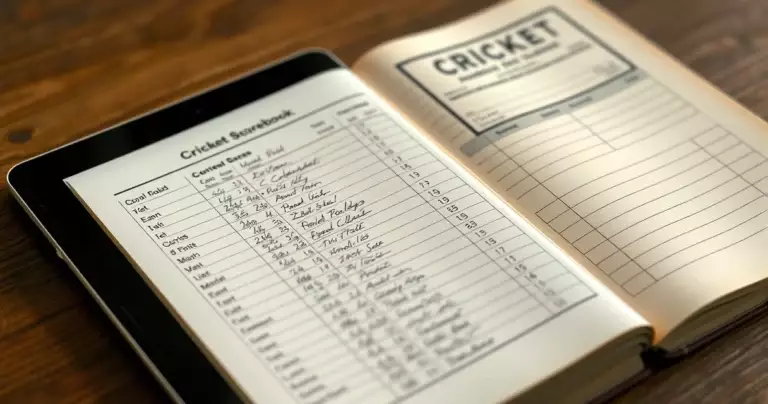
The first Test match took place in March 1877 at the Melbourne Cricket Ground, where Australia met England over four days. Scorers logged every delivery by hand in bound linen books, and for many years those ledgers were the only numerical trace a match left behind. Anyone who wanted to compare players had to leaf through stacks of paper, which made deep analysis slow and rare.
Print reference work changed that. Wisden Cricketers’ Almanack, first published in 1864, standardized how records were collected and presented, giving fans a shared set of numbers to argue over. For more than a century, almanacks and newspaper scorecards were the main way statistics traveled from the ground to the public.
Computers reshaped the field again. Searchable databases turned a century of results into something you could filter in seconds, and ESPNcricinfo’s Statsguru tool let ordinary readers run queries that once needed a professional statistician. Ball-by-ball logging meant a modern scorecard could record not only the outcome of an innings but the rhythm of it, delivery by delivery.
Tracking technology pushed the data even further. Ball-tracking systems introduced around 2001 added the speed, line and length of every delivery, and analytics firms began modelling win probability live during play. A scorecard today is a doorway to layered information, from the simple run tally a beginner reads first to the control percentages a coach studies after stumps. If you are still building the basics, the beginner walkthrough of how to read cricket scorecards covers the layout before you start crunching the figures.
The Batting Numbers and What They Actually Measure
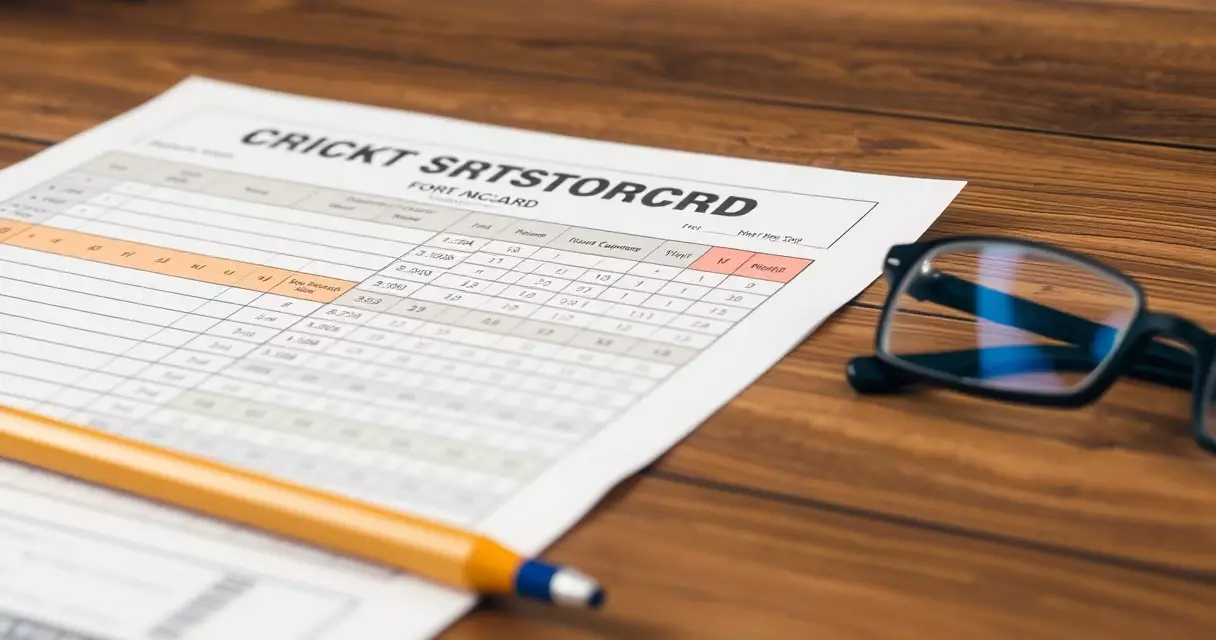
Two batting figures carry most of the analytical weight: the average and the strike rate. They answer different questions, and reading them together is where useful analysis begins. The batting average divides runs scored by the number of times a player was dismissed, not by innings played. A not-out innings adds runs to the top of that fraction without adding to the bottom, which is why consistent finishers often carry averages that look inflated until you check how often they finished unbeaten.
Strike rate measures speed rather than volume. For a batter it is runs scored divided by balls faced, multiplied by 100, so a strike rate of 150 means 150 runs per 100 balls. The Marylebone Cricket Club, which maintains the Laws of Cricket, defines the scoring conventions these metrics are built on, and the calculation is the same in every format even though a healthy value shifts wildly between them.
Put the two together and patterns emerge. A high average with a modest strike rate points to an accumulator who occupies the crease and grinds bowlers down. A high strike rate paired with a lower average suggests a hitter who scores quickly but falls often, valuable in a chase yet risky at the top of a Test innings. Neither number is good or bad on its own. The context of the match decides which one matters more.
| Batting metric | How it is calculated | What it reveals |
|---|---|---|
| Batting average | Runs scored ÷ times dismissed | Long-term consistency and value of a wicket |
| Strike rate | (Runs ÷ balls faced) × 100 | Scoring speed and intent |
| Boundary percentage | (Runs in fours and sixes ÷ total runs) × 100 | How much of a score came from boundaries |
| Balls per dismissal | Balls faced ÷ times out | Staying power against the ball |
Boundary percentage and balls per dismissal add useful texture. A batter who scores 60 percent of their runs in boundaries relies on clean hitting and may struggle if conditions slow the outfield. One who rotates strike and runs hard between the wickets keeps a scoreboard moving without the same risk. Reading the symbols that flag each scoring shot helps here, and the guide to cricket scorecard symbols and abbreviations explains the notation that feeds these numbers.
Bowling Figures Tell You More Than the Wicket Column
Casual readers glance at a bowler’s wickets and stop there. Analysts look at three figures that frame how those wickets were earned. Economy rate divides runs conceded by overs bowled, so a bowler who gives up 30 runs in 6 overs has an economy of 5.00. In a low-scoring Test that is expensive, while in a Twenty20 it is tidy. The same arithmetic produces very different verdicts depending on the format around it.
Bowling average works like its batting cousin in reverse. It divides runs conceded by wickets taken, and a lower number is better because it means each wicket cost fewer runs. Bowling strike rate counts the balls bowled for every wicket, so a strike rate of 40 means a wicket roughly every seven overs. Strike rate rewards the bowlers who break partnerships, even when they leak the odd boundary doing it.
| Bowling metric | How it is calculated | What it reveals |
|---|---|---|
| Economy rate | Runs conceded ÷ overs bowled | Control and run containment |
| Bowling average | Runs conceded ÷ wickets taken | Cost of each wicket |
| Bowling strike rate | Balls bowled ÷ wickets taken | How often a bowler strikes |
| Dot ball percentage | (Dot balls ÷ balls bowled) × 100 | Pressure built through scoreless deliveries |
Dot ball percentage rounds out the picture, especially in limited-overs cricket. A delivery that yields no run forces the batting side to take more risk later, and a bowler with a high dot percentage builds pressure even before a wicket falls. Pairing economy with dot balls separates the bowler who is genuinely hard to score off from one who simply avoided the big over by luck.
Team Totals, Run Rates and the DLS Adjustment
Move up from individuals and the scorecard offers team-level numbers that frame the contest. Run rate is runs scored per over, and required run rate is the pace a chasing side must keep to win. When a target sits at 280 from 50 overs, the required rate of 5.6 sets the tempo, and watching it climb or fall over after over is one of the simplest ways to feel a chase tightening.
Partnership data sits between the individual and the team. A scorecard lists how many runs each wicket-stand produced and how many balls it lasted, which exposes the moments a match turned. A 150-run third-wicket stand built at six an over can swing a One Day International more than any single century, because it shifts both the total and the momentum at once.
Rain complicates totals, and this is where the Duckworth-Lewis-Stern method appears on the card. First adopted in 1997 and renamed in 2014 after statistician Steven Stern joined the original two creators, the system resets a target when overs are lost, using the resources of overs and wickets still in hand. A scorecard from a shortened match will show a par score or revised target, and reading it correctly means knowing the result was decided by a model, not the raw runs alone.
Landmark totals give every other figure a sense of scale. The table below collects reference points that analysts use as the outer edges of what is possible, each drawn from official record listings rather than memory.
| Record | Holder | Figure | Source |
|---|---|---|---|
| Highest Test batting average | Don Bradman | 99.94 | Wikipedia |
| Highest individual Test innings | Brian Lara | 400 not out (2004) | ESPNcricinfo |
| Highest individual ODI innings | Rohit Sharma | 264 (2014) | ESPNcricinfo |
| Highest men’s T20I innings | Aaron Finch | 172 (2018) | ESPNcricinfo |
| Highest Test team total | Sri Lanka | 952 for 6 declared (1997) | ESPNcricinfo |
| Highest ODI team total | England | 498 for 4 (2022) | ESPNcricinfo |
Numbers like Sri Lanka’s 952 for 6 declared against India in 1997 and England’s One Day International peak of 498 for 4 in 2022 mark the ceiling of team scoring. When you analyze a normal scorecard, these extremes act as anchors that tell you whether a total of 350 was par, exceptional or below standard for the conditions.
Why the Same Number Means Different Things by Format
A strike rate of 90 is the heart of a strong Test innings and a slow drag in a Twenty20. Context turns identical figures into opposite verdicts, which is the single most important idea in scorecard analysis. Test cricket rewards occupation of the crease, so averages run high and strike rates stay modest. Twenty20 rewards speed, so strike rates soar while averages shrink because batters take constant risks.
One Day Internationals sit between the two, blending accumulation in the middle overs with acceleration at the death. A bowling economy of 4.50 is respectable in an ODI and poor in a Test, while it would be outstanding in a Twenty20. Before you judge any figure, identify the format, because the benchmark moves with it. The breakdown of Test, ODI and T20 scorecard differences lays out how each format frames its columns.
Comparing players across formats without adjusting for this is the fastest way to draw a wrong conclusion. A batter who averages 35 in Tests and 28 in Twenty20 may be excellent at both, because the standards differ. Skilled analysis always asks what good looks like in the specific format before it scores any individual line on the card.
Going Deeper: Control, Dot Balls and Win Probability
Modern analysis stretches past the printed scorecard into ball-by-ball metrics. Control percentage measures how often a batter middled the ball or played the shot they intended, regardless of runs. A player can score quickly while playing and missing repeatedly, and a low control figure warns that the innings was riskier than the run tally suggests. Coaches lean on this to separate luck from genuine command.
Win probability models update live, weighing the target, wickets in hand, overs remaining and historical outcomes from similar positions. When a broadcast shows a chasing side at 70 percent likely to win, that figure rests on thousands of past matches that reached comparable points. Reading it alongside the required run rate gives a fuller sense of whether a chase is truly in control or merely ahead on paper.
Expected metrics borrow from other sports analytics, estimating how many runs or wickets an average player would produce from the same deliveries. These tools do not replace the basics on the scorecard. They extend them, turning a static record into a living account of pressure, risk and momentum that the raw columns only hint at.
A Worked Example: Breaking Down a Full Innings
Consider an illustrative One Day International innings to see how the figures combine. Suppose a top-order batter scores 88 runs from 92 balls, with eight fours and one six. Their strike rate is 88 divided by 92, multiplied by 100, which lands near 95.7. That pace is steady rather than explosive, the work of an anchor who held the innings together while others attacked around them.
Now check the boundaries. Eight fours and one six equal 38 runs, so boundary scoring made up roughly 43 percent of the total. The remaining 50 runs came from running between the wickets, which tells you this batter rotated strike well and did not depend on clearing the rope. A finisher with the reverse split, most runs in boundaries, would carry a higher ceiling and a higher chance of a quick failure.
Turn to the bowling side of the same imagined card. A bowler returns figures of 10 overs, 1 maiden, 48 runs, 3 wickets. The economy is 4.80, the bowling average for the spell is 16.0, and the strike rate is 20 balls per wicket. Those are strong limited-overs numbers, and the single maiden plus the wicket count suggest a bowler who built pressure and cashed it in. Reading the two performances together, you can already narrate how the innings ebbed and flowed before checking a single replay.
That habit, converting columns into a story, is what separates analysis from data entry. When you want the underlying match records to practice on, the cluster’s Test, ODI and T20 results database gives you real scorecards to run these calculations against.

Common Mistakes When Reading Scorecard Statistics
The most frequent error is judging a strike rate without checking the format, which makes a fine Test innings look sluggish and a measured Twenty20 knock look reckless. A second trap is reading a batting average as raw runs per innings. Because the average divides by dismissals, a player with several not-out innings can show a figure far above their typical score, and missing that distinction skews any comparison.
Small samples mislead constantly. A bowling average of 12 across two matches says little, while the same average over fifty matches is genuinely elite. Always note how many innings or overs sit behind a figure before you trust it. Conditions matter too, since a flat batting pitch inflates totals and a green seamer suppresses them, so a 240 all out can be a better effort than a 320 depending on where the match was played.
Treating one metric as the whole truth is the final pitfall. A bowler with a tidy economy but a poor strike rate contained runs without taking wickets, which suits some game plans and fails others. Reading several columns together, then weighing them against the format and the match situation, is the discipline that keeps analysis honest.
Frequently Asked Questions
What is the difference between batting average and strike rate?
Batting average and strike rate answer separate questions. The average measures volume and consistency by dividing total runs by the number of times a batter was dismissed, so it reflects how reliably a player builds a score over time. Strike rate measures speed, dividing runs by balls faced and multiplying by 100 to show scoring pace. A high average with a low strike rate describes a patient accumulator, while a high strike rate with a lower average describes an aggressive scorer who falls more often. Reading both together gives a far more accurate picture than either figure alone.
How do you calculate a bowler’s economy rate?
Economy rate divides the runs a bowler concedes by the number of overs they bowl. If a bowler gives up 36 runs across 8 overs, the economy rate is 36 divided by 8, which equals 4.50 runs per over. The figure measures containment rather than wicket-taking, so a low economy means the bowler restricted scoring. What counts as good shifts by format. An economy near 4.50 is respectable in a One Day International and excellent in a Twenty20, but the same number would be expensive in a Test match where scoring rates run lower across the day.
What does a high strike rate with a low average tell you?
That combination usually describes an aggressive batter who scores quickly but is dismissed often. The high strike rate shows they put bat to ball at speed, generating runs in a hurry, while the lower average shows those innings frequently end before they reach a big score. Players of this type are valuable in run chases and at the death of limited-overs matches, where rapid scoring outweighs long occupation. They carry more risk at the top of a Test innings, where surviving sessions matters more than pace. Match situation decides whether the profile is an asset or a liability.
Why do Test and Twenty20 statistics look so different?
The formats reward opposite behaviours, so their numbers diverge. Test cricket gives batters unlimited overs and prizes occupation of the crease, which pushes averages up and keeps strike rates modest. Twenty20 caps each side at 20 overs and prizes rapid scoring, so strike rates climb while averages fall because batters accept constant risk. Bowling figures move the same way, with economy rates that look poor in a Test reading as strong in a Twenty20. Comparing a player across formats without adjusting for these benchmarks produces misleading conclusions, which is why analysts always identify the format before judging any single figure.
What is the Duckworth-Lewis-Stern method?
The Duckworth-Lewis-Stern method is the formula used to set a fair target when rain or another interruption shortens a limited-overs match. It was first adopted in 1997 by the two statisticians Frank Duckworth and Tony Lewis, and gained its third name in 2014 when Steven Stern refined the model. The system treats overs remaining and wickets in hand as resources, then recalculates the target based on how much of each side had to work with. On a scorecard from a shortened game, you will see a revised target or par score, and the result reflects that model rather than the raw run totals.
Which statistics matter most when comparing players across eras?
No single figure settles a cross-era comparison, so analysts weigh several together while adjusting for context. Batting and bowling averages remain the sturdiest starting points because they normalize for the number of innings or wickets, but they must be read against the scoring conditions of the time, since pitches, equipment and rules have all changed. Sample size matters, so a record built over a hundred matches carries more weight than one over a handful. Strike rates help in limited-overs eras but mean little for early Test cricket. The honest answer combines averages, longevity and the standard of the period rather than crowning one number.
Sources
- Don Bradman, batting average 99.94 – https://en.wikipedia.org/wiki/Don_Bradman
- First Test match, 1877 – https://en.wikipedia.org/wiki/1876%E2%80%9377_English_cricket_team_in_Australia
- Wisden Cricketers’ Almanack, first published 1864 – https://en.wikipedia.org/wiki/Wisden_Cricketers%27_Almanack
- Duckworth-Lewis-Stern method – https://en.wikipedia.org/wiki/Duckworth%E2%80%93Lewis%E2%80%93Stern_method
- Marylebone Cricket Club, Laws of Cricket – https://www.lords.org/mcc/the-laws-of-cricket
- ESPNcricinfo, highest innings totals records – https://www.espncricinfo.com/records/highest-innings-totals-282911