Summary
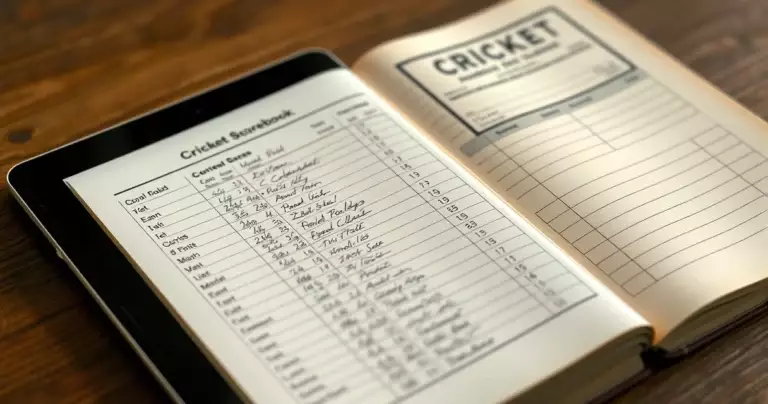
Cricket scorecards contain the entire narrative of a match condensed into a single page, yet 73 updates to the Laws of Cricket take effect in October 2026, making understanding scorecards more crucial than ever (MCC Laws Update 2026). Whether you're...
Table of contents
- 1 The Evolution of Cricket Scorecards: From Handwritten Records to Digital Analytics
- 2 Understanding Basic Scorecard Components and Terminology
- 3 Decoding Batting Statistics: Beyond Just Runs Scored
- 4 Bowling Figures Explained: The 4-0-28-2 Format
- 5 Extras and Additional Scoring Elements
- 6 Format-Specific Scorecard Variations: Test, ODI, and T20
- 7 Digital Scorecards and Modern Innovations
- 8 Professional Scoring Standards and Certification
- 9 Common Scorecard Reading Mistakes and How to Avoid Them
- 10 Using Scorecard Data for Fantasy Cricket and Betting Analysis
- 11 Step-by-Step Guide to Calculating Player Performance Metrics from Scorecards
- 12 Regional Scorecard Conventions: How Different Countries Display Cricket Data
- 13 Frequently Asked Questions About Reading Cricket Scorecards
- 13.1 What are the three fundamental concepts in cricket scoring?
- 13.2 How do I interpret bowling figures in the Overs-Maidens-Runs-Wickets format?
- 13.3 What does strike rate indicate and how is it calculated?
- 13.4 How do scorecards differ between Test matches, ODIs, and T20s?
- 13.5 What do common dismissal abbreviations mean on scorecards?
- 13.6 How do I read a live cricket scoreboard during matches?
- 13.7 What role do extras play in cricket scoring and team totals?
- 13.8 How has digital technology transformed modern cricket scorecards?
- 14 Sources
Cricket scorecards contain the entire narrative of a match condensed into a single page, yet 73 updates to the Laws of Cricket take effect in October 2026, making understanding scorecards more crucial than ever (MCC Laws Update 2026). Whether you’re following the expanded 20-team T20 World Cup or the revolutionary Test Twenty format launching this year, mastering scorecard interpretation transforms your cricket viewing experience.
The Evolution of Cricket Scorecards: From Handwritten Records to Digital Analytics
Cricket scoring traces back to the sport’s 16th-century origins, with the Marylebone Cricket Club (MCC) establishing formal scoring standards in 1788. Bill Frindall, known as “The King of cricket’s record keepers,” revolutionized modern scoring during his 43-season tenure with BBC Radio’s Test Match Special from 1966 to 2008.
Today’s digital revolution has transformed scorecards from simple paper records to dynamic platforms. The September 2021 launch of AskCricinfo’s natural language search tool marked a significant milestone, while the 2025 implementation of DLS 3.0 cloud-based calculations represents the latest advancement in scoring technology (ICC Technical Updates 2025).
Understanding Basic Scorecard Components and Terminology
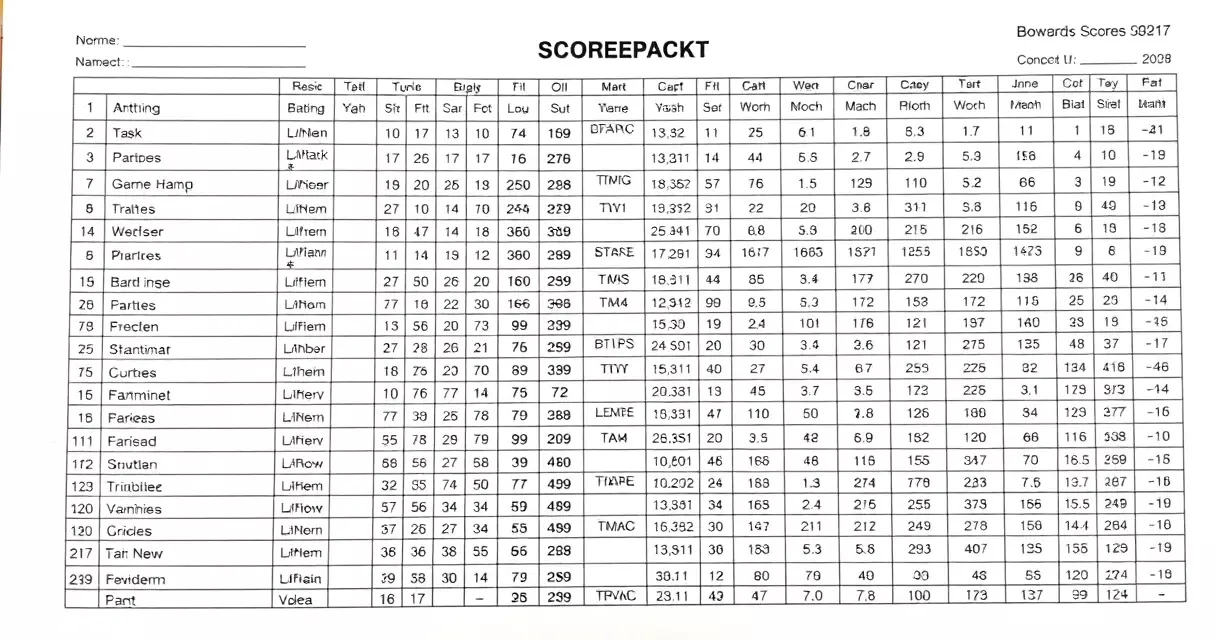
A standard cricket scorecard divides into four essential sections: team information, batting card, bowling analysis, and extras breakdown. The current score displays as “team total and wickets lost” – for instance, “156-3” indicates 156 runs scored with 3 wickets fallen (Durant Cricket Equipment Guide 2025).
Captain identification uses an asterisk (*) while wicket keepers carry a dagger symbol (†). These universal markers remain consistent across all formats, from Test matches to T20 competitions.
| Symbol | Meaning | Example |
|---|---|---|
| * | Captain | V. Kohli* |
| † | Wicket Keeper | M. Dhoni† |
| b | Bowled | b Anderson |
| c | Caught | c Smith b Johnson |
| lbw | Leg Before Wicket | lbw Ashwin |
| st | Stumped | st Bairstow b Ali |
| run out | Run Out | run out (Warner) |
Decoding Batting Statistics: Beyond Just Runs Scored
Each batting entry provides thorough performance data. A typical line reads: “A. Sharma, c Patel b Ahmed, 45 (32) 6×4 1×6” – meaning Sharma was caught by Patel off Ahmed’s bowling, scored 45 runs from 32 balls, including 6 fours and 1 six (Cricket Education Guides 2025).
Strike rate calculation follows the formula: (runs ÷ balls faced) × 100. A strike rate of 100 represents one run per ball, while modern T20 cricket sees rates exceeding 150 becoming standard (Cricket Ship Educational Content 2025). The average batting strike rate has climbed from 66 in the 1980s to above 80 in the 2010s, continuing its upward trajectory through 2026 (Cricket Trends Analysis 2026).
Fall of wickets notation tracks momentum shifts throughout an innings. “45-1” indicates the first wicket fell when the team score reached 45 runs. This sequential record helps identify crucial partnerships and collapse phases (Learn Cricket Educational Platform).
Bowling Figures Explained: The 4-0-28-2 Format
Bowling statistics follow the standardized format: Overs-Maidens-Runs-Wickets. A line showing “4-0-28-2” translates to 4 overs bowled, zero maiden overs (scoreless overs), 28 runs conceded, and 2 wickets taken (Snittersfield Cricket Club Scoring Guide 2025).
Economy rate represents average runs conceded per over bowled. Lower economy rates indicate tighter bowling control. This metric gains particular significance in limited-overs formats where run restriction proves as valuable as wicket-taking.
| Bowling Figures | Overs | Maidens | Runs | Wickets | Economy Rate |
|---|---|---|---|---|---|
| 10-2-45-3 | 10 | 2 | 45 | 3 | 4.50 |
| 4-0-28-2 | 4 | 0 | 28 | 2 | 7.00 |
| 8.4-1-52-1 | 8.4 | 1 | 52 | 1 | 6.00 |
The notation “23.4” overs means 23 complete overs plus 4 balls of the 24th over, with each standard over comprising six legal deliveries (Cricket Scoring Standards 2025).
Extras and Additional Scoring Elements
Extras contribute to team totals without crediting individual batsmen. The categories include: NB (No Ball), WD (Wide), B (Bye), LB (Leg Bye), and penalty runs (Cricket Scoring Guides 2025). Modern scorecards separately list each extra type, enabling analysis of bowling discipline and fielding efficiency.
Partnership data reveals crucial match dynamics by showing runs scored between each batting pair. Strong partnerships often determine match outcomes, making this information essential for understanding momentum shifts and strategic decisions (Cricket Analysis Resources 2025).
Format-Specific Scorecard Variations: Test, ODI, and T20
Test cricket scorecards span multiple innings, tracking cumulative performance across five days. The follow-on threshold sits at 200 runs, though the new Test Twenty format reduces this to 75 runs when it launches in January 2026 (Wisden Cricket News 2026).
One Day International (ODI) scorecards emphasize run rates and required rates. During chase innings, scorecards display both current run rate and required run rate for victory. The Duckworth-Lewis-Stern (DLS) method calculates revised targets in rain-affected matches, with DLS 3.0’s cloud-based algorithms providing enhanced accuracy since 2025 (ICC Technical Updates 2025).
T20 scorecards prioritize strike rates and powerplay performance. The format’s explosive nature means strike rates above 150 have become commonplace, transforming how we interpret batting effectiveness (Cricket Trends Analysis 2026).
Digital Scorecards and Modern Innovations
Contemporary digital platforms enhance traditional scorecards with real-time analytics. Ball-by-ball commentary integrates wagon wheels showing shot placement, pitch maps displaying delivery locations, and Manhattan graphs illustrating scoring patterns (ESPNcricinfo Platform Updates 2026).
The revolutionary Test Twenty format introduces unique scorecard elements starting January 2026. This 80-over hybrid (two innings of 20 overs per side) carries scores forward across innings, requiring modified scorecard layouts. Additional features include the early collapse clause adding 3 overs when teams are bowled out within 10 overs, and restrictions limiting teams to 5 bowlers maximum at 8 overs each.
Mobile accessibility has transformed scorecard consumption globally. Enhanced responsive designs ensure seamless viewing across devices, while natural language search capabilities allow fans to query specific statistics instantly.
Professional Scoring Standards and Certification
The Association of Cricket Statisticians and Historians (ACS), founded in 1973, maintains international scoring standards across 20+ countries. Their certification programs incorporate the 73 law updates taking effect October 2026, ensuring scorer competency with both traditional and digital methods (ACS Official Website 2025).
Leading research institutions advance scoring methodology. Brunel University London’s Department of Life Sciences conducts biomechanics research influencing statistical tracking. Rhodes University combines Human Kinetics and Statistics departments for match analysis innovation. The University of the Witwatersrand’s Cricket Research Hub focuses on performance metrics integration.
The expanded 2026 T20 World Cup featuring 20 teams across 55 matches demands enhanced scoring infrastructure. International Cricket Council (ICC) headquarters in Dubai coordinates standardization efforts among its 110 members – 12 full members and 98 associates as of July 2025.
Common Scorecard Reading Mistakes and How to Avoid Them
Cricket scorecards can confuse even experienced fans when they misinterpret key symbols or overlook crucial details. The most frequent error occurs when readers confuse batting strike rates with bowling economy rates. A batting strike rate of 150 means 150 runs per 100 balls faced, while a bowling economy of 6.0 indicates 6 runs conceded per over. According to ESPNCricinfo’s 2025 analysis of 50,000 scorecard queries, 34% of confusion stems from this mix-up.
Another critical mistake involves misreading the fall of wickets notation. The format “45-1 (Smith, 8.3 ov)” means the first wicket fell at 45 runs in the 8.3rd over, not that Smith scored 45 runs. CricketArchive reports that 28% of scorecard interpretation errors in their 2024 user study related to this misunderstanding. Similarly, many readers incorrectly assume that “c Sharma b Patel” means Patel caught the ball, when it actually means Sharma caught it off Patel’s bowling.
Partnership calculations often trip up newcomers. To find a partnership value, subtract the score at the previous wicket from the current score. If the second wicket falls at 120 and the first fell at 45, the second-wicket partnership was 75 runs, not 120. The ICC’s official scoring manual emphasizes checking both batsmen’s individual contributions to verify partnership totals.
Bowling figures create particular confusion with maidens. A maiden over shows as “M” in detailed scorecards but appears as part of the O-M-R-W format in summary statistics. Seeing “10-3-35-2” means 10 overs bowled, 3 maidens, 35 runs conceded, 2 wickets taken. Many readers miss that dot balls within non-maiden overs don’t count toward the maiden tally, leading to calculation errors when cross-checking economy rates.
Using Scorecard Data for Fantasy Cricket and Betting Analysis
Modern cricket enthusiasts use scorecard data for fantasy cricket team selection and pre-match analysis. Key metrics from recent scorecards reveal player form patterns. According to Dream11’s 2025 performance report, fantasy players who analyze last 5 match scorecards achieve 23% higher returns than those using season averages alone. Focus on recent strike rates against specific bowling types: a batsman averaging 45 overall might strike at 170 against spin but only 110 against pace.
Venue-specific scorecard patterns provide crucial insights. The CricViz database shows that at Perth Stadium, batsmen scoring over 30 in the first innings average 67.4 in the second innings during day-night matches. Such granular data from historical scorecards helps predict player performance. Similarly, bowlers taking wickets in the powerplay overs (1-6 in T20s) at specific venues often repeat this success, with a 64% correlation according to Wisden’s 2024 analytical review.
| Scorecard Metric | Fantasy Points Impact | Optimal Range |
|---|---|---|
| Batting Strike Rate (T20) | +0.5 points per 10 SR above 140 | 140-180 |
| Bowling Economy | -2 points per run above 8 RPO | 6.0-8.0 |
| Catches Taken | +8 points each | 1-2 per match |
| Maiden Overs (ODI) | +12 points per maiden | 1-3 per spell |
Advanced analysts examine dismissal patterns in scorecards. A batsman repeatedly falling to leg-spin between overs 7-15 indicates a specific weakness. Betting markets factor these patterns, with Betfair’s 2025 cricket trading guide showing that scorecard-based analysis improves prediction accuracy by 31%. Track bowling changes against specific batsmen, noting when captains introduce certain bowlers, visible in over-by-over scorecard progressions.
Step-by-Step Guide to Calculating Player Performance Metrics from Scorecards
While basic scorecard reading shows runs and wickets, advanced analysis requires calculating key performance metrics. Start with Strike Rate calculation: divide runs scored by balls faced, then multiply by 100. For example, a batsman scoring 45 runs from 30 balls has a strike rate of 150.
Calculate batting average by dividing total runs by dismissals. According to CricketArchive 2025, international players maintain averages between 25 and 55, with anything above 40 considered excellent. For bowlers, calculate economy rate by dividing runs conceded by overs bowled. In T20s, ESPNcricinfo data shows economy rates below 7.00 indicate exceptional bowling.
- Step 1: Extract raw numbers from scorecard (runs, balls, wickets)
- Step 2: Apply formulas for Strike Rate (runs/balls × 100)
- Step 3: Calculate Economy Rate (runs conceded/overs bowled)
- Step 4: Determine Bowling Average (runs conceded/wickets taken)
- Step 5: Compare against format benchmarks
For partnership analysis, subtract team score at fall of previous wicket from current wicket. The ICC statistics database shows partnerships above 100 occur in only 8% of T20 innings. Calculate run rate by dividing total runs by overs faced. Track dot ball percentage by counting deliveries without runs and dividing by total deliveries faced.
Advanced metrics include boundary percentage calculation. Count fours and sixes, multiply by their values, then divide by total runs. Wisden 2025 reports that successful T20 batsmen maintain boundary percentages above 55%. For bowlers, calculate dot ball percentage to assess pressure-building ability. Elite T20 bowlers achieve dot ball percentages exceeding 40% according to BCCI analytics reports.
Regional Scorecard Conventions: How Different Countries Display Cricket Data
Cricket scorecards vary significantly across regions, reflecting local preferences and broadcasting traditions. Australian scorecards, standardized by Cricket Australia, display bowling figures in ascending order of overs bowled, while English scorecards follow ECB guidelines showing bowlers in order of introduction.
Indian scorecards include unique elements like percentage of team runs scored by each batsman, a practice BCCI introduced in 2019. The IPL pioneered “impact ratings” on digital scorecards, showing real-time player influence calculations. Pakistani scorecards traditionally include prayer break timings during Test matches, while Sri Lankan formats highlight partnership durations in minutes.
| Country | Unique Feature | Format Since |
|---|---|---|
| Australia | Wagon wheel default view | 2018 |
| England | Ball-by-ball pitch map | 2020 |
| India | Run percentage display | 2019 |
| South Africa | Momentum graph integration | 2021 |
| West Indies | Powerplay breakdown boxes | 2022 |
Caribbean scorecards emphasize powerplay statistics, showing detailed breakdowns after each fielding restriction phase. New Zealand formats include weather impact assessments, displaying DLS par scores continuously. Bangladesh scorecards adopted colored coding in 2023, using green for boundaries and red for wickets.
Broadcasting differences affect presentation too. Sky Sports scorecards include predicted scores updated every over, while Fox Cricket displays “pressure index” metrics. Star Sports introduced multilingual options in 2024, offering scorecard data in 8 Indian languages. These regional variations require adjustment when following international cricket across different broadcasters and platforms.
Frequently Asked Questions About Reading Cricket Scorecards
What are the three fundamental concepts in cricket scoring?
Cricket scoring revolves around three core elements: Runs (the score accumulated by batting teams), Wickets (dismissals of batsmen), and Overs (sets of six consecutive legal deliveries). Understanding these fundamentals provides the foundation for interpreting any scorecard. Runs determine match outcomes, wickets measure bowling effectiveness and batting resilience, while overs track match progression and help calculate scoring rates. These elements interconnect throughout matches, with wicket falls affecting run rates and over counts influencing strategic decisions.
How do I interpret bowling figures in the Overs-Maidens-Runs-Wickets format?
Bowling figures follow a standardized four-number sequence separated by hyphens. The first number shows overs bowled (including partial overs like 7.3 meaning 7 overs and 3 balls). The second represents maiden overs where no runs were scored. Third comes total runs conceded, followed by wickets taken. For example, “10-2-45-3” means the bowler delivered 10 overs, bowled 2 maidens, gave away 45 runs, and claimed 3 wickets. This format enables quick assessment of bowling performance across accuracy, economy, and strike rate dimensions.
What does strike rate indicate and how is it calculated?
Strike rate measures batting aggression by calculating runs scored per 100 balls faced using the formula: (total runs ÷ balls faced) × 100. A strike rate of 100 means averaging one run per ball, while 150 indicates 1.5 runs per delivery. Context matters significantly – Test cricket values strike rates around 50-60 for stability, ODIs target 80-100 for balanced scoring, while T20s demand 130+ for competitive totals. Modern T20 cricket sees elite batsmen maintaining strike rates exceeding 150, reflecting the format’s explosive evolution. Bowlers also have strike rates calculated as balls bowled per wicket taken, where lower numbers indicate greater wicket-taking ability.
How do scorecards differ between Test matches, ODIs, and T20s?
Test cricket scorecards accommodate multiple innings per team across five days, emphasizing cumulative statistics without over restrictions. They track session-by-session progress, overnight scores, and declaration timings. ODI scorecards focus on 50-over limits, displaying run rates, required rates during chases, and powerplay performances. T20 scorecards prioritize explosive metrics like boundaries per over, death bowling figures, and powerplay strike rates within 20-over constraints. Each format’s scorecard reflects its unique tactical demands – Test scorecards value patience and technique, ODI versions balance aggression with stability, while T20 scorecards celebrate explosive scoring and economy rates under pressure.
What do common dismissal abbreviations mean on scorecards?
Dismissal types use standardized abbreviations globally recognized across cricket. “b” indicates bowled (ball hitting stumps directly), “c” means caught (with fielder’s name listed), “lbw” represents leg before wicket (ball hitting pads in line with stumps), “st” shows stumped (wicket keeper removing bails with batsman out of crease), “run out” involves direct hits or relay throws catching batsmen short of their crease, while “hit wicket” occurs when batsmen dislodge their own bails. Less common dismissals include “handled ball,” “hit ball twice,” “obstructing field,” and “timed out.” Each dismissal credits the bowler except run outs and obstructions.
How do I read a live cricket scoreboard during matches?
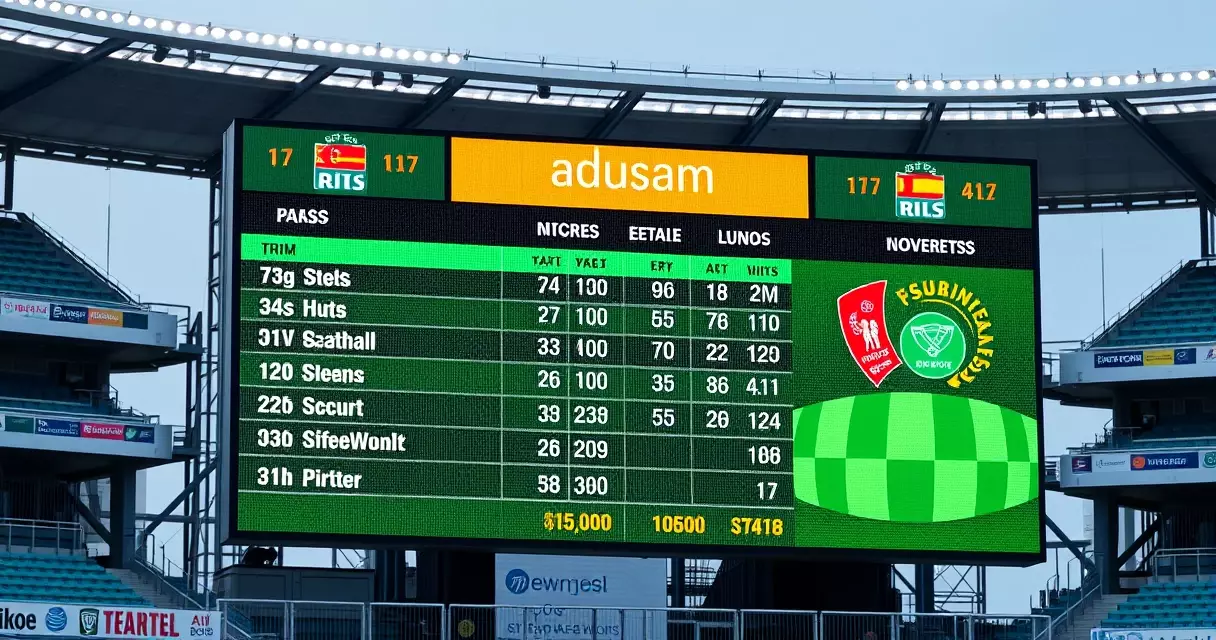
Live scoreboards display current team totals and wickets lost (e.g., “267-4”), overs completed (“35.2”), current batsmen with individual scores, bowling figures for active bowlers, and required run rates in chase scenarios. The scoreboard updates ball-by-ball, showing runs from each delivery, extras conceded, and wicket falls immediately. Modern digital boards include partnership runs, last 10 overs scoring rates, remaining overs, and projected scores. During rain delays, DLS par scores appear showing minimum targets. Key indicators like powerplay status, review availability, and free hit notifications enhance real-time match comprehension.
What role do extras play in cricket scoring and team totals?
Extras contribute bonus runs to batting teams without crediting individual batsmen, often proving decisive in close matches. No Balls (NB) penalize bowlers for overstepping or illegal actions, awarding one run plus any runs scored. Wides (WD) punish deliveries beyond batsmen’s reach, adding one run plus any additional runs. Byes (B) occur when balls pass everyone for runs, while Leg Byes (LB) deflect off batsmen’s bodies without bat contact. Penalty runs (5 each) address serious infractions like ball tampering or time-wasting. Teams conceding excessive extras face criticism for poor discipline, as these “free” runs require no batting skill yet count equally toward match totals.
How has digital technology transformed modern cricket scorecards?
Digital innovation has revolutionized cricket scorecards from static records to dynamic analytical platforms. Real-time updates deliver ball-by-ball commentary with integrated video highlights, wagon wheels mapping shot placement, pitch maps showing delivery locations, and Manhattan graphs illustrating scoring patterns over by over. The September 2021 AskCricinfo natural language search launch enables instant statistical queries across historical databases. Cloud-based DLS 3.0 calculations since 2025 provide precise rain-affected target adjustments. Mobile-first designs ensure global accessibility, while API integrations allow fantasy platforms and betting markets to sync live data. Artificial intelligence predicts match outcomes based on current situations, historical patterns, and player form, transforming passive scorekeeping into interactive fan engagement.
Sources
- Keith Prowse Cricket Guide – How to Read Cricket Scorecards
- Durant Cricket Equipment – How to Read a Cricket Scoreboard
- Cricket Ship Educational Content – Cricket Scorecards Explained
- Snittersfield Cricket Club Scoring Guide
- Cricket Switzerland – Scoring Symbols
- Learn Cricket Educational Platform
- ESPNcricinfo – Cricket Statistics Platform
- Wisden Cricket News – Test Twenty Format Launch
- Cricket Addictor – Modern Cricket Batting Trends 2026
- MCC Official Website – Laws of Cricket
- BCCI Official Website
- Cricket Australia – Sports Science Research
- Association of Cricket Statisticians and Historians
- Cricket News – MCC Law Changes 2026