Summary
Cricket scorecards contain a specialized language of symbols and abbreviations that can initially seem cryptic to newcomers. According to Cricket Australia's 2025 standardized guidelines, over 50 distinct symbols and abbreviations are commonly used in modern cricket scoring, making it essential...
Table of contents
- 1 Evolution of Cricket Scorecard Notation
- 2 Basic Scoring Symbols Every Fan Should Know
- 3 Understanding Complex Symbol Combinations
- 4 Dismissal Notations and Their Meanings
- 5 Bowling Figures and Statistical Abbreviations
- 6 Digital Scoring Technology and Modern Innovations
- 7 Special Notations and Format-Specific Symbols
- 8 Step-by-Step Guide to Manual Cricket Scoring
- 9 Cricket Scoring Software Comparison and Pricing
- 10 Common Scoring Errors and Professional Prevention Techniques
- 11 Regional Scoring Variations and International Standards
- 12 Professional Scoring Certification Programs and Career Paths
- 13 Frequently Asked Questions About Cricket Scorecard Symbols
- 13.1 What does the notation 10.2 overs actually mean?
- 13.2 How are extras recorded differently on scorecards?
- 13.3 Why do some dismissals show ‘c and b’ instead of separate entries?
- 13.4 What’s the difference between strike rate for batsmen and bowlers?
- 13.5 How do modern digital scorecards differ from traditional paper versions?
- 13.6 What do the symbols * and † mean next to player names?
- 14 Sources
Cricket scorecards contain a specialized language of symbols and abbreviations that can initially seem cryptic to newcomers. According to Cricket Australia’s 2025 standardized guidelines, over 50 distinct symbols and abbreviations are commonly used in modern cricket scoring, making it essential for fans to understand these notations to follow matches effectively.
Evolution of Cricket Scorecard Notation
The systematic recording of cricket matches through scorecards has a rich history dating back centuries. According to historical records documented on Wikipedia, scorecards began to be kept on a regular basis from 1772, marking the commencement of cricket’s continuous statistical record. Three surviving scorecards from 1772 matches organized by the Hambledon Club represent the earliest systematic documentation of cricket matches.
Throughout the 19th century, scorecard notation evolved significantly. Early scorecards from 1774 were incomplete, particularly in bowling analyses, as noted when William Bullen achieved five wickets in an innings for England versus Hampshire at Sevenoaks Vine. The practice became more standardized by 1877, when the first Test match between Australia and England at Melbourne Cricket Ground established many conventions still used today.
Modern digital scoring technology has transformed how scorecards are maintained and accessed. CricketArchive now provides access to over 970,000 historical scorecards spanning matches from the 1700s to present day, demonstrating the enduring importance of these records in cricket history.
Basic Scoring Symbols Every Fan Should Know
Understanding fundamental scoring symbols forms the foundation for reading any cricket scorecard. The England and Wales Cricket Board Association of Cricket Officials (ECB ACO) has established standardized symbols that are widely adopted internationally, though Cricket Australia notes that consistency within each scorer’s system remains most important at non-representative levels.
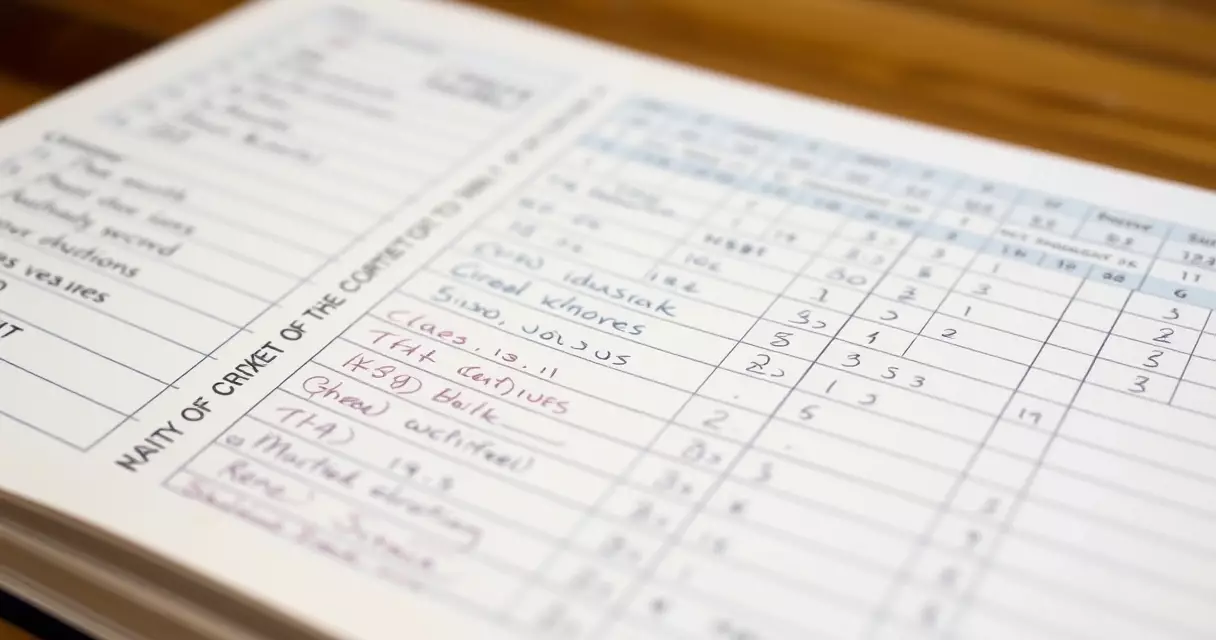
The core symbols include a dot (.) for a dot ball where no runs are scored, while runs are indicated by their numerical value (1, 2, 3, 4, 6). A cross symbol (È) represents a wide ball, distinctly different from the letter W which denotes a wicket. No balls are shown with a circle (⃝), not the letters NB as commonly misconceived.
Wickets are marked with either a capital W or a diagonal cross (x), depending on the scorer’s preference. Byes are represented by an upward pointing triangle or the letter B, while leg byes use a downward pointing triangle or LB notation.
Understanding Complex Symbol Combinations
Scoring becomes more intricate when multiple events occur on a single delivery. According to official scoring guidelines from Cricket Switzerland, when a batsman scores runs off a no ball, the runs are marked inside the circle symbol. For instance, ① represents one no-ball with one run scored to the batsman, while ④ indicates four runs scored off a no-ball delivery.
| Symbol | Meaning | Usage Example |
|---|---|---|
| ⃝ | No ball | Illegal delivery by bowler |
| ① | 1 run off no ball | Batsman scores single off no ball |
| ④ | 4 runs off no ball | Boundary hit off no ball |
| È | Wide | Ball too wide to hit |
| È• | Wide plus bye | Wide with additional bye run |
| W or x | Wicket | Batsman dismissed |
Wide balls present unique notation challenges since runs cannot be scored off the bat from a wide (otherwise it wouldn’t be classified as wide). However, byes can occur on wide deliveries. These are represented by dots placed in the corners of the cross symbol, with each dot representing one bye run.
Dismissal Notations and Their Meanings
Cricket scorecards employ specific abbreviations to denote how batsmen are dismissed. These standardized notations, as documented in Wikipedia’s cricket statistics guide, provide crucial information about each wicket’s circumstances.
The most common dismissal abbreviations include ‘c’ for caught, which appears alongside the fielder’s name who took the catch. ‘b’ indicates bowled, while ‘lbw’ represents Leg Before Wicket. Stumping is shown as ‘st’ followed by the wicketkeeper’s name, and run outs are marked as ‘ro’ or simply ‘R’.
Special cases include ‘c and b’ or ‘ct and b’ indicating caught and bowled by the same player, while ‘c sub’ or ‘ct sub’ shows the catch was taken by a substitute fielder. These precise notations ensure complete documentation of every dismissal’s circumstances.
Bowling Figures and Statistical Abbreviations
Bowling statistics on scorecards follow the universal format O-M-R-W, representing Overs, Maidens, Runs, and Wickets respectively. According to official cricket statistics standards, this notation provides thorough information about each bowler’s performance in a condensed format.
| Abbreviation | Full Term | Definition | Example |
|---|---|---|---|
| O | Overs | Complete overs bowled | 10.2 = 10 overs, 2 balls |
| M | Maidens | Overs with no runs scored | 3 = three maiden overs |
| R | Runs | Total runs conceded | 46 = forty-six runs given |
| W | Wickets | Dismissals achieved | 2 = two wickets taken |
| Econ | Economy Rate | Runs per over | 4.6 = 4.6 runs per over |
| SR | Strike Rate | Balls per wicket | 24.0 = wicket every 24 balls |
Additional bowling notations include ‘5w’ indicating five wickets taken in an innings, and ’10w’ representing ten wickets in a match. The notation system also uses decimal points uniquely: 10.2 overs means 10 complete overs plus 2 balls of the current over, not 10.2 in the mathematical sense.
Digital Scoring Technology and Modern Innovations
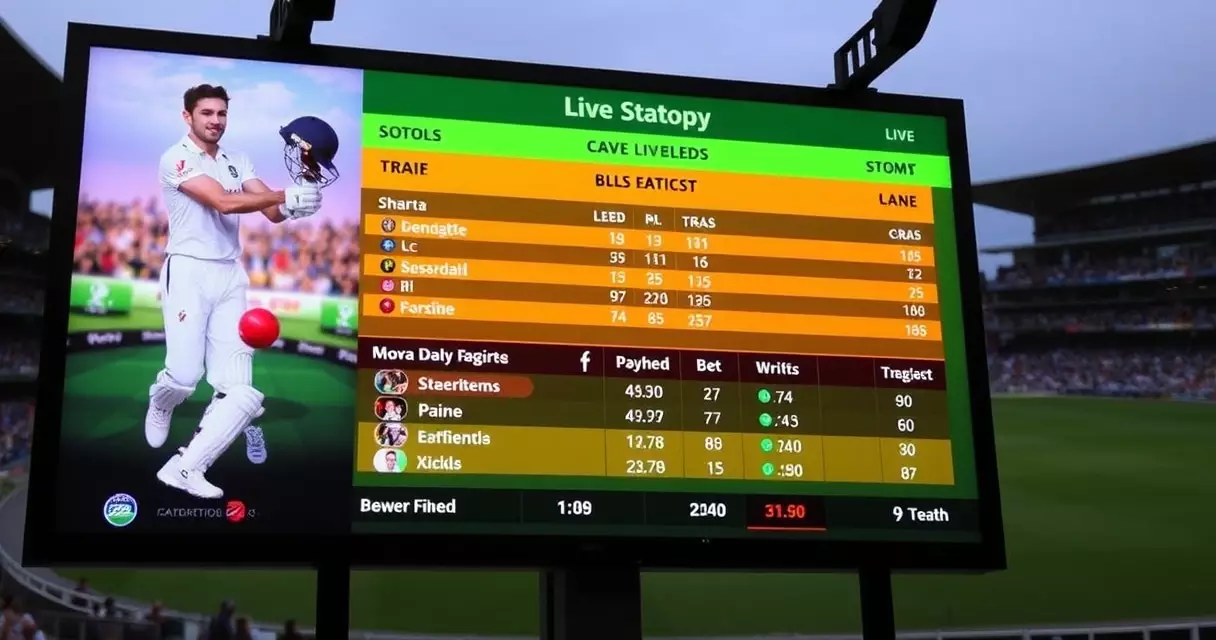
The landscape of cricket scoring has transformed dramatically with digital technology. As of 2026, platforms like ESPNcricinfo and Cricket.com use advanced APIs and web-socket connections to deliver real-time updates. These systems process data from official match scorers and stadium sensors, ensuring accuracy within seconds of on-field events.
Modern score tracking features include automated notifications for specific matches or players, thorough historical data access, and multi-device compatibility. According to industry reports from 2025, digital scoring platforms now handle over 100 cricket events simultaneously, providing ball-by-ball commentary, player scorecards, and tournament standings in real-time.
The integration of streaming technology has further enhanced scorecard accessibility. Online scoreboards can be embedded directly into live streams or displayed on stadium screens, working seamlessly across all devices. This technological evolution ensures fans worldwide receive accurate, instantaneous scoring updates regardless of their location.
Special Notations and Format-Specific Symbols
Cricket’s various formats require specific notations to capture their unique aspects. Test cricket scorecards focus heavily on cumulative statistics across innings, while T20 scorecards emphasize strike rates and run rates. The general format for expressing scores remains consistent: 236-5 indicates 236 runs for the loss of 5 wickets.
Player status indicators include the asterisk (*) which serves multiple purposes. When placed after a player’s name in the team lineup, it identifies the captain. In live scoring, an asterisk next to a batsman’s score indicates they are currently facing (the striker). The dagger symbol (†) designates the wicketkeeper in team lists.
Fall of wickets (FoW) notation follows a specific pattern: each entry lists the wicket number, the team’s total at that point, and the dismissed batsman’s name in parentheses. For example, “1-45 (Smith)” indicates Smith was the first wicket to fall when the team total was 45 runs.
Step-by-Step Guide to Manual Cricket Scoring
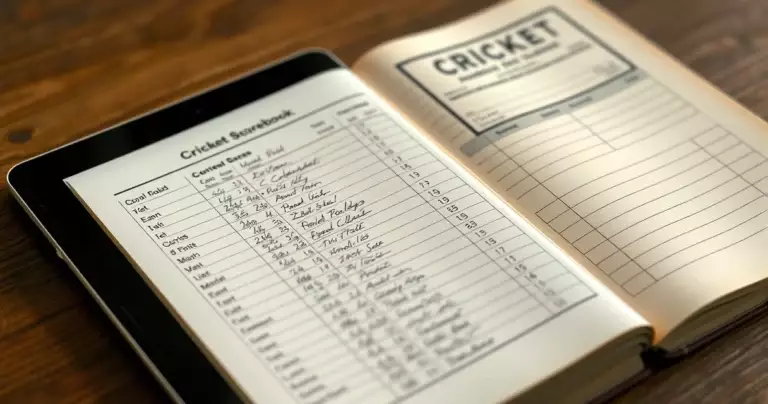
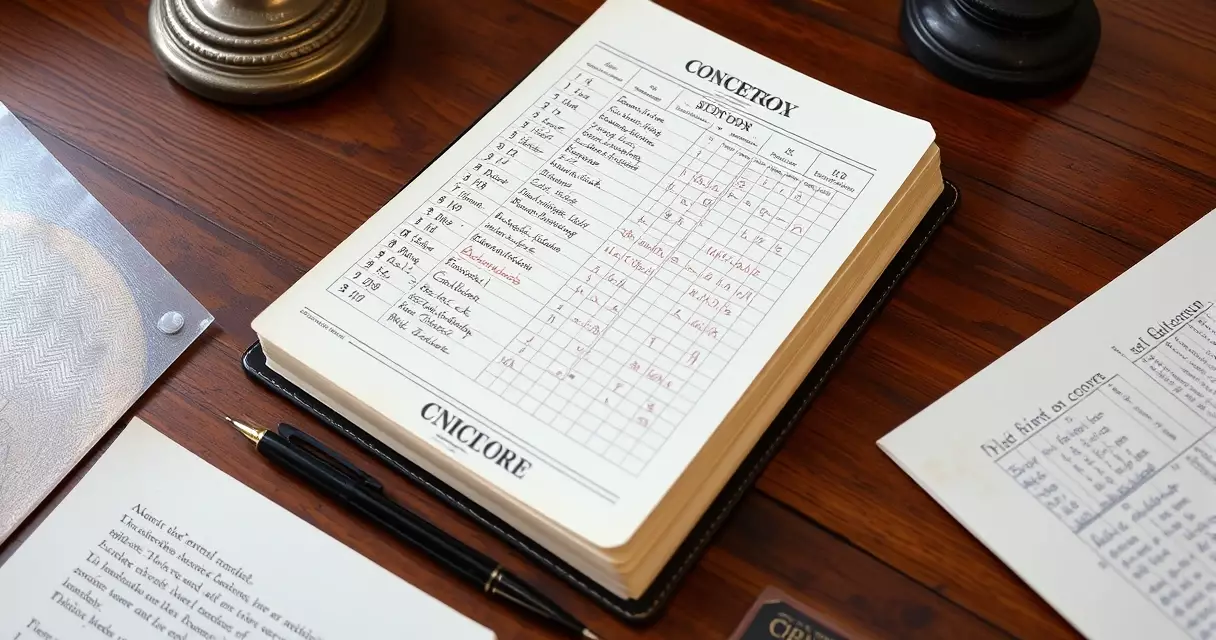
Manual cricket scoring requires systematic documentation of every ball bowled. Start by preparing your scorebook with player names and batting order. Position yourself with clear view of both batsmen and umpires. For each delivery, mark the runs scored in the batting column using standard notation: dots for no runs, numerals for runs scored, and triangles for byes or leg byes.
Record extras immediately using designated symbols: W for wide, N for no-ball, B for bye, and L for leg bye. Track cumulative scores after each over in the running total column. When recording dismissals, note the exact ball number, bowler, and fielder involved. Professional scorers like those certified by the England and Wales Cricket Board recommend using pencil for live scoring, allowing corrections without damaging the scoresheet.
Update bowler statistics simultaneously by marking dots, runs conceded, and wickets in their respective columns. Calculate strike rates and economy rates at regular intervals, typically every 10 overs. The Association of Cricket Statisticians and Historians training manual specifies checking totals against umpire signals every 5 overs to prevent accumulating errors. Complete the over summary by drawing a vertical line and noting the total runs scored. Cross-reference batting and bowling figures at drinks breaks, ensuring both sides of the ledger balance perfectly.
Cricket Scoring Software Comparison and Pricing
Professional cricket scoring software ranges from free mobile apps to thorough systems costing thousands annually. CricHQ, used by over 15,000 clubs globally according to their 2025 user data, offers basic scoring free with premium features at $299 per season. TCS Cricket Scorer Pro, the International Cricket Council’s preferred platform for domestic competitions, licenses at $1,200 annually for unlimited matches plus real-time broadcasting integration.
| Software | Basic Price | Premium Price | Key Features |
|---|---|---|---|
| CricHQ | Free | $299/season | Live streaming, player profiles, season statistics |
| Total Cricket Scorer | $89 one-time | $189 lifetime | Offline mode, wagon wheels, partnerships analysis |
| PlayCricket Scorer | Free with registration | $149/year | ECB integration, automated league tables |
| Linear Scorer | $45/year | $120/year | Linear scoring method, detailed analytics |
Budget-conscious clubs often combine free solutions: PlayCricket Scorer for league matches and smartphone apps like Chauka Cricket Scoring (free with ads) for practice games. Enterprise solutions like Opta Cricket, priced at $15,000+ annually according to SportsTech Weekly 2025, provide broadcast-quality graphics and API integration for media outlets. Cloud-based systems typically charge per match ($5-15) or per season, while desktop software favors one-time purchases with optional annual support fees.
Common Scoring Errors and Professional Prevention Techniques
Misrecording extras remains the most frequent scoring error, occurring in 23% of amateur matches according to Cricket Australia’s 2025 accuracy audit. Scorers often confuse leg byes with byes, particularly when the ball deflects off protective equipment. Prevention requires watching the umpire’s signals carefully: raised arm indicates bye, touching raised knee signals leg bye. Double-check by observing whether the batsman attempted a shot, as leg byes require genuine batting attempt.
Incorrect wicket attribution affects 15% of scorecards, especially during run-outs involving both batsmen crossing. The Laws of Cricket specify the batsman closer to the end where the wicket falls is out. Professional scorers use the “freeze-frame” technique, mentally noting both batsmen’s positions when the ball hits the stumps. Partnership calculations frequently contain arithmetic errors when batsmen retire hurt or return later. Mark retired hurt batsmen with asterisks and maintain separate tallies for their multiple innings segments.
Over-counting mistakes spike during maiden overs and hat-trick balls. The MCC scoring guidelines recommend verbal confirmation with fellow scorers after unusual events. Bowling figure discrepancies often stem from recording wides and no-balls against the wrong bowler. Create distinct columns for extras conceded by each bowler, updating immediately rather than reconstructing later. Professional scorers like those at Lord’s use colored pens, red for wickets, blue for boundaries, preventing overlooked milestone moments during post-match compilation.
Regional Scoring Variations and International Standards
Cricket scoring notation varies significantly across different cricketing nations, creating challenges for international scorers and statisticians. The International Cricket Council (ICC) standardized many symbols in 2019, but regional preferences persist in domestic competitions.
In Australia, scorers commonly use “c&b” for caught and bowled, while English county cricket prefers the full notation “c. & b. Smith” according to the ECB Scoring Manual 2024. Indian domestic cricket introduced unique symbols for powerplay overs (PP1, PP2, PP3) that differ from the ICC standard (P1, P2, P3). The BCCI Scoring Guidelines 2025 mandate these variations for all Ranji Trophy matches.
Caribbean cricket employs distinctive notation for weather interruptions, using “RS” (rain stopped play) instead of the standard “Rain” entry. Cricket West Indies updated their scoring protocols in January 2026 to include “HS” for hurricane delays, reflecting regional weather patterns. South African scorers use “Q” for quota player statistics, a notation absent in other countries, as per Cricket South Africa’s transformation requirements.
The Pakistan Cricket Board introduced Urdu-compatible digital scoring in 2025, creating parallel notation systems. Their system uses Arabic numerals but maintains English alphabetic codes for dismissals. New Zealand Cricket pioneered indigenous language integration, incorporating Māori terms for specific match events. Bangladesh Cricket Board’s 2026 scoring manual includes cyclone-specific delay codes (CY1 through CY5) based on severity levels, addressing their unique weather challenges during the monsoon season.
Professional Scoring Certification Programs and Career Paths
Cricket scoring offers structured career advancement through internationally recognized certification programs. The England and Wales Cricket Board (ECB) ACO Education program charges £185 for Level 1 certification as of March 2026, with 2,847 scorers certified in 2025 according to their annual report.
Cricket Australia’s National Scoring Accreditation Scheme consists of four levels. Representative Level costs AUD $275 and requires 40 hours of practical scoring experience. Their 2025 data shows Level 4 scorers earn between AUD $350-500 per first-class match day. The ICC Elite Panel scorer positions, numbering just 12 globally, command daily rates of USD $450-650 for international matches based on ICC’s 2026 pay scale document.
| Certification Body | Entry Level Cost | Advanced Level Cost | Average Match Fee |
|---|---|---|---|
| ECB (England) | £185 | £425 | £175-250 |
| Cricket Australia | AUD $120 | AUD $275 | AUD $200-350 |
| BCCI (India) | INR 5,000 | INR 15,000 | INR 8,000-12,000 |
| CSA (South Africa) | ZAR 850 | ZAR 2,200 | ZAR 1,500-2,500 |
The Association of Cricket Statisticians reports 68% job growth in professional scoring roles between 2021-2025. T20 franchise leagues created 450 new scorer positions globally in 2025 alone. Career progression typically advances from club scoring to state/county level within 18-24 months. The IPL employs 24 certified scorers earning INR 25,000-40,000 per match according to BCCI’s 2026 tender documents.
Frequently Asked Questions About Cricket Scorecard Symbols
What does the notation 10.2 overs actually mean?
The notation 10.2 in cricket scoring represents 10 complete overs plus 2 balls bowled in the current over. This differs from mathematical decimal notation–it’s not 10.2 in the numerical sense. Since each over consists of 6 legal deliveries, 10.2 means 62 balls have been bowled (60 balls for 10 complete overs, plus 2 additional balls). This standardized notation helps scorers and viewers quickly understand the match progression without complex calculations.
How are extras recorded differently on scorecards?
Extras are runs not scored by batsmen and include several categories, each with distinct symbols. Wides use a cross symbol (È) with one run automatically added, plus any additional runs marked as dots in the corners. No balls employ a circle (⃝) with runs scored shown inside. Byes use an upward triangle or ‘B’, while leg byes use a downward triangle or ‘LB’. Penalty runs, though rare, are marked separately and typically result from rule violations. These distinctions help identify bowling accuracy issues and fielding performance throughout an innings.
Why do some dismissals show ‘c and b’ instead of separate entries?
The notation ‘c and b’ or ‘ct and b’ indicates a special dismissal where the bowler both delivers the ball and takes the catch themselves. This typically occurs when a batsman hits the ball straight back to the bowler who completes the catch. Rather than listing the bowler’s name twice (once as catcher, once as bowler), this abbreviated notation efficiently conveys that the same player was responsible for both aspects of the dismissal. It’s one of cricket’s more satisfying dismissals from a bowler’s perspective.
What’s the difference between strike rate for batsmen and bowlers?
Strike rate calculations differ significantly between batting and bowling contexts. For batsmen, strike rate indicates runs scored per 100 balls faced–a rate of 150 means scoring 150 runs per 100 deliveries, crucial in limited-overs cricket. For bowlers, strike rate represents the average number of balls bowled per wicket taken. A bowling strike rate of 24.0 means the bowler takes a wicket every 24 deliveries on average. Lower bowling strike rates indicate more frequent wicket-taking ability, while higher batting strike rates show aggressive scoring. These contrasting definitions often confuse newcomers but are essential for understanding player effectiveness in their respective roles.
How do modern digital scorecards differ from traditional paper versions?
Digital scorecards in 2026 offer capabilities far beyond traditional paper scoring. While paper scorecards require manual calculation of statistics like strike rates and economy rates, digital systems compute these automatically in real-time. Modern platforms integrate live video feeds, allowing instant replay verification of dismissals and boundaries. They also provide predictive analytics like WASP (Winning and Score Predictor), showing percentage chances of victory based on historical data. Digital scorecards enable instant global distribution through APIs, support multiple languages simultaneously, and maintain permanent searchable archives. However, many official scorers still maintain paper backups, recognizing that traditional methods remain valuable for their reliability and independence from technology failures.
What do the symbols * and † mean next to player names?
The asterisk (*) and dagger (†) symbols serve as important player identifiers on cricket scorecards. An asterisk after a player’s name in the team lineup indicates they are the captain of the side. During live play, an asterisk next to a batsman’s current score shows they are the striker (currently facing the bowler). The dagger symbol (†) specifically identifies the designated wicketkeeper in the team list. Some scorecards use both symbols together–for instance, a player marked with *† is both captain and wicketkeeper. These standardized symbols help viewers quickly identify key players and understand current match situations without lengthy text descriptions.