
Summary
When Pakistan scored 150/3 in a Test match versus scoring 150/3 in an ODI, the context changes everything. The same numbers tell completely different stories across cricket formats. According to the ICC Test Match Playing Conditions (June 2025), Test cricket...
Table of contents
- 1 Evolution of Cricket Scorecard Formats
- 2 Fundamental Structural Differences Between Formats
- 3 Bowling Analysis Column Variations
- 4 Time-Based Information Display
- 5 Statistical Metrics and Performance Indicators
- 6 Modern Digital Scorecard Enhancements
- 7 Record-Breaking Performances Across Formats
- 8 Frequently Asked Questions
- 8.1 Why do Test scorecards show session times while ODI scorecards don’t?
- 8.2 What do the extra bowling columns in ODI scorecards represent?
- 8.3 How do fall of wickets notations differ between Test and ODI formats?
- 8.4 Why are economy rates interpreted differently across formats?
- 8.5 What partnership statistics matter most in each format?
- 8.6 How do new ICC stop clock rules affect Test match scorecards?
- 8.7 Which scorecard format provides better statistical analysis?
- 8.8 What unique information does each format’s extras column reveal?
- 9 Sources
When Pakistan scored 150/3 in a Test match versus scoring 150/3 in an ODI, the context changes everything. The same numbers tell completely different stories across cricket formats. According to the ICC Test Match Playing Conditions (June 2025), Test cricket now incorporates a 60-second stop clock system, adding new timing elements to traditional scorecards that ODI and T20 formats have tracked differently for years.
Evolution of Cricket Scorecard Formats
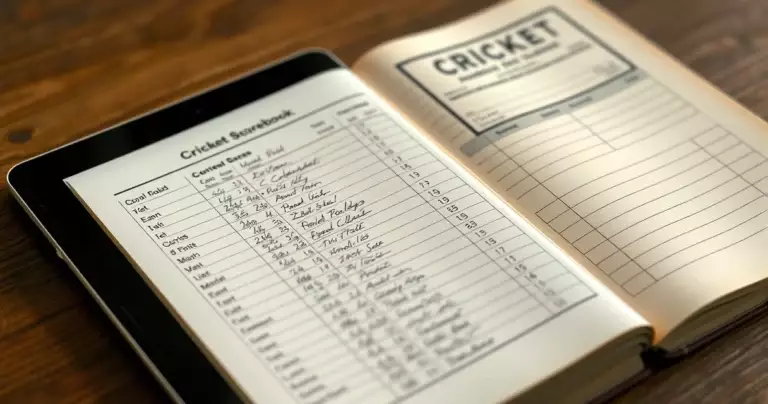
Cricket scorecards began as simple handwritten records in 1877 when Test cricket started. The traditional five-day format required tracking multiple innings, unlimited overs for bowlers, and session-by-session progress. ODI scorecards emerged in 1971 with built-in constraints: 50 overs per side and 10 overs maximum per bowler.
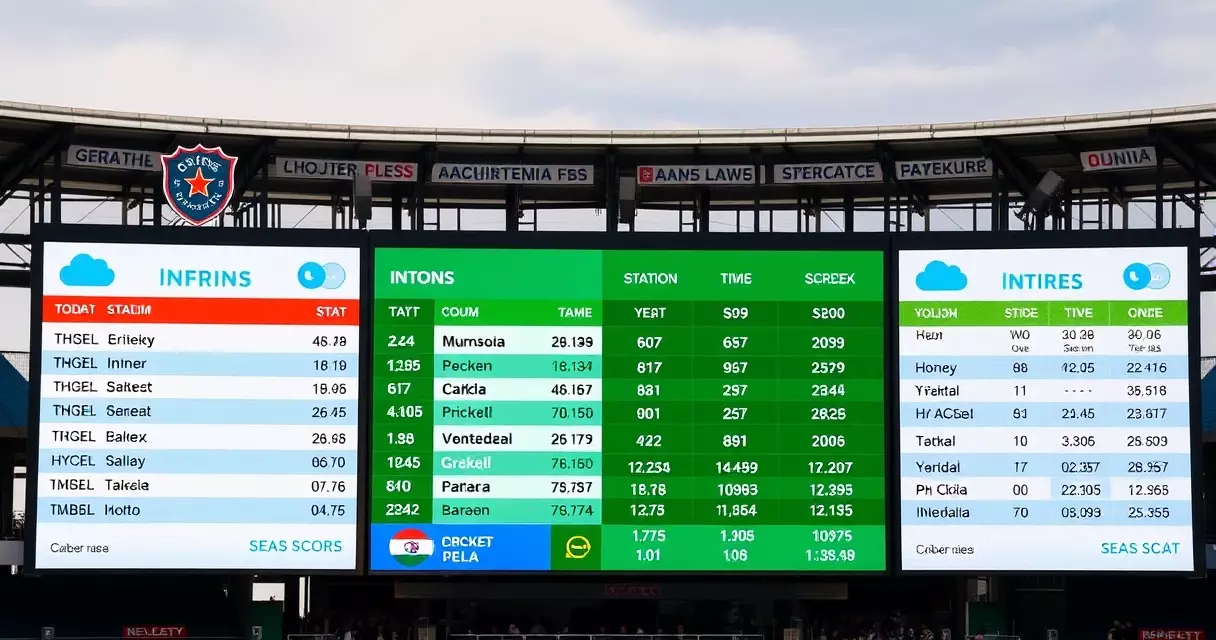
Modern digital scorecards reflect these fundamental differences. Test scorecards display four potential innings columns, while ODI scorecards show just two. The ICC Playing Conditions mandate specific data tracking for each format, creating distinct scorecard structures that serve different analytical needs.
Fundamental Structural Differences Between Formats
Test match scorecards accommodate complexity that ODI formats never require. A Test scorecard tracks up to four innings across five days, with each team potentially batting twice. Session times matter in Tests: morning (11:00 AM-1:00 PM), afternoon (1:40 PM-3:40 PM), and evening (4:20 PM-6:20 PM), separated by 40-minute lunch and 20-minute tea intervals according to ICC regulations.
ODI scorecards operate within fixed boundaries. Each team faces maximum 50 overs, bowlers limited to 10 overs each, and matches complete in approximately 7-8 hours. The scorecard structure reflects these constraints through dedicated columns for powerplay phases and bowling restrictions.
| Scorecard Element | Test Match | ODI | T20 |
|---|---|---|---|
| Innings Tracked | Up to 4 | 2 | 2 |
| Overs Per Bowler | Unlimited | 10 maximum | 4 maximum |
| Match Duration | 5 days | 1 day | 3-4 hours |
| Session Tracking | Yes (3 per day) | No | No |
| Powerplay Notation | None | 3 phases | 1 phase |
| Over Rate Target | 15 overs/hour | 14.28 overs/hour | 14.11 overs/hour |
Bowling Analysis Column Variations
Test cricket bowling figures display as O-M-R-W (Overs-Maidens-Runs-Wickets) without restrictions. A bowler might show 45.3-12-98-3, indicating 45.3 overs bowled with 12 maidens, 98 runs conceded for 3 wickets. This unlimited bowling creates strategic depth absent in limited-overs cricket.
ODI bowling columns add constraint tracking. The 10-over limit per bowler means scorecards include utilization percentages and economy rates prominently. Modern ODI scorecards from major tournaments display additional columns for wides and no-balls bowled, reflecting the format’s emphasis on restricting extras.
Economy rates carry different benchmarks across formats. Cricket statistics show that in Test cricket, an economy under 3.0 demonstrates strong control. ODI economies under 5.0 rank as solid performances, while T20 economies under 7.0 are considered good.
Time-Based Information Display
Test scorecards incorporate temporal data absent from limited-overs formats. Session-by-session scoring tracks momentum shifts across days. A typical Test scorecard shows Day 1: 285/3, Day 2: 421 all out and 156/2, providing context for match progression.
The 2025 ICC stop clock rules add new timing elements to Test scorecards. Teams must be ready within 60 seconds between overs, with violations tracked on modern digital scorecards. Three violations trigger a five-run penalty, resetting after each 80-over block.
ODI timing focuses on over-by-over progression rather than clock time. Scorecards display current run rate, required run rate, and projected totals. The format’s 3.5-hour completion target drives different statistical priorities than Test cricket’s daily session structure.
Statistical Metrics and Performance Indicators
Partnership tracking varies significantly between formats. Test partnerships often span sessions or days, with scorecards noting duration in both balls and minutes. The longest Test partnership lasted 624 minutes, impossible in limited-overs cricket.
Strike rates tell opposite stories. In Tests, a 50+ strike rate indicates aggressive batting. ODI strike rates below 80 suggest conservative play. This fundamental difference appears in how scorecards present batting data, with ODI cards prominently featuring strike rates while Test cards often omit them.
| Statistical Metric | Test Cricket Benchmark | ODI Cricket Benchmark | Scorecard Display Priority |
|---|---|---|---|
| Batting Strike Rate | 50+ (aggressive) | 80+ (normal) | Low in Tests, High in ODIs |
| Bowling Economy | Under 3.0 (excellent) | Under 5.0 (good) | Secondary in Tests, Primary in ODIs |
| Maiden Overs | Key metric | Less relevant | Always shown in Tests, Often omitted in ODIs |
| Partnership Duration | Balls + Minutes | Balls only | Detailed in Tests, Basic in ODIs |
| Fall of Wickets | Score/Day/Session | Score/Over | Extended format in Tests |
Modern Digital Scorecard Enhancements
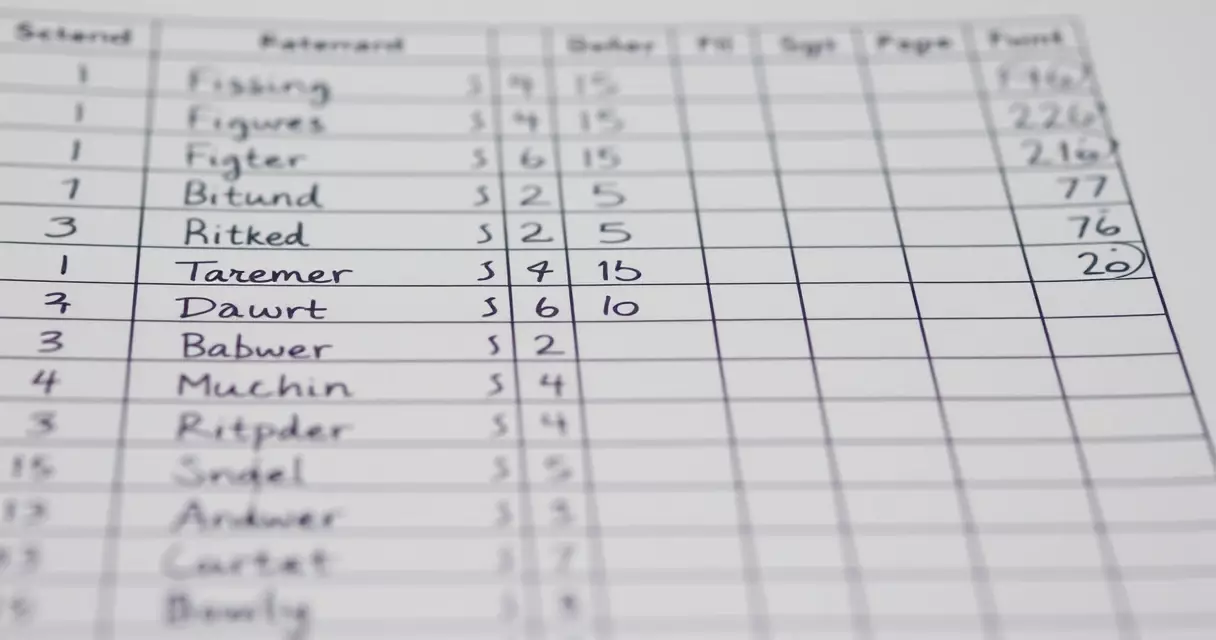
Digital platforms transform how scorecards present format-specific data. Test scorecards on modern platforms include heat maps showing scoring areas, wagon wheels for boundary distribution, and session-wise run rates. These visualizations help decode five-day narratives.
ODI digital scorecards emphasize phase-based analytics. Powerplay performance (overs 1-10, 11-40, 41-50) appears prominently with field restriction indicators. Real-time required run rate calculations and win probability models integrate directly into the scorecard interface.
Live scoring adds dynamic elements. Test scorecards update with session summaries, weather delays, and strategic declarations. ODI scorecards focus on target chasing metrics, with ball-by-ball pressure indicators absent from Test match displays.
Record-Breaking Performances Across Formats
Scorecard structures highlight different achievements. Brian Lara’s 400 not out (Statista 2025) remains Test cricket’s highest individual score since 2004. The Test scorecard for this innings spans multiple sessions, showing his progression through different bowling attacks across days.
Rohit Sharma’s 264 in ODIs (Statista March 2025 data) tells a compressed story. His ODI scorecard emphasizes strike rate (152.60), boundaries (33 fours, 9 sixes), and powerplay exploitation. The format’s time constraints create different statistical narratives.
Recent milestones reflect format evolution. Wiaan Mulder’s 367 not out in July 2025 joined Test cricket’s elite scores, while George Munsey’s 191 in March 2025 set Associate Nation ODI records. These achievements appear differently on respective scorecards, with Test cards detailing day-by-day progression versus ODI cards highlighting acceleration phases.
Frequently Asked Questions
Why do Test scorecards show session times while ODI scorecards don’t?
Test cricket’s five-day structure requires session tracking to understand match flow and momentum shifts. Each day comprises three sessions (morning, afternoon, evening) separated by lunch and tea breaks. Session scoring helps identify periods of dominance – a team might score freely in the morning but struggle post-lunch. ODI cricket completes in one continuous period without formal session breaks, making session tracking irrelevant. The format’s 50-over limit provides its own structural framework through powerplay phases rather than time-based divisions.
What do the extra bowling columns in ODI scorecards represent?
ODI scorecards include specialized columns reflecting format-specific rules and strategies. The 10-over bowling limit requires tracking bowler utilization – scorecards show overs remaining for each bowler. Wide and no-ball columns appear prominently because these extras cost more in limited-overs cricket where every run matters. Dot ball percentages indicate bowling pressure, crucial when batsmen face finite deliveries. Economy rate calculations help captains manage bowling changes strategically. These columns don’t appear in Test scorecards where bowlers face no restrictions and matches unfold without over constraints.
How do fall of wickets notations differ between Test and ODI formats?
Test cricket fall of wickets includes multiple data points: score, batsman dismissed, partnership details, and crucially, the session and day. A notation might read “156-3 (Smith, 45.2 overs, Day 2, Session 1)” providing complete temporal context. ODI notations focus on over progression: “156-3 (Smith, 23.2 overs)” since the entire match occurs in one day. Test notations often include partnership duration in minutes alongside balls faced, recognizing that time consumption itself represents a tactical element. ODI partnerships measure only balls faced, as time pressure comes from over limits rather than match days.
Why are economy rates interpreted differently across formats?
Format constraints drive economy rate interpretations. Test bowlers can bowl defensively, building pressure over multiple overs without worrying about attacking requirements. An economy of 2.5 runs per over across 30 overs represents excellent Test bowling. ODI bowlers face batting aggression from over one, especially during powerplays when only two fielders patrol the boundary. A 5.0 economy in ODIs actually indicates good control given these attacking conditions. The 10-over limit also forces ODI bowlers to balance wicket-taking with run prevention, while Test bowlers can focus purely on dismissals knowing they have unlimited overs available.
What partnership statistics matter most in each format?
Test partnerships emphasize duration and match context over scoring rate. A 150-run partnership across 60 overs on a difficult pitch represents match-defining batting. Scorecards track time batted together, balls faced, and session progression. The ability to survive represents success. ODI partnerships focus on run rate maintenance and acceleration. A 150-run partnership must consider required scoring rates, powerplay utilization, and setting or chasing targets. Strike rotation, boundary percentage, and partnership run rate appear prominently on ODI scorecards. The same run total tells completely different stories based on how quickly runs accumulated.
How do new ICC stop clock rules affect Test match scorecards?
The 2025 ICC stop clock implementation adds timing accountability to Test cricket previously exclusive to limited-overs formats. Scorecards now track over rate compliance with warning indicators for slow play. Teams must ready themselves within 60 seconds between overs, with violations noted on digital scorecards. After two warnings, the third violation triggers a five-run penalty, appearing in the extras column with specific notation. Warning counts reset every 80 overs, coinciding with new ball availability. This creates a new statistical category on Test scorecards, bringing time-based pressure elements traditionally associated with white-ball cricket into the five-day game.
Which scorecard format provides better statistical analysis?
Neither format provides definitively better analysis – they serve different analytical purposes. Test scorecards excel at revealing technique, temperament, and match situation management across varying conditions. The extended format captures momentum shifts, pitch deterioration effects, and strategic declarations. Statistical depth comes from tracking performance across multiple innings and conditions. ODI scorecards better analyze scoring efficiency, phase-based performance, and pressure handling within constraints. The format’s standardized conditions (50 overs, field restrictions, white ball) enable more direct statistical comparisons. Modern analysts use both formats to build complete player profiles, recognizing that excellence in one format doesn’t guarantee success in another.
What unique information does each format’s extras column reveal?
Test match extras columns reflect the format’s attritional nature. Leg byes and byes occur more frequently as wicketkeepers stand back to pace bowlers operating with older balls. The column might show relatively fewer wides and no-balls as bowlers prioritize accuracy over aggression. Penalty runs for slow over rates now appear following 2025 rule changes. ODI extras tell an aggression story – higher wide counts as bowlers test tramlines, more no-balls from bowlers pushing for pace and yorkers. The pressure of defending finite runs makes every extra costly. Powerplay bowling produces more wides as bowlers avoid feeding aggressive batsmen. The extras breakdown reveals bowling discipline under different format pressures.
Sources
- ICC Playing Conditions
- ICC Men’s Test Match Clause 11: Intervals
- Cricket Statistics – Wikipedia
- Highest Individual Score in Test Cricket 2025 – Statista
- Highest Individual Score in ODI Matches 2025 – Statista
- Session (cricket) – Wikipedia
- Over Rate – Wikipedia